What jetty stainless work usually includes
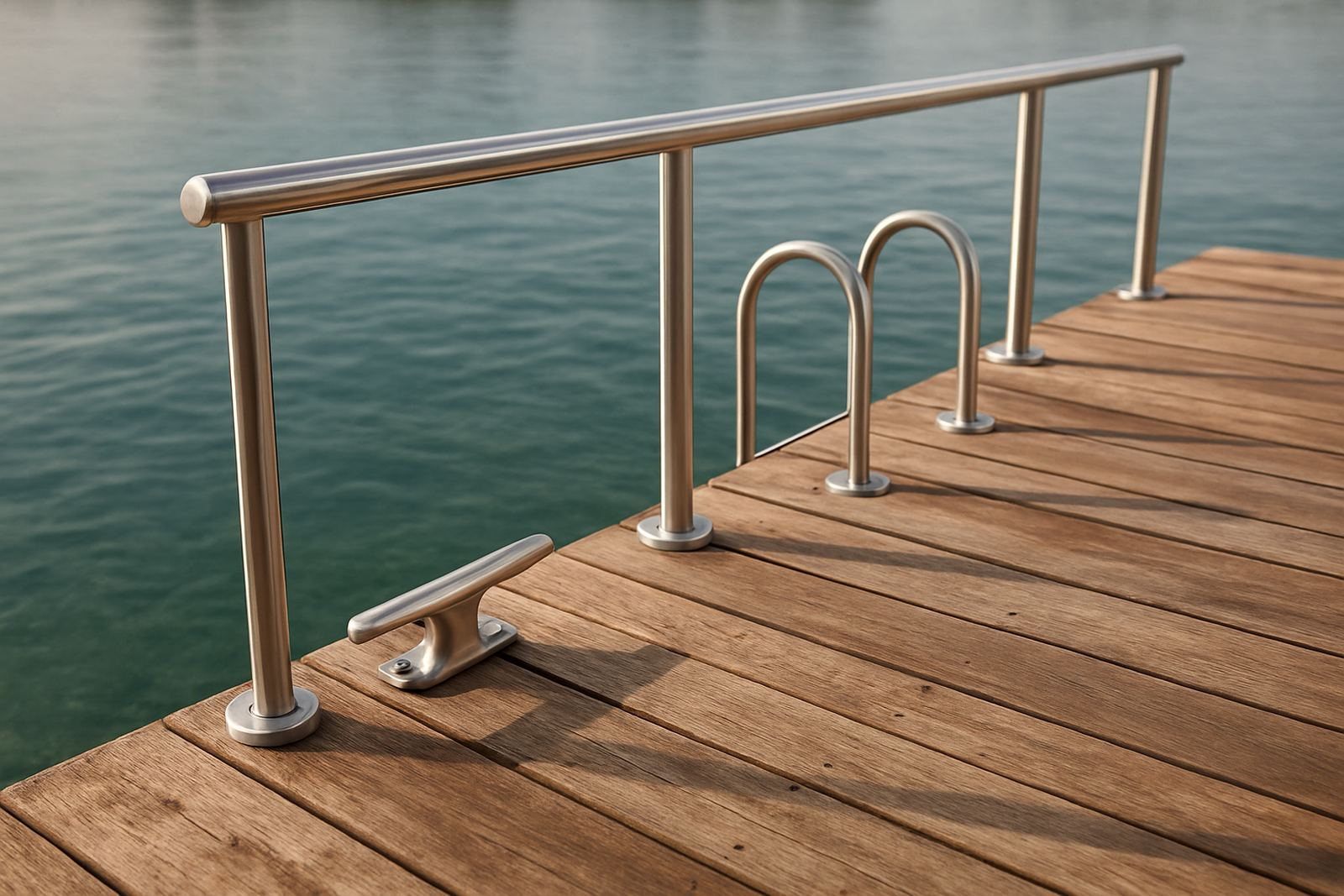
Most jetty jobs start with the parts people touch every day. That usually means safety rails, grab rails, ladder frames, post bases, hinge plates, mooring points and protective trims around access edges. On some sites we also supply gates at the landward end, handrails on steps down to the water, and fitted brackets for timber or composite decking.
In Knysna, Plettenberg Bay and Sedgefield, the biggest issue is not just strength but corrosion. Salt air gets into the joins, screw heads and welded corners, so we choose the right grade and keep the detailing simple. If a jetty is used by children, older visitors or maintenance crews, the height and spacing of the rails matter just as much as the finish.
When a private jetty needs an upgrade
Clients usually call when the old mild steel has rusted, timber fixings have loosened, or the jetty feels unsafe after winter storms. Shared jetties on estates and lodge properties often need a cleaner look too, with fittings that are easy to inspect and maintain. A small repair now can save a bigger rebuild later, especially where tide movement or wave action keeps working the structure loose.
- Loose or wobbly handrails at the water edge
- Rust streaks around bolts, welds or base plates
- Broken ladder rungs or bent side rails
- Sharp edges where timber has shrunk away from the fixings
- Staining on decking from old steel parts
If the jetty sits in a sheltered lagoon or estuary, fittings still need proper sealing. If it is exposed to open water near Mossel Bay or Wilderness, the details need even more care because wind-driven spray gets everywhere.
Planning the layout before fabrication starts
Good jetty work starts with site measuring. We look at the waterline, deck height, access steps, movement of the structure and how people actually use the space. A rail that looks fine on paper can become awkward if a boat berth, ladder or mooring cleat is in the wrong place. The best layouts leave enough room for safe movement, cleaning and future maintenance.
For most projects, we suggest keeping the design practical and light on unnecessary parts. Fewer welded junctions means fewer places for corrosion to begin. It also helps to plan the jetty around the full path of use from the parking area or garden path right through to the edge, not just the rail itself.
- Check the deck height against the highest and lowest practical water levels
- Allow space for a person to pass while carrying rope, gear or a cooler box
- Keep ladder access clear of docking points and turning movement
- Confirm fixing points before any timber is drilled or cut
Typical stainless parts we fabricate for jetties
Our workshop in Knysna Industria handles both straight-forward and custom pieces. Some jetty projects only need a few metres of rail and a ladder. Others need a full set of marine fittings to suit a private launch point, a fishing platform or a shared boardwalk. We fabricate to the site, not just to a standard size, because no two waterfront structures are exactly the same.
The normal equipment set can include round or square tube rails, welded post assemblies, base plates, ladder stiles, grab rails, support brackets, connection plates, gate latches and custom covers for exposed fixings. Where needed we also assist with glass fitment on sheltered viewing platforms, though on exposed jetties many owners prefer plain stainless for easier care. The aim is always tidy work that stands up to weather and daily use.
Installation details that matter near the water
Onsite installation has to suit the site conditions. Access can be tight, ground can be soft, and weather windows matter. We plan around tide movement, visitor traffic and the reality of working on wet timber or slippery concrete. Fixings need to be tightened properly and checked after the first few weeks of use, because a jetty can settle a little once the load is on it.
We also pay attention to the little things that save trouble later, like keeping welds neat, avoiding trapped water pockets and making sure there is a clear path for washing down salt build-up. If a jetty is near a municipal walkway or a shared shoreline, the client may also need to keep within local safety and access requirements. That is where a careful site measure and clear shop drawings help most.
Budget ranges for jetty stainless work in Rand
Jetty budgets vary a lot because the work can range from a single handrail repair to a full custom package with ladders, posts and special fixings. For a small repair job, clients in the Garden Route often spend from about R6,500 to R18,000 depending on access, material choice and whether old parts must be removed. A new set of safety rails for a private jetty usually lands between R18,000 and R45,000. Larger shared or commercial waterfront structures can sit from R45,000 to R120,000 or more when there is a lot of fabrication and onsite fitting.
The biggest cost drivers are length, fixing method, corrosion level and access. Jobs in coastal areas may also need more time for cleaning, sealing and final checks. If the structure is in good shape, replacing only the worn parts is often the most practical option. If the base framing is moving or rusted through, it is better to say so early rather than patch over a bigger problem.