What clinic spaces usually need stainless work
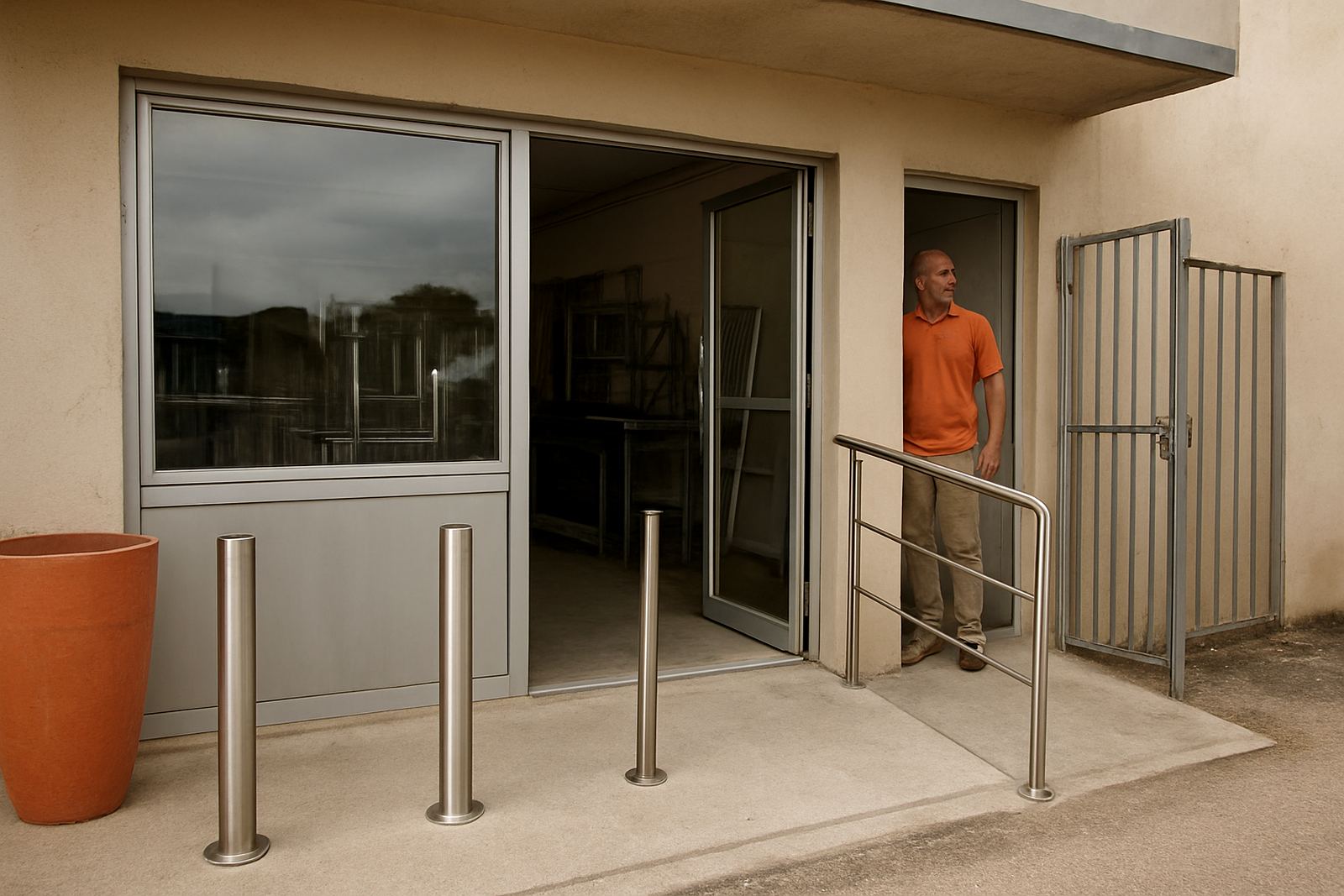
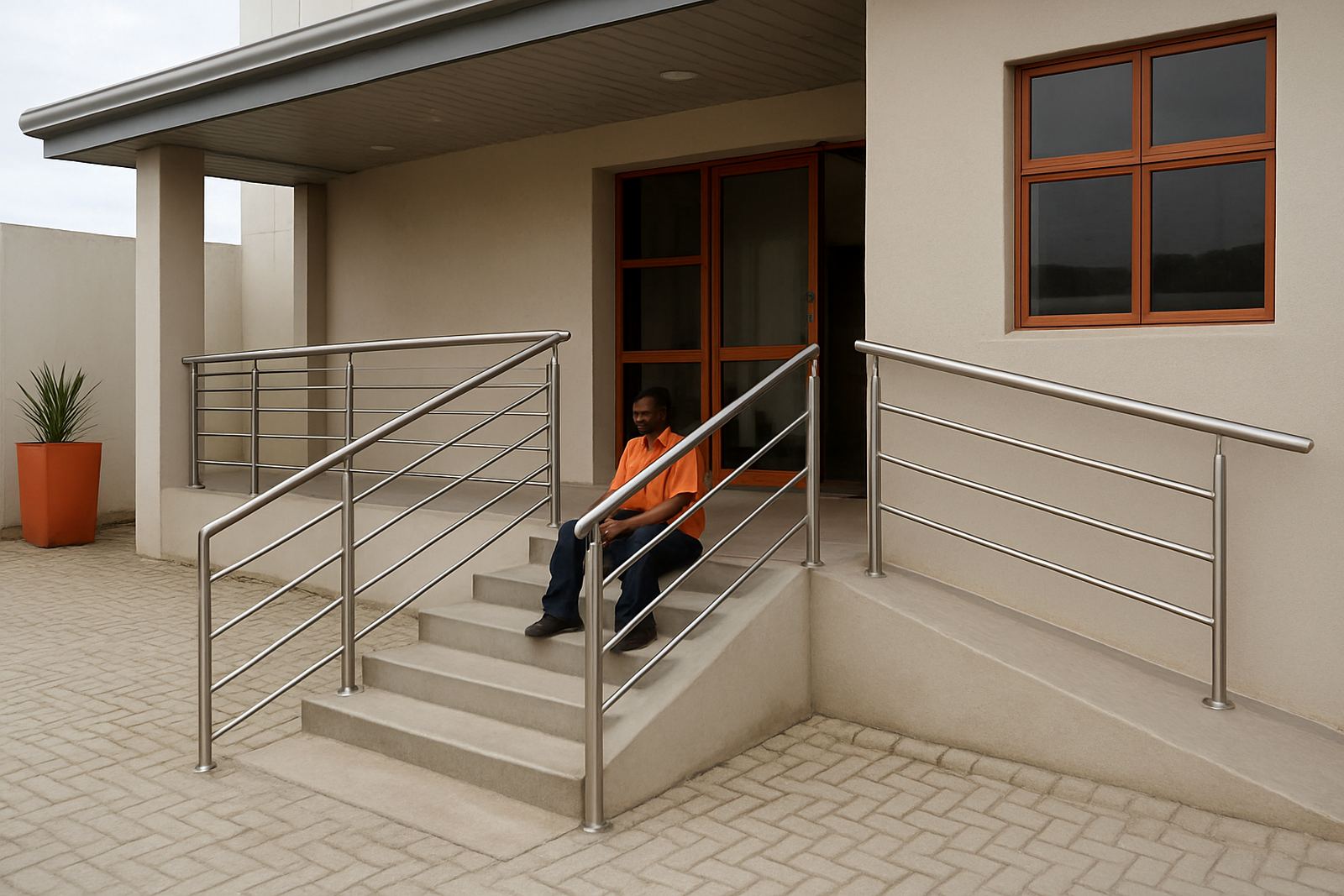
In a clinic, the fittings do more than finish the space. They help patients move safely, support staff flow, and stand up to constant wiping with cleaning chemicals. In waiting areas, passages, ramps and entrance steps, stainless handrails are often the first thing people use when they need balance. At treatment rooms, dispensary counters and staff access points, hygienic stainless details can reduce wear and make cleaning simpler.
We are often called in when a clinic is opening in a converted house, expanding into a new wing, or replacing old painted steel that has started to rust near the coast. In Knysna, Sedgefield and Wilderness, salt in the air can shorten the life of lighter fittings. A proper stainless setup gives better value over time, especially where daily cleaning and public use are part of the routine.
The client usually wants a neat finish, but also practical things such as the right height, clear wall clearances, and fixing points that do not interfere with doors, skirtings or wheelchair movement.
Typical clinic equipment we supply and fit
Every site is different, but most clinic jobs include a mix of hand support, edge protection and custom stainless parts. We measure on site, discuss how the room is used, then fabricate to suit the actual layout instead of forcing standard sizes into awkward spaces. For coastal towns like Plettenberg Bay and Mossel Bay, material choice and fixing method matter just as much as the shape.
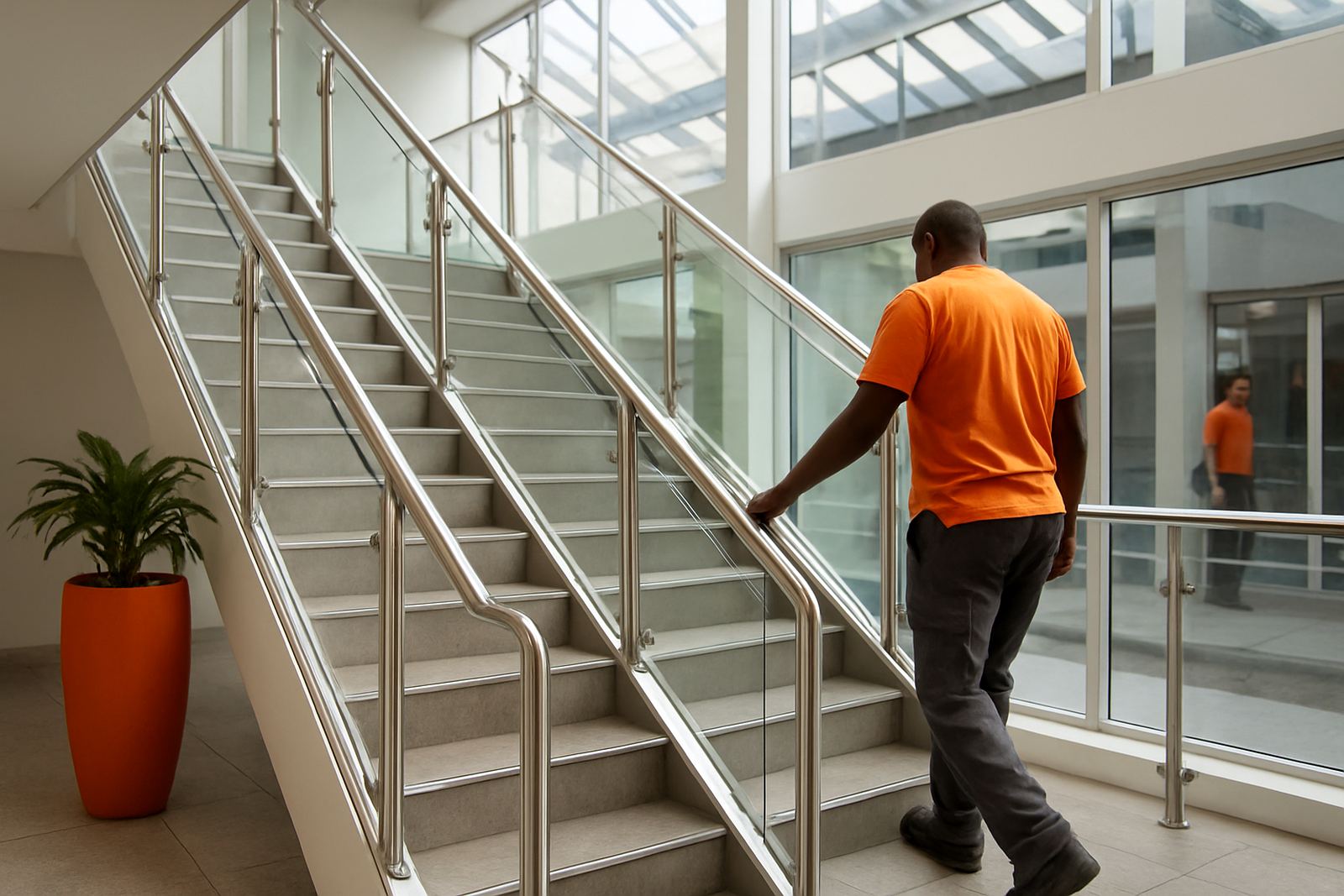
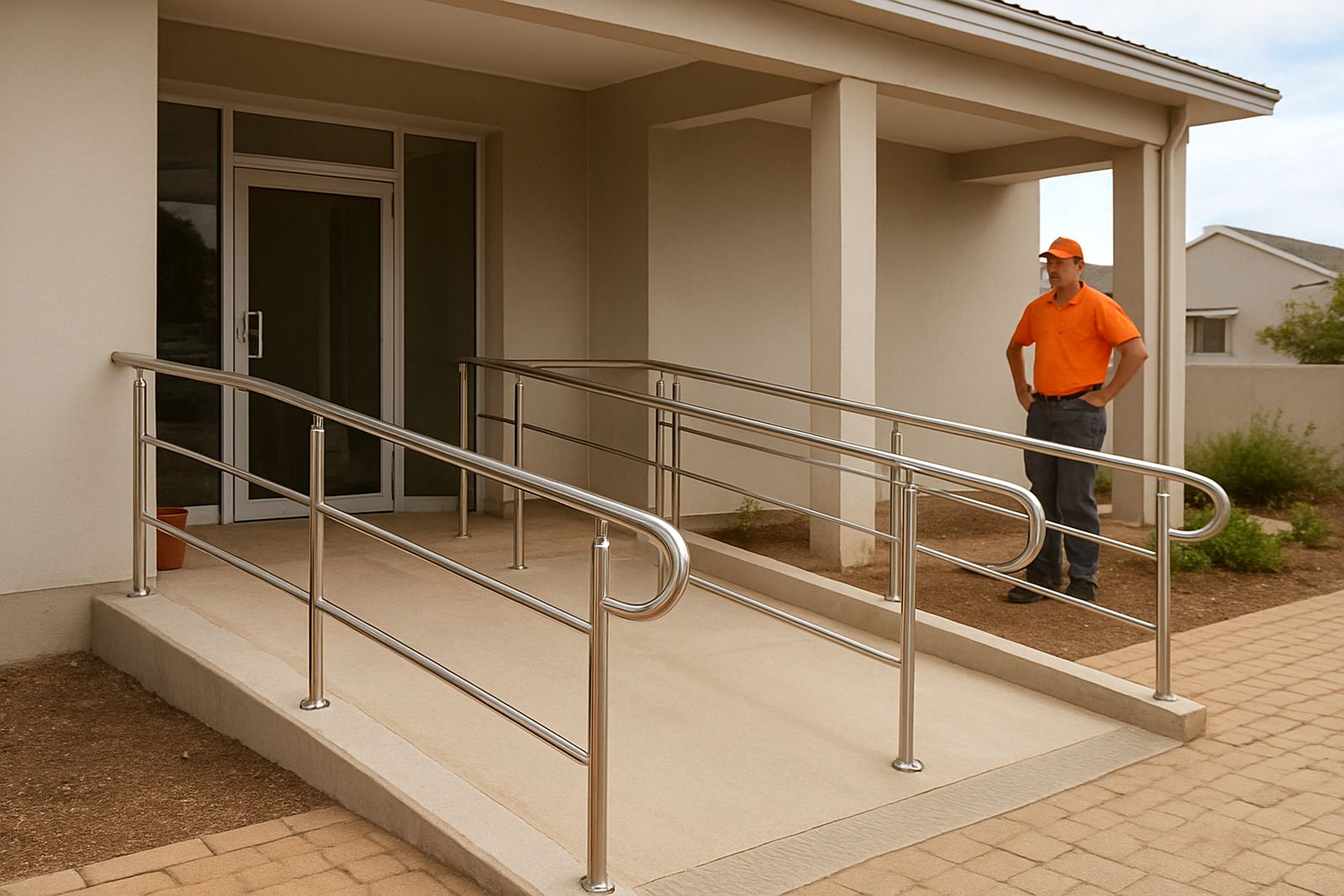
- Wall mounted handrails for passages, ramps and steps
- Balustrades for raised entrances, decks and internal landings
- Stainless kick plates and protective trims for doors and counters
- Hygienic splash guards and small screens where needed
- Gate hardware and access fittings for secure staff areas
- Custom brackets, supports and repair sections for old installations
- Glass fitment where a clearer, more open look is required
Where a clinic has a pharmacy, reception counter or patient queue area, we often recommend details that reduce contact points and clean up properly with a cloth and standard cleaning products. Not every fitting needs to be decorative. In many cases the cleaner line is the better one.
Planning the layout before fabrication starts
Good clinic work starts with measuring. We look at traffic flow, door swing, wheelchair turning space, ramp gradient, step height and where patients naturally reach for support. A handrail that is too close to the wall or too far from the edge can be uncomfortable and even unsafe. On narrow passages, especially in older buildings around Knysna and George, a few millimetres can make the difference between a usable rail and one that gets in the way.
We also plan for cleaning. Clinics need fittings that can be wiped down quickly around shifts, and that do not trap dirt in corners. Fixings are placed so they are accessible for maintenance but not obvious to patients. If the site has regular load-shedding, we plan installation stages so the team can keep working without long shutdowns. That matters when a clinic has only limited after-hours access.
For new builds, we like to see the floor plan early. That gives time to confirm heights, returns, gate swing direction and any wall strengthening before plastering or tiling is finished. It saves money later because the installer is not cutting around the finished work.
Common mistakes that cost clinics extra
We are often brought in after another contractor has fitted something that looks fine from a distance but fails in daily use. One common mistake is using the wrong grade or finish for a damp, coastal site. Another is fixing handrails into weak plaster instead of proper substrate. In a clinic, that kind of shortcut leads to movement, loose fittings and repeated repairs.
Another issue is placing rails where trolleys, wheelchairs or stretchers need to pass. If the passage is already tight, a rail must be planned with care. We also see gates and access doors installed without enough thought to hardware clearance, so the latch catches on a wall or the swing blocks a cleaning trolley. Small errors like that slow staff down every day.
Finally, some clients try to save on the budget by using a decorative idea where a practical solution is needed. A clinic does not need unnecessary detail. It needs simple, durable fittings that can be cleaned fast and replaced or repaired without shutting down the whole room.
Budget ranges for clinic stainless work in Rand
Costs depend on the length of the rail, the fixing type, the amount of custom fabrication and whether the site needs glass or access hardware. As a guide, a small clinic entrance rail or one short passage rail can start from around R12,000 to R18,000. A fuller package with several handrails, a balustrade and access fittings may sit in the R25,000 to R55,000 range. Larger medical spaces, new builds or multi-room upgrades can move beyond R60,000 when there is more fabrication and site work involved.
Site conditions also affect pricing. A clean, level wall in George is quicker to work on than a damp coastal wall that needs extra prep or corrosion-resistant fixing. If the clinic is operating during the day, after-hours installation can add labour cost but it avoids disruption. We are upfront about this at quotation stage so the client can plan properly.
- Simple wall rail: from about R1,800 to R3,500 per metre fitted
- Custom balustrade sections: from about R3,500 to R7,500 per metre
- Small repairs or surface restoration: from about R950 to R3,000 per item
- Maintenance checks and tightening: quoted to site size and access
How we work on active clinic sites
We keep the process practical. First comes site measuring and a discussion of the clinic’s daily routine. Then we prepare shop drawings so the client can see the sizes, returns and fixing points before fabrication begins. After that, the workshop team makes the parts in Knysna Industria and the site team installs them with as little disruption as possible.
For clinics in Plettenberg Bay, Sedgefield, Wilderness, George and Mossel Bay, we plan transport and installation around access, parking and patient movement. If there are stairs, ramps or a reception area with constant foot traffic, we schedule the work to avoid peak times. Where needed, we can also return later for maintenance checks, minor adjustments or stainless repairs after the space has been in use for a while.
Our aim is simple: fittings that look tidy, clean easily and hold up in a busy health setting. No fuss, no unnecessary parts, just the right stainless work for the job.
The right finish for a clinic should stay easy to clean
In a clinic, the best fitting is the one staff barely think about because it works every day. Stainless handrails and fittings should feel solid in the hand, stay neat after repeated cleaning, and match the rest of the space without drawing attention to themselves. That is why we focus on measurement, correct fixing and sensible detailing from the start.
If you are fitting out a new clinic, refurbishing an older practice or replacing rusted rails near the coast, we can assist with supply and installation across the Garden Route. A careful first measure saves time later, and a proper stainless finish gives the space a cleaner, calmer feel for patients and staff alike.