Where Marina Owners Usually Need Help
Most marina projects start with a practical problem. A jetty gets slippery at low tide, a gangway has no proper handhold, or an older rail has rusted at the base where spray sits all day. In Knysna, Plettenberg Bay and Mossel Bay, salt air and damp mornings can shorten the life of mild steel fittings very quickly, so the first job is usually to replace weak parts before they become a safety issue.
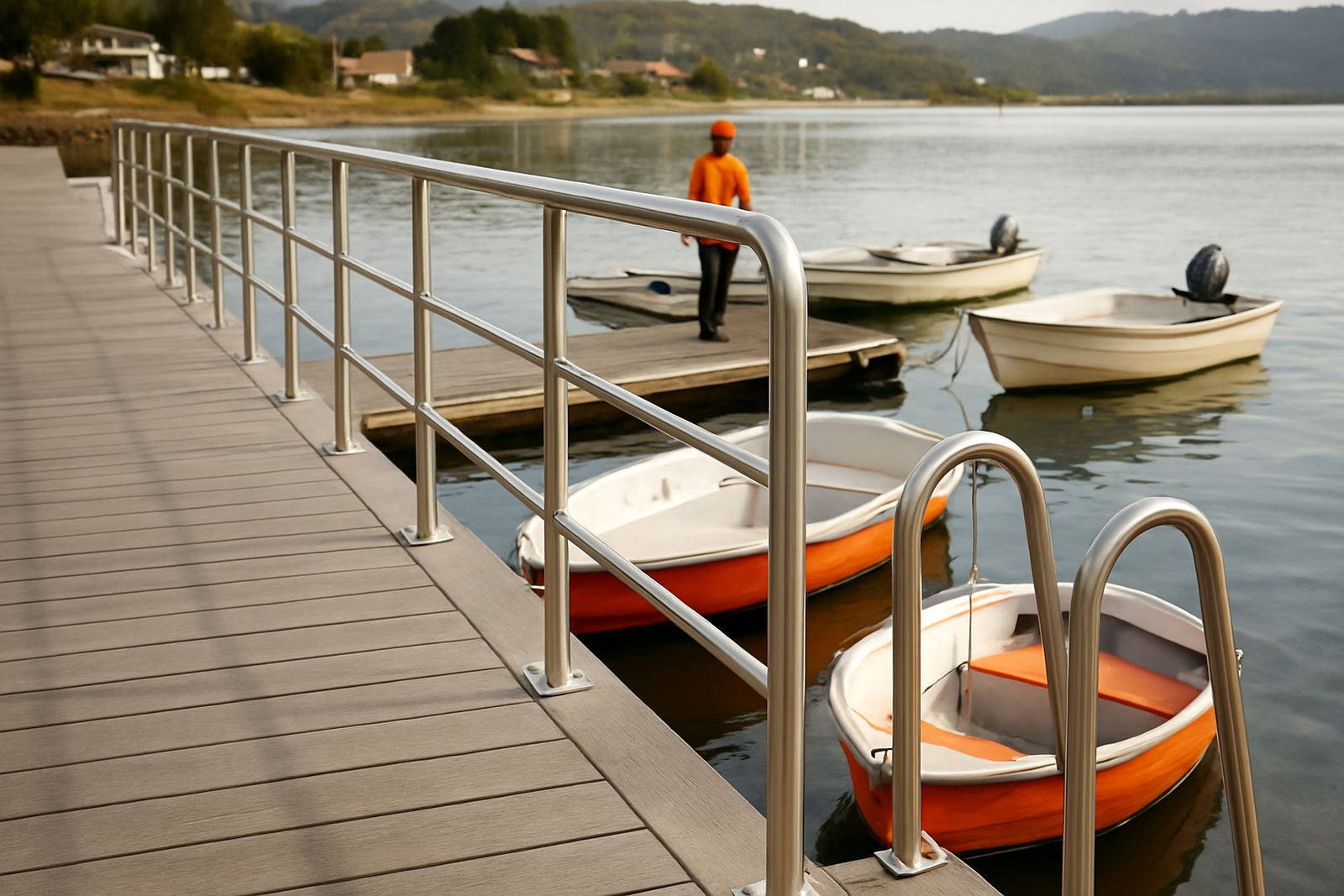
We are often asked to work on private moorings, small boat clubs, guesthouse pontoons and waterfront access points where people move between uneven levels. That may include a simple handrail on steps, a longer run along a quay edge, or stainless tie-in points for rope and fender protection. The key is to match the hardware to the actual use, not just to what looks neat on paper.
If the marina sees children, older visitors or crew carrying gear, the layout needs to allow a steady grip and enough space to pass without knocking shoulders. On tighter walkways, the rail can do double duty as a safety edge and a guide for moving safely in wet conditions. We plan for that from the start, because changing it later is more costly and time consuming.
Typical Stainless Equipment for Docks and Waterfront Access
Every site is different, but marina work usually needs a mix of railings, ladders and fitted hardware. We fabricate to suit the deck height, the anchor points and the traffic that the area gets. For exposed sites, the material choice and fixing method matter just as much as the shape.
- Handrails for steps, ramps and narrow walkways
- Balustrades for edge protection on piers and viewing points
- Access ladders with secure top mounts and sensible rung spacing
- Stanchions, posts and base plates for permanent fixing
- Gate frames, latch points and lockable access sections
- Fender brackets, tie-off points and small custom fittings
- Glass support fittings where a wind break or clear barrier is needed
- Repair parts for damaged or corroded existing structures
We also handle marine fitouts where small details make life easier, such as removable sections for maintenance access, gate hardware that resists sticking, and brackets that keep hoses and cables off the walking line. On a busy jetty, one loose end or sharp edge can become a daily nuisance, so the finish needs to be clean and practical.
How We Plan a Jetty or Marina Rail Layout
The best layouts start with site measuring. We check the actual widths, height changes, post locations and fixing surfaces before anything is cut. A timber deck, concrete edge or steel frame all need different attachment details. If the substrate is weak, a good-looking rail can still fail, so we look at the structure as a whole.
For most marina access points, we suggest keeping the rail line clear and continuous, with fewer joins where possible. That gives a better hand feel and less chance of water sitting in hidden gaps. We also look at how people approach the area in the dark or during load-shedding. In those conditions, a simple shape with clear edges is safer than a busy layout with too many interruptions.
Before fabrication, we prepare shop drawings so the client can check heights, post spacing and gate swing direction. This helps avoid clashes with pontoons, cleats, mooring ropes or service hatches. It also gives the installer a proper plan, which saves time on site and reduces rework.
Common Mistakes on Water-Side Projects
We see the same errors come up again and again on waterfront jobs. The first is using the wrong grade of metal for a salty site. It may look fine for a while, then tea staining and pitting show up around welds and fixings. Another mistake is using fasteners that are not matched to the rest of the assembly, which can cause ugly marks and early failure.
Spacing is another issue. If posts are too far apart, rails flex and feel unsafe. If they are too close, the walkway becomes cluttered and hard to use. We aim for a balance that suits the load and the movement of people on the deck. On jetties, that matters more than people expect because the surface can move slightly underfoot.
- Do not fix directly into damaged timber or cracked concrete without checking the base first
- Do not leave open tube ends where water can sit and cause staining
- Do not make gate openings too narrow for maintenance equipment
- Do not forget drainage around post bases and lower brackets
- Do not ignore the effect of spray, sun and wind on finishes
Small details like these may seem minor during planning, but they make the difference between a rail that lasts and one that needs frequent repairs.
Budget Ranges for Marina Work in Rand
Costs depend on length, fixing method, height above water, access to the site and whether glass, gates or ladder sections are included. Simple handrails for a short access run can start from about R6 500 to R12 000, while longer balustrade runs with several posts and returns often sit between R18 000 and R45 000.
Custom marina ladders and access fittings can vary from about R4 500 for a basic unit to R15 000 or more for a heavier installation with extra mounting work. For larger jetty packages, where rails, gates and hardware are all supplied together, budgets often land in the R35 000 to R90 000 range depending on scale and finish. Repairs and maintenance checks are usually far less than a full replacement, which is why early attention can save a site from a bigger bill later.
We can price from drawings, photos or an on-site visit, but the best numbers come after measuring. That way the quote reflects the real work, not guesses. It also helps to plan around the busy season, because marina sites often need the work done in a tight window.
Installation, Repairs and Ongoing Maintenance
Our workshop in Knysna Industria handles fabrication, and our site team installs across Knysna, Sedgefield, Wilderness, George, Plettenberg Bay and Mossel Bay. For marina work, timing matters because access can be limited by tides, traffic, weather and vessel movement. We plan the install so the site can keep working while the new rail or fitting goes in.
We also do stainless repairs, surface restoration and maintenance checks on existing marina hardware. That can include re-welding a cracked bracket, replacing a loose post base, polishing damaged surfaces or checking for early signs of corrosion after winter weather. For exposed coastal sites, a scheduled check every so often is a sensible way to catch problems before they become safety issues.
Many clients ask for a staged approach. We can do one section now and another later, or rebuild only the parts that have failed while keeping the rest in service. That is often the easiest way to manage cost without leaving the site unfinished.