What the client needed at Keurbooms
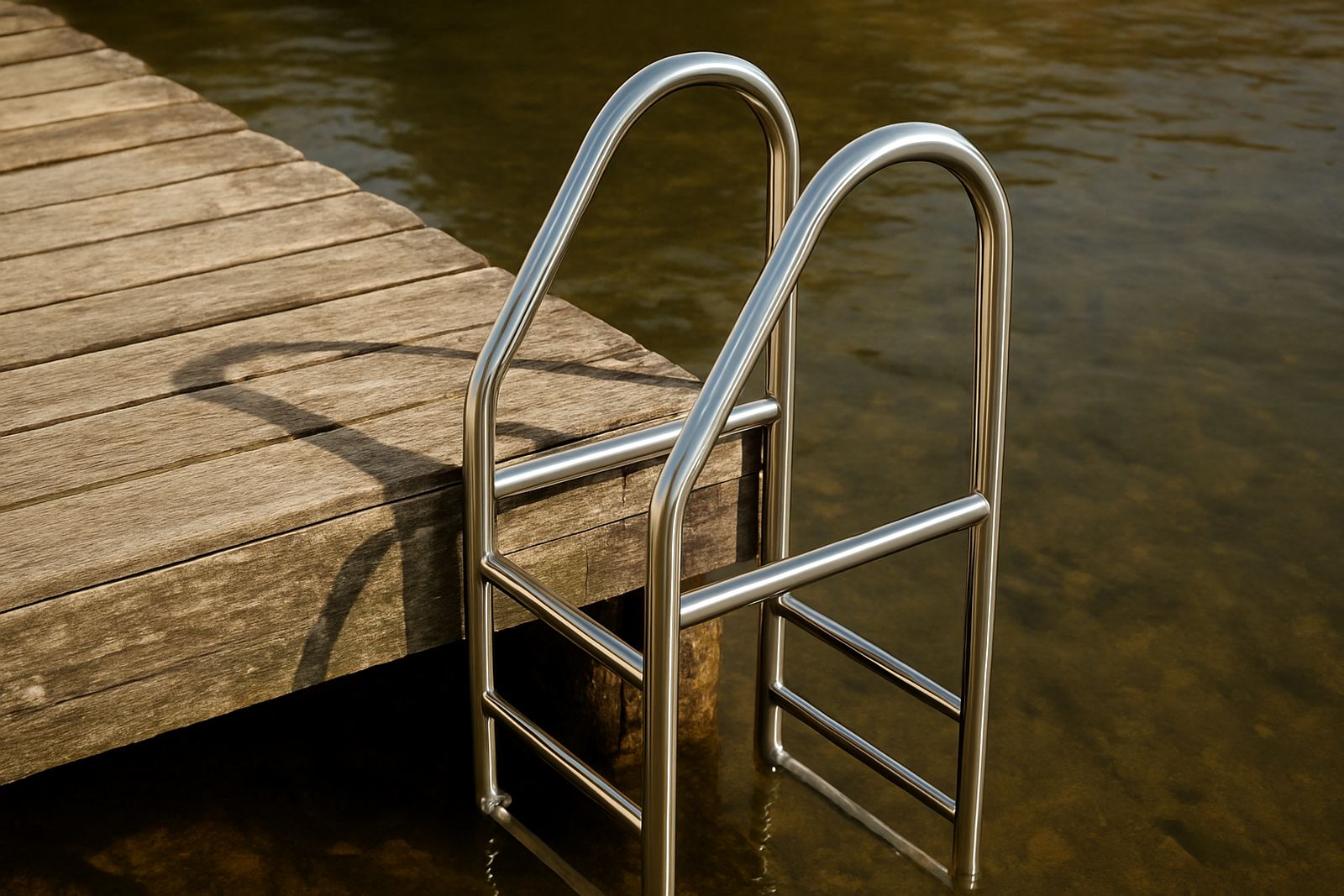
The client was a private property owner with a jetty and river access point near Keurbooms, just outside Plettenberg Bay. They needed a ladder that would give people a safe way to step in and out of the water without taking up much space on the structure.
The brief was straightforward but specific. The ladder had to suit the existing jetty height, sit clear of the walkway, and cope with regular wet use. Because the site is close to the coast, the finish also had to resist staining, surface tea-marking and the general wear that comes with salt air. We were working with a structure that could not be altered too much, so the fixing points had to be planned carefully from the start.
- River access point near Keurbooms
- Compact ladder footprint for a narrow jetty edge
- Safe step spacing for everyday use
- Stainless finish suited to coastal conditions
Measuring the jetty and planning the fixings
We started with a site visit to take measurements on the jetty and check the height from deck level down to the water line. This is always important on a river site because water levels can move with rainfall and tide influence closer to the mouth. We also checked the available edge space, the condition of the mounting area and the safest angle for the ladder drop.
Our workshop team then worked out the ladder profile and fixing layout. The client needed something tidy, not bulky, and simple to use with wet feet. We allowed for hand placement, rung spacing and enough clearance behind the ladder for comfortable footing. It was also important to keep the ladder aligned so it would not twist under load. A little extra time at this stage saves problems later on site, especially where timber or composite jetty surfaces are involved.
- Site measuring done before fabrication
- Fixing positions matched to the existing structure
- Clearance checked for safe movement on and off the ladder
- Angles set to suit the access height, not just the drawing
What we fabricated in the workshop
We fabricated a custom stainless boarding ladder using marine-suited stainless steel sections and closed tube members where appropriate. The ladder was built with smooth edges and evenly spaced rungs so it would be comfortable to use and easier to keep clean. We kept the profile neat and light enough for the structure, while still giving it the strength needed for repeated boarding.
The handgrip and rung positions were set out from the measured site dimensions. We also prepared all fixing points in the workshop so installation would be fast and accurate once we got to site. For a river access point, the finish needs to be practical. There is no benefit in overcomplicating the job if the result is hard to clean or awkward to use. This one was built for real daily handling, not just for show.
- Marine-grade stainless construction
- Custom rung spacing for easy boarding
- Clean welded joints and dressed edges
- Pre-drilled fixing points for faster installation
Onsite installation near the river
We delivered and installed the ladder on site near Keurbooms within two weeks from final measurements to completion. The installation had to be handled with care because access around river structures can be tight, and working over water leaves little room for mistakes. Our site team confirmed the level, aligned the ladder and secured it into position so it sat firm against the jetty edge.
We checked every point after fixing, including the comfort of the first step and the hand clearance. Once the ladder was fitted, we cleaned the stainless and inspected the welds and joints for any marks from handling. The final result was a tidy access ladder that fitted the site properly and did not interfere with movement on the jetty. On a project like this, that practical finish matters more than anything else.
- Timeline: 2 weeks from measure-up to fitment
- Installed to suit the existing jetty structure
- Final alignment checked on site
- Finished and cleaned before handover
Why stainless was the right material choice
Near Keurbooms, even a river-facing structure can deal with coastal humidity and airborne salt. Mild steel would need regular paint maintenance and would start showing corrosion fairly quickly. Stainless steel is the better option for this sort of access point because it holds up well in damp conditions and stays presentable with basic care.
The client wanted a solution that would last without creating extra maintenance work. Stainless is still not magic, it needs washing down now and again, especially in coastal areas, but it gives a much longer service life and keeps the ladder looking neat for longer. That is the sort of practical choice that saves time and money over the years.
- Better resistance to coastal moisture and salt air
- Less maintenance than painted steel
- Good for river, jetty and marina type environments
- Suitable for private and commercial access points
What we would do again on a similar project
If we were doing this same type of ladder again, we would follow the same process: measure on site, confirm the access height carefully, and set out the fixing points before fabrication starts. That is the best way to avoid site rework and to make sure the ladder sits correctly on the structure. For water access work, small errors in angle or height can make a big difference once people start using it.
We would also keep the design simple and strong. A ladder for a river access point should be easy to grip, easy to clean, and easy to inspect later. For future projects around Keurbooms, Plettenberg Bay or any of the Garden Route towns, the same approach applies. Good measuring, sound stainless fabrication and careful installation produce a result that lasts, with no fuss.
- Measure first, fabricate second
- Keep the design practical and easy to maintain
- Allow for wet use and changing water levels
- Check the structure before drilling or fixing
Key facts
| Project | Custom stainless boarding ladder for a river access point |
|---|---|
| Location | Keurbooms, near Plettenberg Bay |
| Material | Stainless steel |
| Service scope | Site measuring, custom fabrication, onsite installation |
| Timeline | 2 weeks |
| Use case | Private jetty and water access |
| Finish | Cleaned and fitted for coastal conditions |