Project brief for a busy Wilderness entrance
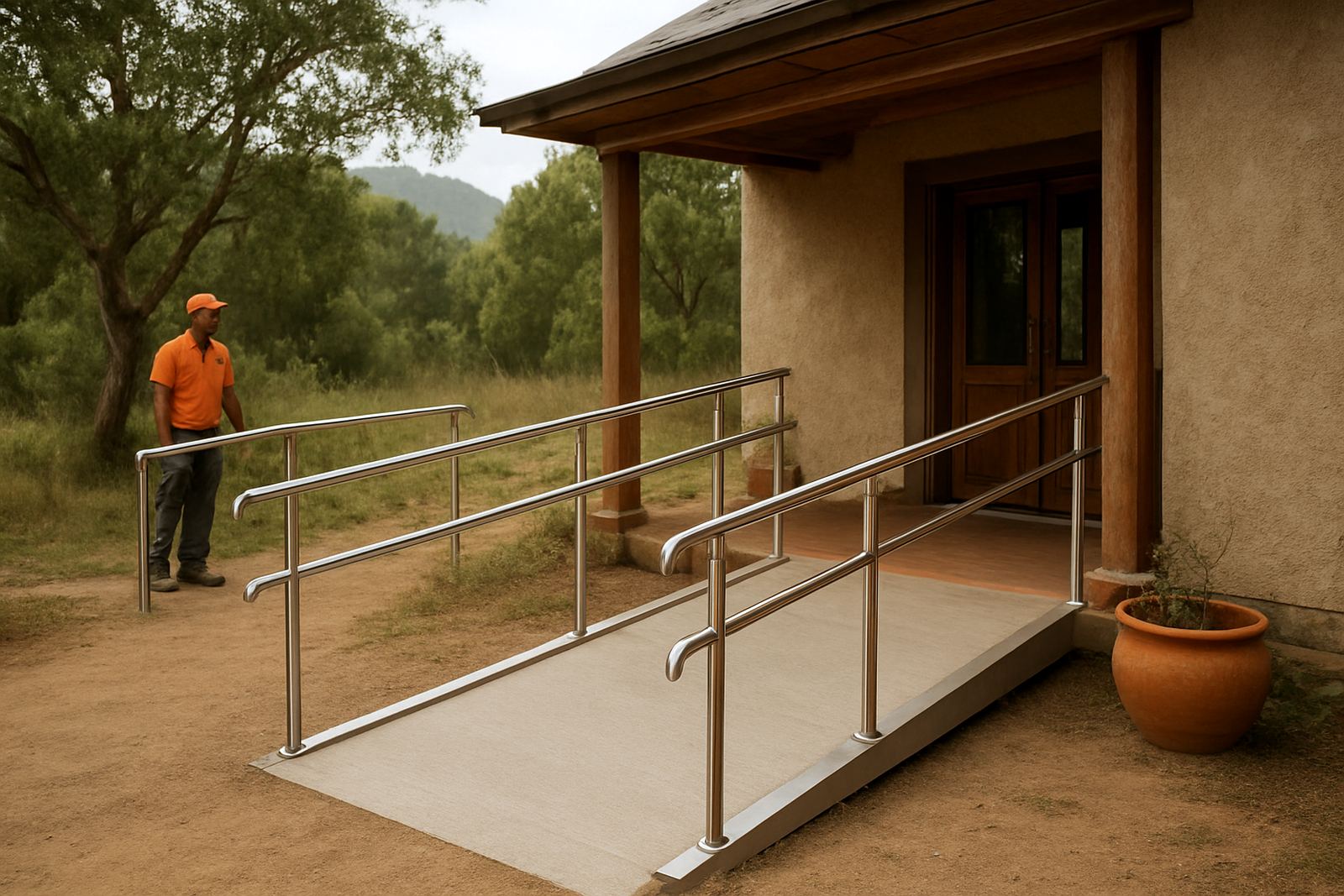
The client needed ramp rails that would help visitors move safely from the parking side into the main entrance, with a finish that would not look out of place on a neat public-facing property. The ramp is used by a mix of older visitors, parents with prams and people who need a steady handhold, so the rails had to feel firm in the hand and be set at a comfortable height.
Wilderness brings its own set of conditions. The site sits close enough to the coast for salt in the air, and the facility stays open to the public through most of the day. That meant the handrails had to handle repeated contact, morning damp, afternoon heat and the sort of wear that comes from people leaning on the same point all week.
We were brought in to measure the ramp properly, confirm fixing points and prepare a rail layout that would keep movement easy without narrowing the usable width too much. The brief was practical from the start: make it safe, keep it tidy, and finish it in a way that would be simple to maintain over time.
What the site allowed and what it did not
There was not much room for error. The ramp already had established edges, and the client did not want heavy visual clutter or posts that would make the approach feel cramped. We also had to work around normal trading hours so visitors were not blocked while we were on site. That meant planning the installation in stages and keeping the work area clean as we went.
The key constraints were slope, fixing position and exposure to weather. We checked the ramp fall, set out the handrail line to suit the incline, and made sure the posts would not clash with the route of foot traffic. Because the site is in a damp coastal pocket, we specified materials and fixing methods that would hold up better than mild steel in the long run.
- Ramp length: approximately 8 m
- Rail sides: one main side rail plus landing returns
- Use pattern: daily public access
- Finish requirement: neat, low maintenance and suitable for coastal air
The owner also wanted the finished rail to look consistent with the rest of the property. We kept the profile clean and avoided unnecessary joints, which helps with both appearance and cleaning.
Materials and fabrication from our Knysna workshop
After site measuring, we prepared shop drawings and set out the rail sections in our Knysna Industria workshop. The handrails were fabricated from stainless tube with welded joints and carefully dressed ends, then trial fitted before the installation date. Using a workshop method lets us check alignment before anything goes on site, which saves time and cuts down on surprises.
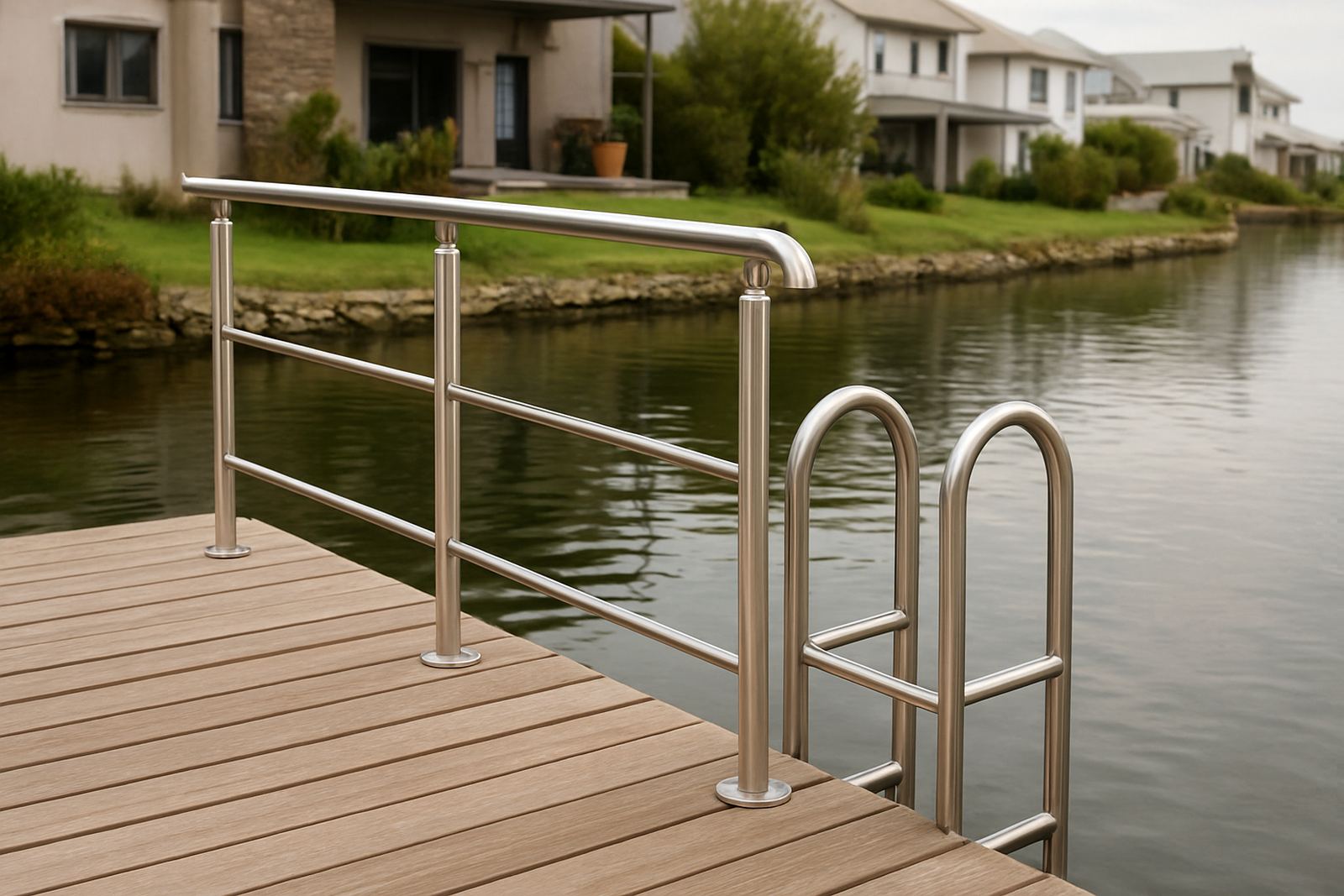
For this job we supplied stainless steel handrails, vertical posts, base plates, fixings and matching returns at the top and bottom of the ramp. The rail height was set for practical public use, and the grip size was chosen so it feels secure without being too bulky. We also made sure the joints were arranged to shed water and not trap grit or salt.
- Material: stainless steel for better coastal resistance
- Construction: welded sections with dressed visible joints
- Fixings: mechanical anchoring into the existing concrete structure
- Hand contact: smooth finish for comfortable grip
Because the site is exposed to rain and sea air, we paid attention to drainage points and edge details. Small choices like that matter over time, especially where municipal and public-facing facilities need to stay presentable with limited down time.
Installation on site without disrupting the public
The installation was completed in a short, planned window over 2 weeks from first measure to final handover. Our site team arrived with the pre-cut and pre-checked sections, then marked out the fixing points and set the posts in line with the ramp edge. Once the anchors were secure, we fitted the rail sections, checked the height again and made sure the hand feel was right along the full run.
Working on a public-facing site means you cannot leave swarf, dust or loose offcuts lying about. We kept the area controlled, swept up as we went and left the access route open once each stage was complete. The client appreciated that, because the facility still had visitors moving through during the day.
There was one minor adjustment on site where the landing return needed a small shift to suit the actual concrete edge, which is common enough on older builds. We adjusted it there and then, and the final fit came together neatly, no fuss.
Result: safer movement and a cleaner finish
The finished ramp rails give users a steady, easy handhold from approach to landing. The rail line follows the ramp properly, and the entry now feels more controlled for anyone who needs support while walking. For the client, that meant fewer concerns about visitors losing balance on the incline and a better first impression at the entrance.
Stainless was the right call here because Wilderness weather can be unforgiving. The rails will still need normal cleaning, but they should hold their appearance well if washed down now and then, especially after wet spells or if the site gets a lot of sea breeze. The overall result is practical, tidy and in keeping with a small public building that must work hard every day.
From a maintenance point of view, the client now has a solution that should not demand constant repainting or patch repairs. That saves time and keeps the access point looking cared for, which matters on a site where visitors form an impression as soon as they arrive.
What we would repeat on a similar project
For a job like this, we would do the same sequence again: measure first, make the sections in the workshop, then install in a short site visit once everything is checked. That approach keeps the work neat and reduces the chance of site delays. It also allows us to plan around weather, public access and delivery timing, which is especially useful along the Garden Route.
We would also keep using stainless for exposed ramp handrails in coastal towns like Wilderness, Sedgefield and Plettenberg Bay. In these areas, the extra cost is often justified by the longer service life and lower upkeep. When a client wants an access point that is safe, presentable and straightforward to maintain, that is usually the best route.
- Best suited to public entrances, clinics, guest facilities and small retail sites
- Works well where salt air, damp and regular foot traffic are expected
- Can be matched to existing concrete, paving or landing edges
Our team would approach another similar ramp the same way, with careful measuring, proper fixing and a clean handover. It is simple work when planned properly, but it still needs the right eye on site. That is where experience counts.
Key facts
| Project | Accessible ramp handrails |
|---|---|
| Location | Wilderness, Garden Route |
| Client type | Small public-facing facility |
| Scope | Measure, fabricate and install |
| Material | Stainless steel handrails and posts |
| Programme | Completed over 2 weeks |