Jetty access that had to work in real coastal conditions
The client was a private homeowner in Knysna who wanted safer access along a jetty used for daily water access, family use and general maintenance around the waterfront side of the property. The existing arrangement needed a proper rail line for balance, plus a ladder that made stepping down to the water much easier, especially when surfaces were damp after early mornings or light rain.
The site sits in a marine environment, so the main concern was not only strength but long term corrosion resistance. We also had to allow for movement, spray and regular washing down. In places like Thesen Island, the finish matters because the fitting is seen every day and any rough edge or messy bracket line stands out. We planned the work around those conditions and kept the layout clean, practical and easy to maintain.
What the brief called for and the site limits we worked within
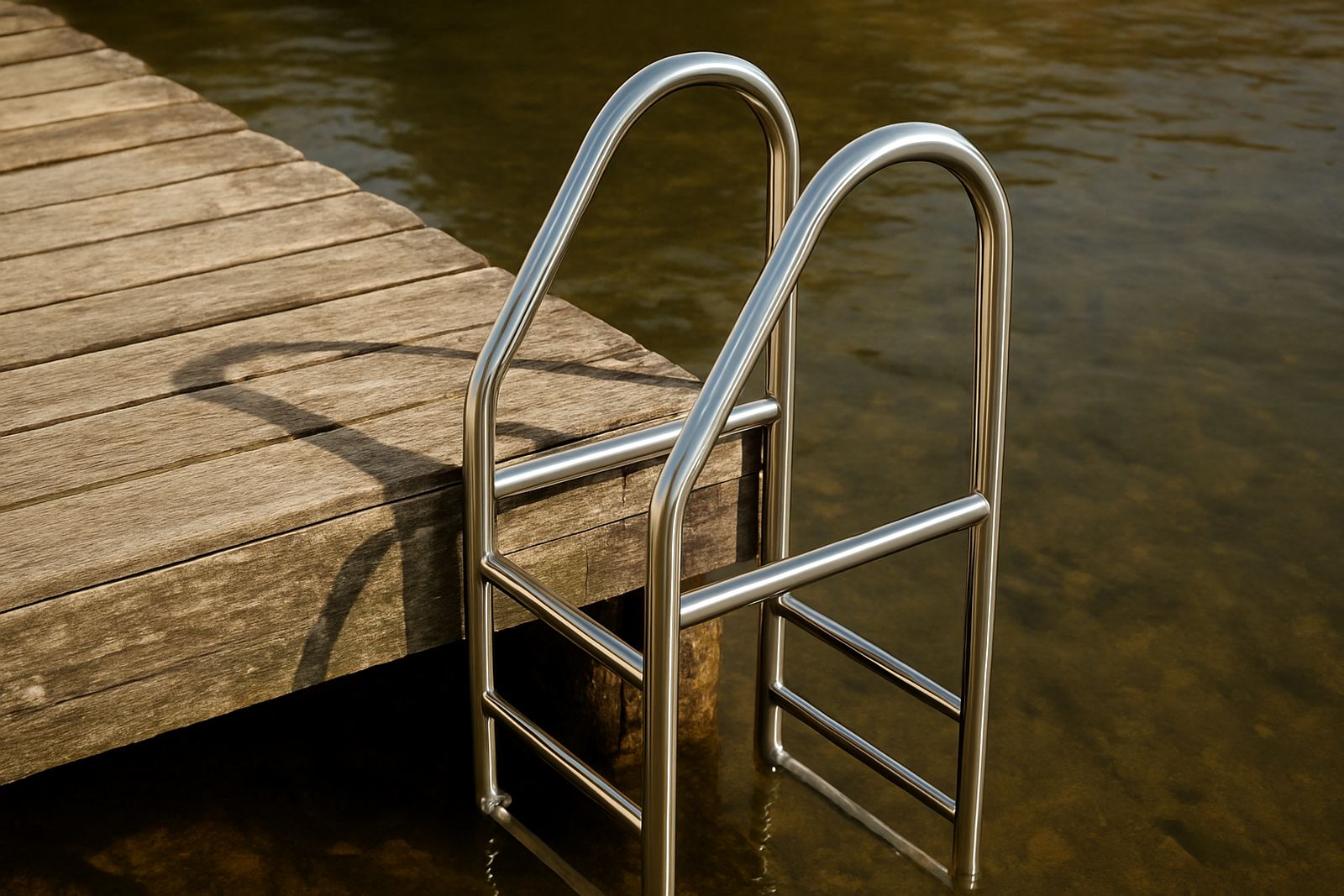
The brief asked for a rail package that would give steady grip along the access edge, plus a fixed ladder with sensible rung spacing and enough projection to make the first step comfortable. The client also wanted something that would sit neatly with the existing jetty structure, without bulky supports or awkward offsets. A neat look was important, but so was safe use for adults and children.
We found the usual site limits that come with waterfront work. Fixing points had to be checked carefully, the working area was tight in parts and the jetty could not be left cluttered for long. Wind and spray also meant we needed to keep the installation clean and avoid any unnecessary handling on site. The measurement work was important here, because a few millimetres out on paper can become a problem once you are standing on a moving edge over water.
- Residential jetty in Knysna
- Marine exposure with regular spray and humidity
- Neat integration with the existing timber and structural lines
- Safe ladder access with practical rung spacing
- Low maintenance finish for long term coastal use
Materials, sizes and fittings supplied for the job
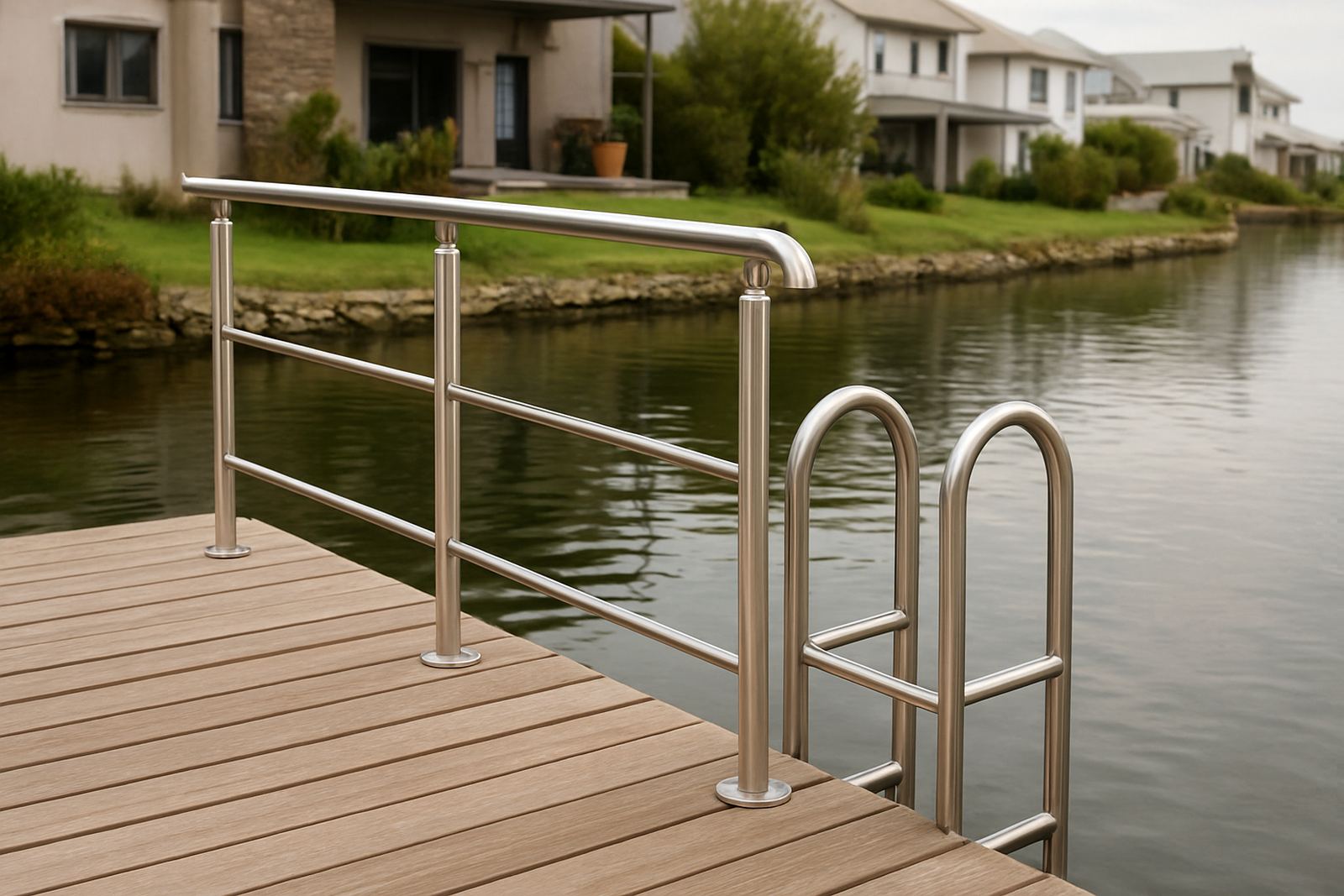
We fabricated the package from marine grade stainless steel suited to coastal conditions. The rail sections were made to follow the jetty line cleanly, and the ladder was built with firm side members and non slip rungs for safer use when wet. All visible fixing points were kept tidy, with a focus on even spacing and good alignment from every angle.
The supply included site measuring, workshop fabrication, fitment of the rail and ladder assembly, and final adjustments on site. Where the structure needed interface detail, we matched the component positions to the existing jetty so the final result looked planned rather than patched in later. We also completed the necessary hardware fitment and checked the installed set-up for movement after fastening.
- Marine stainless rail sections with site specific bends
- Fixed ladder with comfortable access depth
- Brackets and fasteners selected for coastal use
- Careful edge finishing to reduce snag points
- Final alignment check and handover inspection
Measured, fabricated and installed in a short programme
The full programme ran over three weeks from first site measure to final handover. Week one covered measuring and confirming the fixing positions. Week two was spent in the workshop on fabrication, preparation and dry fitting of the parts. Week three covered transport, installation and final adjustment on site.
Because the client wanted as little disruption as possible, we kept the site time tight and arranged the work so the jetty remained usable as soon as the fitting was complete. Our installation lead coordinated the sequence with the workshop team and the site conditions on the day. That sort of planning matters on water facing sites because weather can change fast and small delays can affect the whole day.
After fitment, we checked the rail line, ladder position and all visible joints. We also made sure there were no sharp edges, loose ends or uneven points that could cause a problem during use. The final result was solid and tidy, with no need for follow up rework. The homeowner was happy to have it sorted without the usual back and forth that can happen on custom jobs, which is always a relief.
What changed once the jetty had proper stainless access
The main result was safer everyday use. The rail gave users something steady to hold on to, and the ladder made water access simpler and more confident. The package also improved the overall appearance of the jetty because the fittings now read as part of the structure rather than separate add ons.
From a maintenance point of view, stainless was the right choice. In Knysna’s humid, salt carrying air, ordinary hardware can start looking tired quickly if it is not chosen carefully. This installation was built to stay cleaner for longer and to need less attention between maintenance checks. For a private residential jetty, that usually means less worry and fewer callouts when the weather turns.
- Better grip and safer access along the jetty edge
- Cleaner visual finish on a visible waterfront feature
- Lower maintenance compared with ordinary steel fittings
- Fit for daily family use and occasional service work
What we would do again on a similar waterside job
If we were doing a similar jetty package again, we would keep the same approach: measure properly, keep the fabrication exact, and install with enough time to test each fixing point before handover. On a marine site, there is no benefit in rushing the small details. Good prep saves time later and helps the fitting hold up better over the long run.
We would also use the same approach to the finish. Clean welds, careful dressing of corners and proper alignment are worth the effort because they make the install easier to maintain and nicer to use. For Thesen Island and other waterfront properties around Knysna, Plettenberg Bay and Sedgefield, that practical finish is usually what clients remember most. It looks right, works properly, and does not ask for constant attention.
For Sisonke Stainless, this project fit the way we like to work: local measuring, workshop control, and a tidy onsite handover. That is the kind of job we know well from our Knysna Industria base, and it is the same standard we bring to marine fitouts, balustrades, handrails and custom stainless parts across the Garden Route.
Key facts
| Project | Thesen Island Jetty stainless rail and ladder package |
|---|---|
| Location | Knysna, Garden Route |
| Client type | Private residential waterfront owner |
| Scope | Site measuring, fabrication, installation and final adjustment |
| Materials | Marine grade stainless steel for coastal exposure |
| Timeline | 3 weeks from measure to handover |