Why concrete fixings need more than a standard drill and plug
Concrete looks simple from the outside, but it can vary a lot from one property to the next. A garage slab in Knysna Industria is not the same as a weathered coastal retaining wall in Plettenberg Bay, and that difference changes which fixing will hold a balustrade or handrail properly. We look at the age of the concrete, where the edge is, whether there is reinforcing close to the drill line, and how much movement the finished item will see once people start using it every day.
A handrail on steps takes different force to a decorative guard around a stoep opening. If the fixing is too light, the fastener can work loose over time, especially where vibration, salt air and regular cleaning come into play. If it is too aggressive for the substrate, you can crack the concrete or weaken the edge. The goal is not just to get metal into concrete, it is to get a connection that stays put through years of use and the odd hard knock from furniture or trolleys.
The main fixing types we use on concrete
There is no one-size choice for every job. On site we usually decide between mechanical anchors, chemical anchors, base plates with through-bolting, or a hybrid approach where the fixing is hidden but still fully rated for the load. For older concrete or areas with slight surface damage, chemical anchoring can give better grip because the resin bonds around the stud and helps spread the load. For new, sound concrete, a mechanical anchor can be quick and very dependable when it is installed to the correct depth.
- Mechanical anchors for sound concrete and faster installation
- Chemical anchors for cracked, older or higher-risk substrates
- Through-bolting where both sides of the concrete are accessible
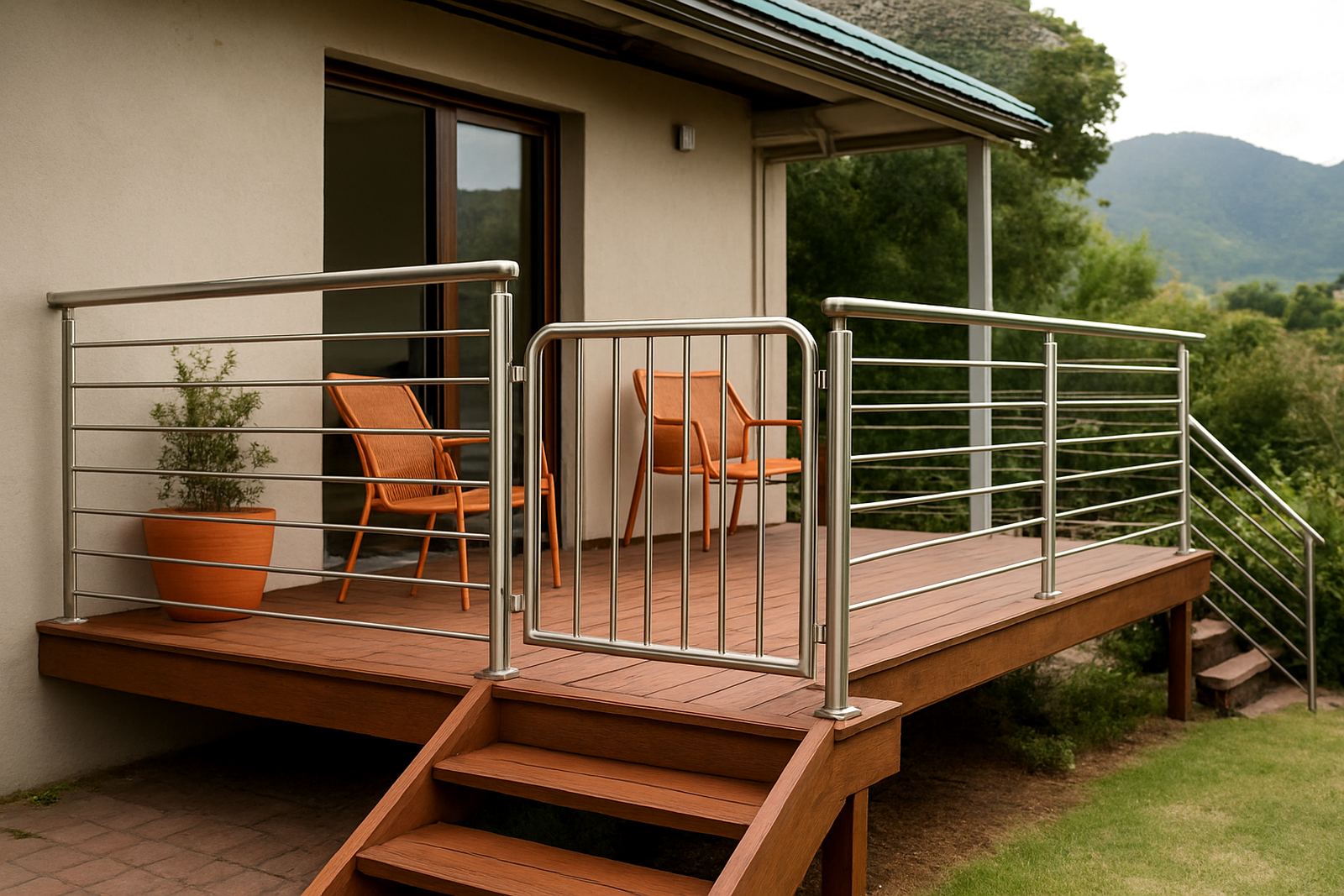
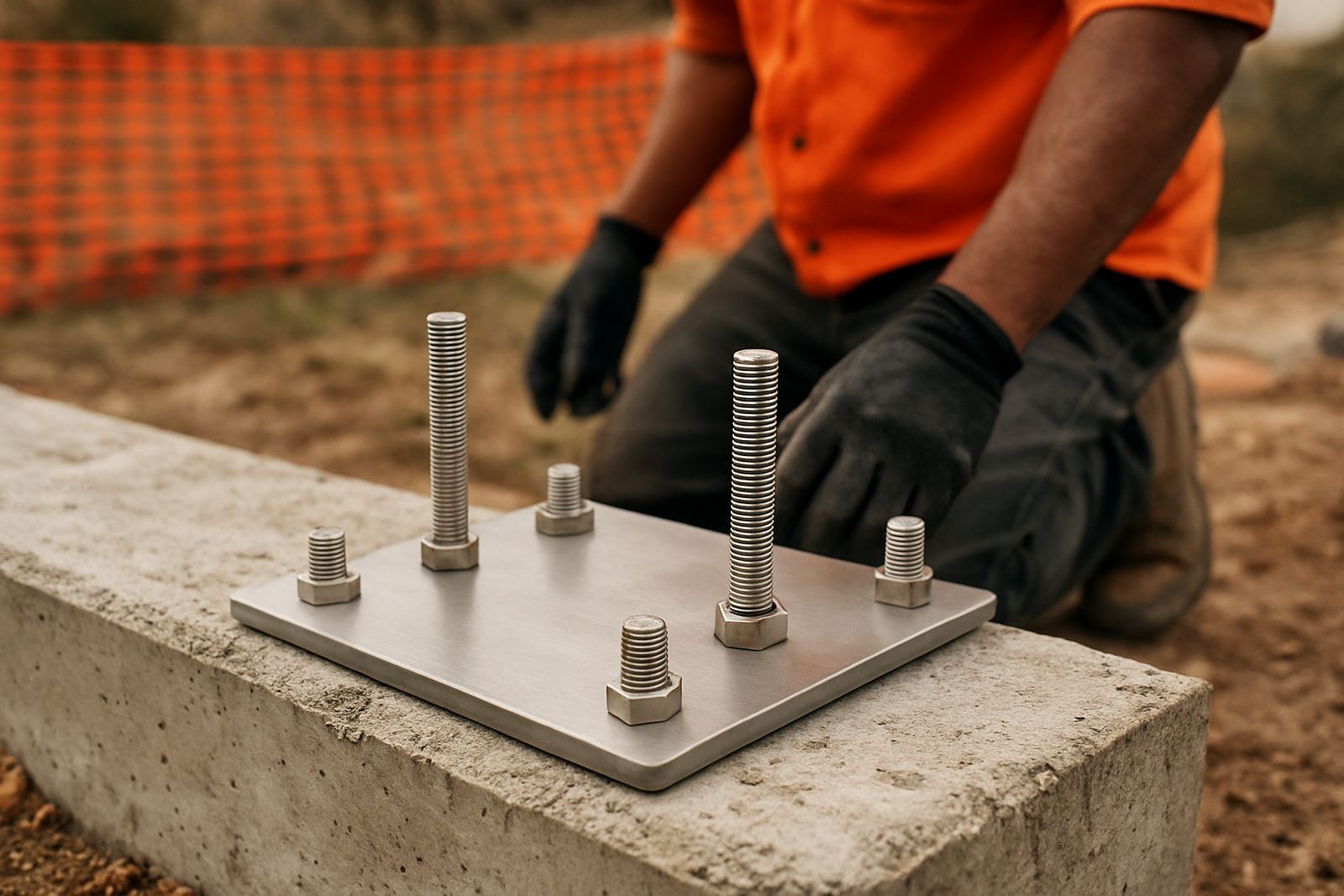
- Base plates with welded posts for balustrades and handrails
- Stainless studs, nuts and washers for coastal durability
The fixing also has to suit the item. A slim handrail bracket does not need the same spread as a heavy gate hinge plate. If the bracket footprint is small, the anchor spacing becomes more important, because the load concentrates in a tighter area. We plan that before fabrication so the finished work matches the concrete rather than forcing the concrete to suit the metal.
What we check before drilling into a slab or wall
Before we drill, we inspect the surface and confirm the line of the structure. On many Garden Route homes, there are hidden pipes, power lines or under-slab services that must be avoided. We also check for hollow spots, weak screed, patch repairs and old bolt holes. A neat-looking area can still have poor holding strength, so we do not guess. We mark the fixing centres after measuring the actual balustrade or handrail position, not before.
It also matters whether the fixing is near an edge or corner. Concrete breaks easier close to the edge, especially on thinner slabs and step treads. Where we see that risk, we may change the bracket position, increase the plate size, or use a different fixing depth. In some jobs we will recommend a small design change at the drawing stage rather than forcing a bad detail on site, because that saves the client from repairs later on.
- Check concrete age, condition and thickness
- Confirm there are no hidden services in the drilling zone
- Measure the actual installed position before marking
- Watch edge distance and existing cracks
- Choose a fixing method that suits the load and exposure
Coastal conditions around Knysna and the Garden Route
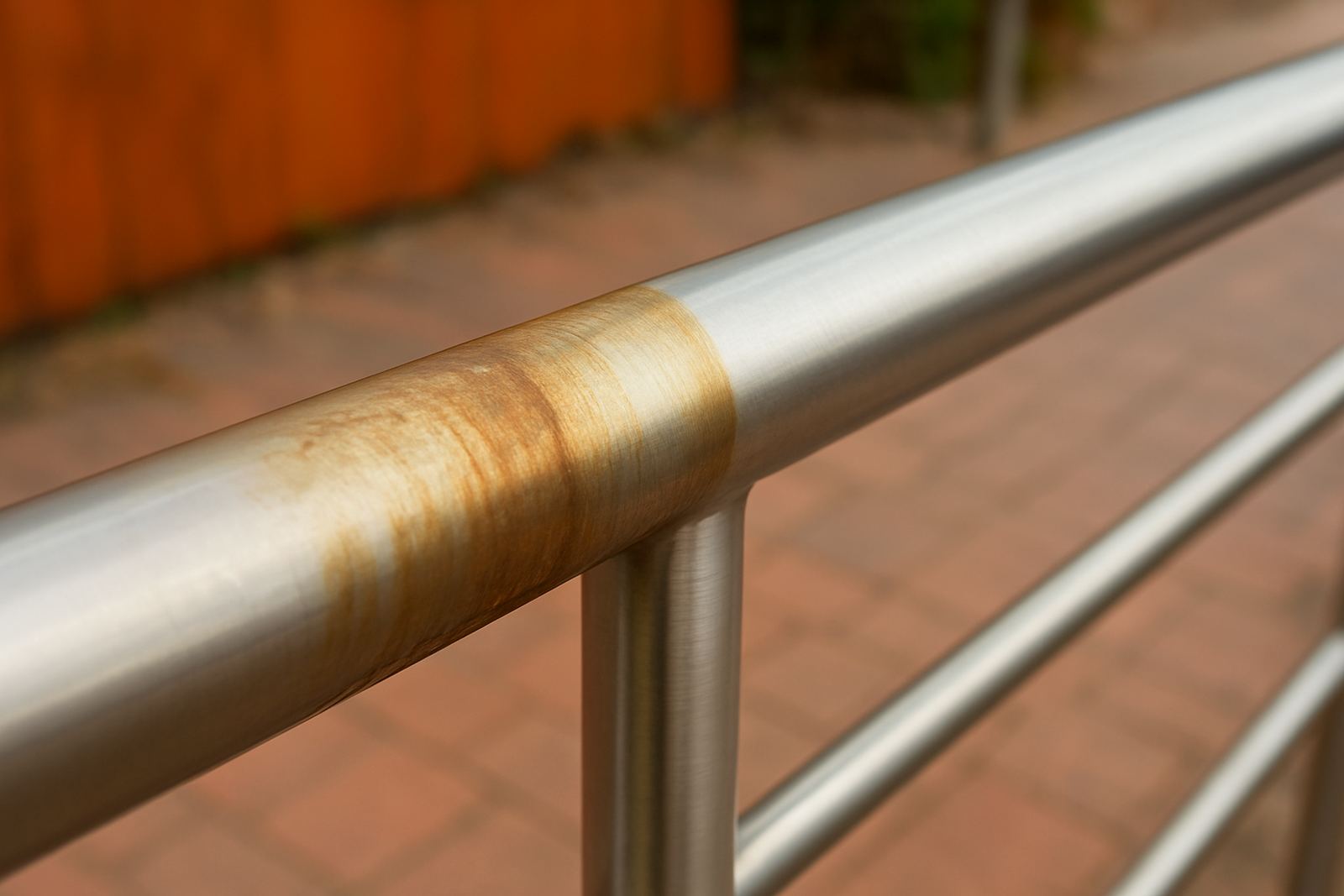
Salt air changes the way fixings behave over time. In places like Sedgefield, Wilderness and Mossel Bay, a fixing that would be fine inland can start staining, seizing or corroding much sooner if it is not suited to the environment. We generally keep to stainless fixings for exposed balustrades and handrails, and we avoid mixed-metal contact where it can be helped. If a carbon steel fastener sits against stainless in a wet spot, you can get staining and deterioration around the connection.
For exterior work we also think about drainage and cleaning. A fixing detail that traps water under a base plate will age badly, even if the metal itself is decent. Small gaps for drainage, good sealing around penetrations, and correct tightening all help. On the coast, the little details matter more than people expect, and a clean install today can still look good years later if the fixing was chosen properly. We have seen jobs where the metal was not the issue, it was the wet concrete around the base that caused the trouble.
A local example from a Knysna step rail
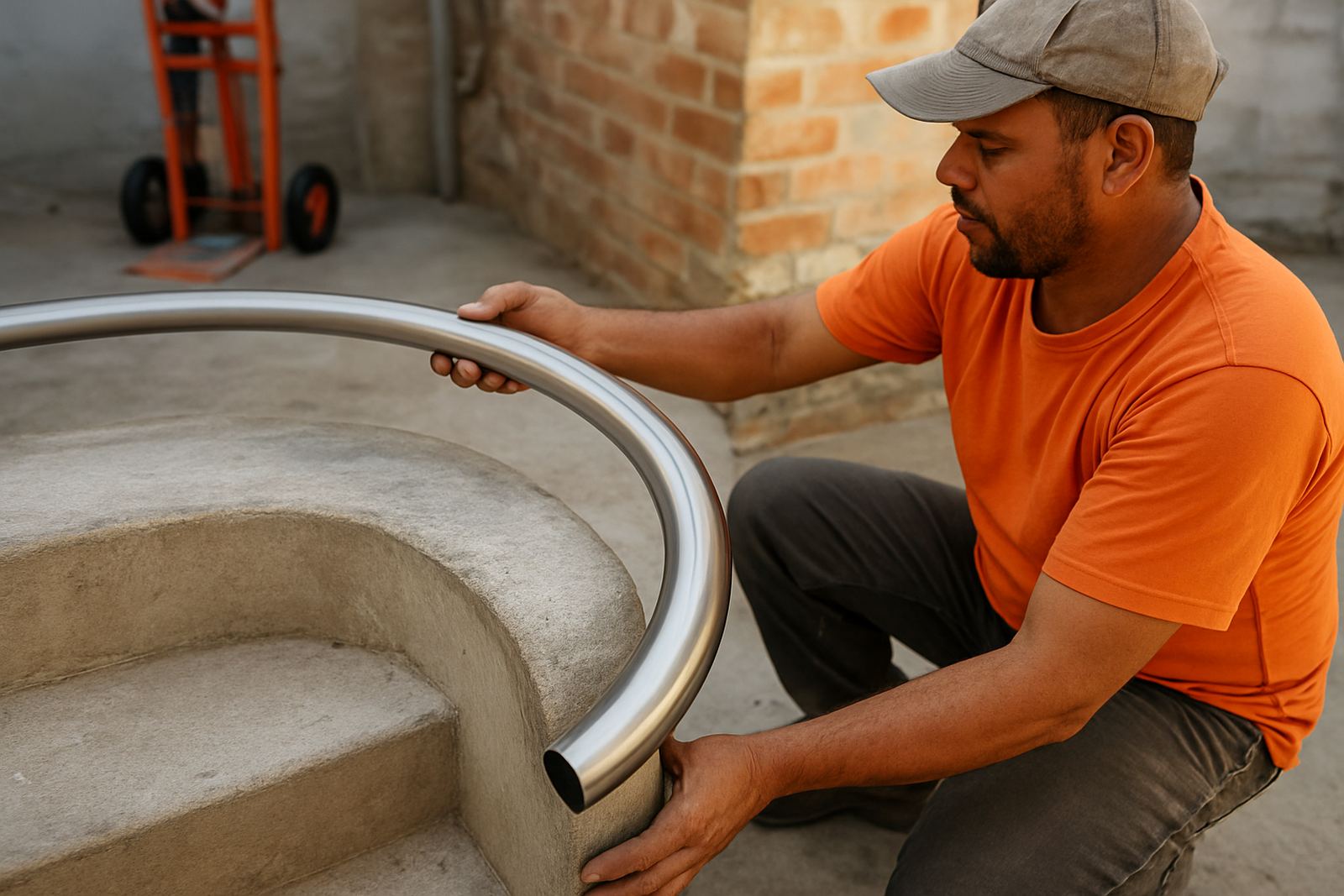
We recently worked on a short stair handrail for a home not far from the Knysna lagoon, where the concrete steps had been poured years earlier and had a few surface hairlines. The owner wanted a neat rail for daily use, but there was also a concern about the coastal moisture and the fact that the steps caught rain from the open side of the house. We first checked the edge distances, then adjusted the bracket positions so each fixing had enough concrete around it to hold properly.
Because the steps were older, we used a fixing method suited to the condition of the substrate, and we set the posts so water would not pool around the base. The final result was simple, practical and easy to maintain. That is usually the best outcome for concrete fixings: nothing fancy, just the right detail in the right place. It saved the client from having to rework the steps later, which is often where the real cost shows up.
How to keep concrete fixings in good shape
Once the balustrade or handrail is installed, maintenance is not complicated. A quick visual check every few months can pick up loosened nuts, cracked sealant, rust marks from other metals, or movement in the bracket. If the fixing is under a covered stoep, it may need less attention than one fully exposed to rain and sea air, but it should still be checked. This is especially important after building work nearby or any hard impact to the rail.
- Check for movement at the base plate after installation
- Look for staining, moisture traps and seal failure
- Retighten fixings if the installation design allows it
- Wash salt build-up off exposed metalwork
- Report any cracking in the concrete early
If a fixing starts to loosen, do not wait for it to fail completely. A small repair on concrete is far easier than replacing a whole rail after the substrate has broken up. On the coast, that kind of small check can make a proper difference.
What we recommend when the concrete is not ideal
Not every slab, wall or step is ready for a simple fit. If the concrete is thin, cracked, badly patched or close to failure, we may suggest a revised fixing layout, a larger base plate, or a different support point altogether. Sometimes the best answer is to spread the load over more points rather than force a heavy bracket into a weak patch. In a few cases, we will advise the client to repair the concrete first, because a fixing can only be as good as what it is holding onto.
For balustrades and handrails across Knysna, George and the wider Garden Route, the right fixing decision comes down to practical site knowledge. Measure first, choose the anchor second, and always treat the concrete as part of the system. That approach gives better results, less call-backs and a cleaner finish for the long term.