Why a curve changes the whole job
A straight handrail can be measured, cut and fixed in sections with predictable results. A curved rail asks for a different approach because every part of the bend affects the next part. The radius, rise, fixing points and end transitions all need to work together or the rail will fight the building rather than follow it.
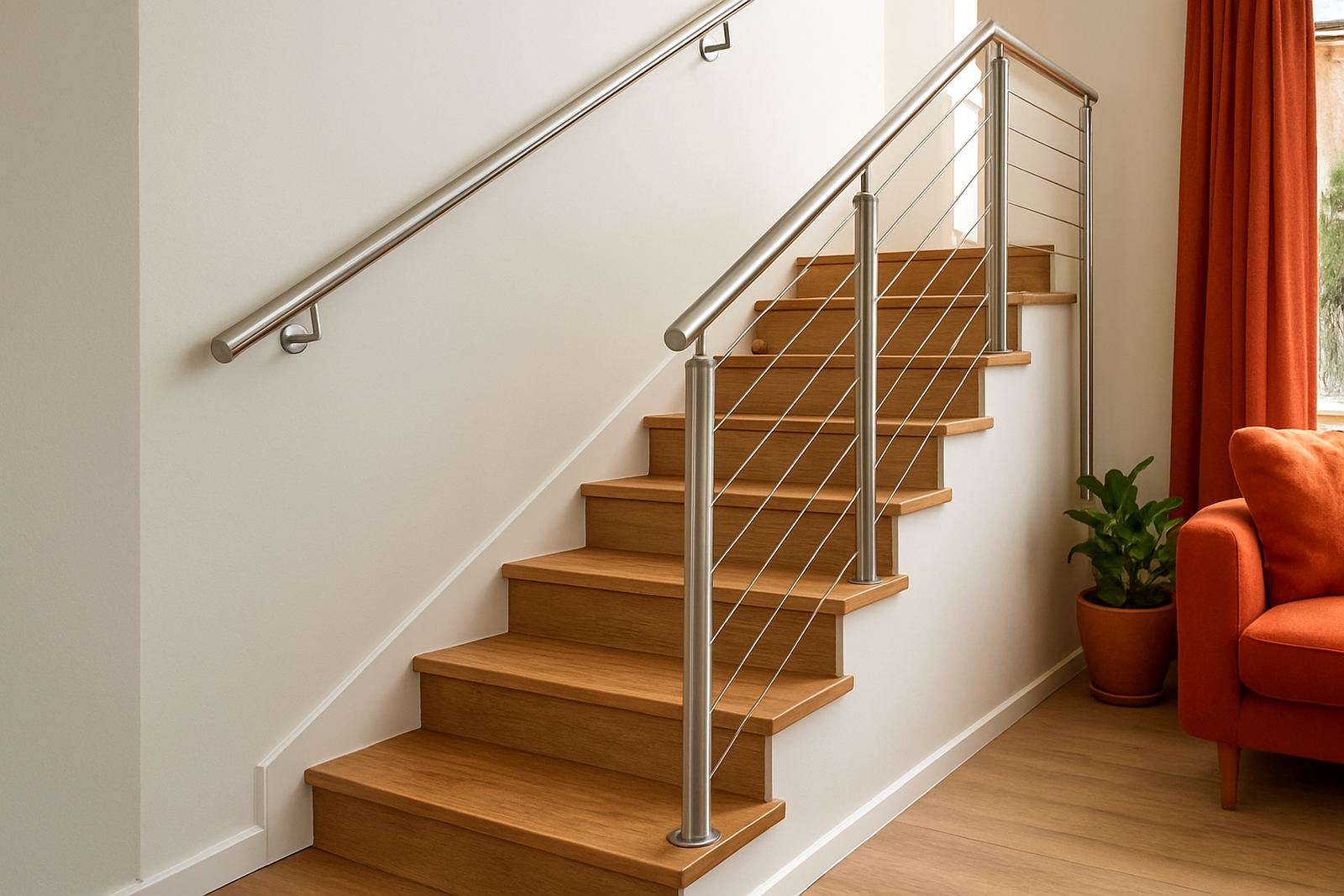
In practice this means more time on site before fabrication even starts. We measure the line carefully, check the walking path and note where the curve begins and ends. On sloped sites in Knysna or Sedgefield, the curve may also need to follow a stair pitch at the same time. That combination is where many problems begin if the job is rushed.
Curved work also shows mistakes more clearly than straight work. A 3 mm error on a short splice can disappear in a straight run, but on a curve it can leave a twist or a gap that catches the eye immediately. Stainless does not hide bad setting out.
Setting out must be done twice, maybe three times
The first challenge is getting the exact shape on paper and then onto the workshop floor. We normally take field measurements, confirm them against the structure and then prepare shop drawings. For curved rail, the drawing is not just a picture. It is the map that keeps the bend true from one support to the next.
Good setting out also helps when the site conditions are less than perfect. In older homes around Knysna central or along parts of the George road, walls are not always straight and steps may have settled over time. If you work off the wall alone, the rail can look wrong even if it matches the wall. The rail must read correctly to the eye and still meet safety rules.
- Check the radius at more than one point, not just at the centre.
- Confirm floor levels before cutting posts or stanchions.
- Mark fixing centres from a single agreed datum.
- Allow for final adjustment at the installation stage.
Fabrication on a bend is slower for a reason
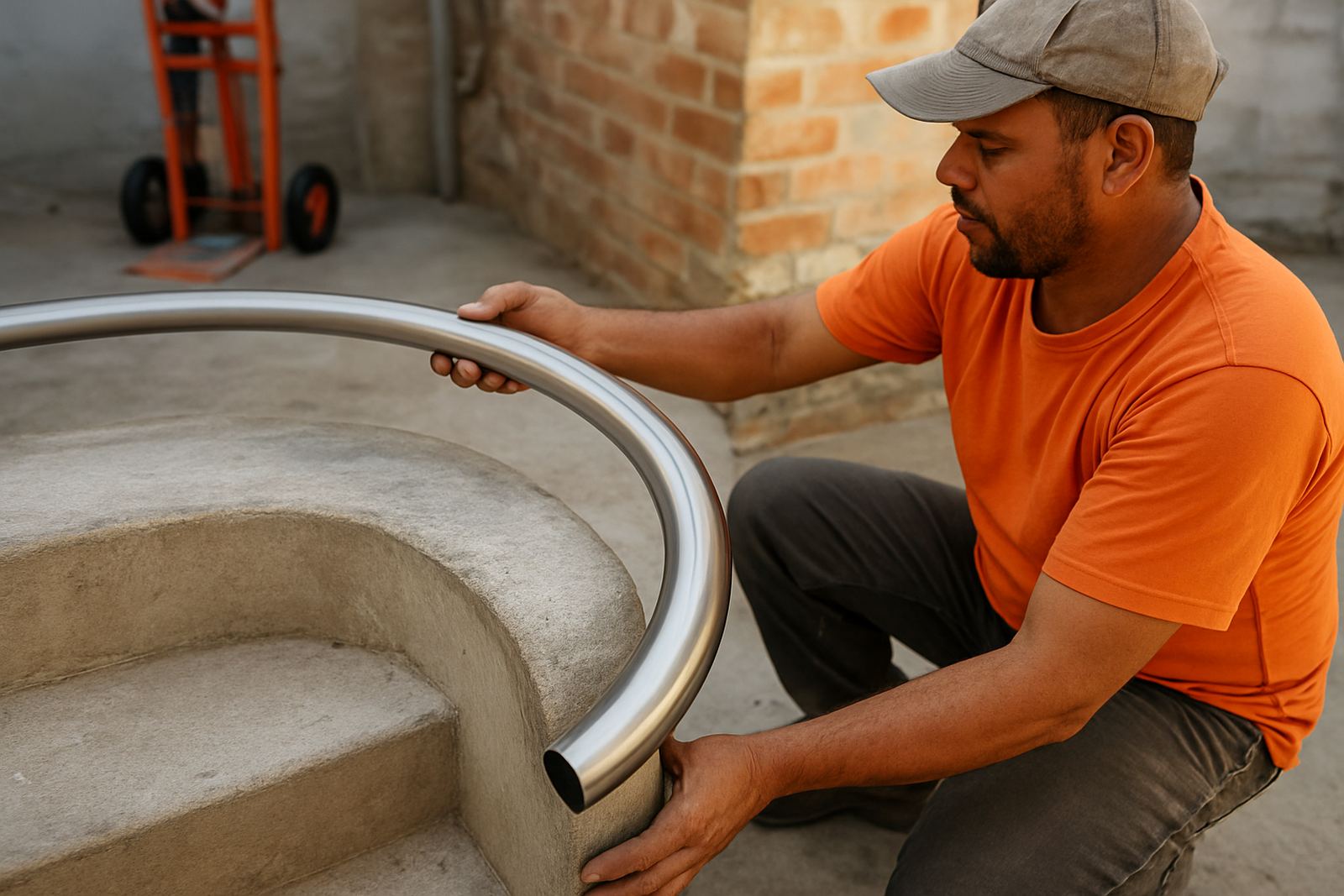
Once fabrication begins, curved work asks for patience. Tubes or sections must be formed without flattening, kinking or pulling the line out of true. The welding sequence matters too, because heat can distort a curved rail faster than a straight one. If the maker is not careful, the bend can move during welding and the final fit becomes a struggle.
At our Knysna Industria base, the team checks each section against the drawing before assembly. Luyanda Ngesi oversees the workshop sequence so the bend stays consistent while the smaller fittings are added. That extra checking may feel slow, but it saves time later on site. A curved rail that is forced into place often needs rework, and rework costs more than doing it right first time.
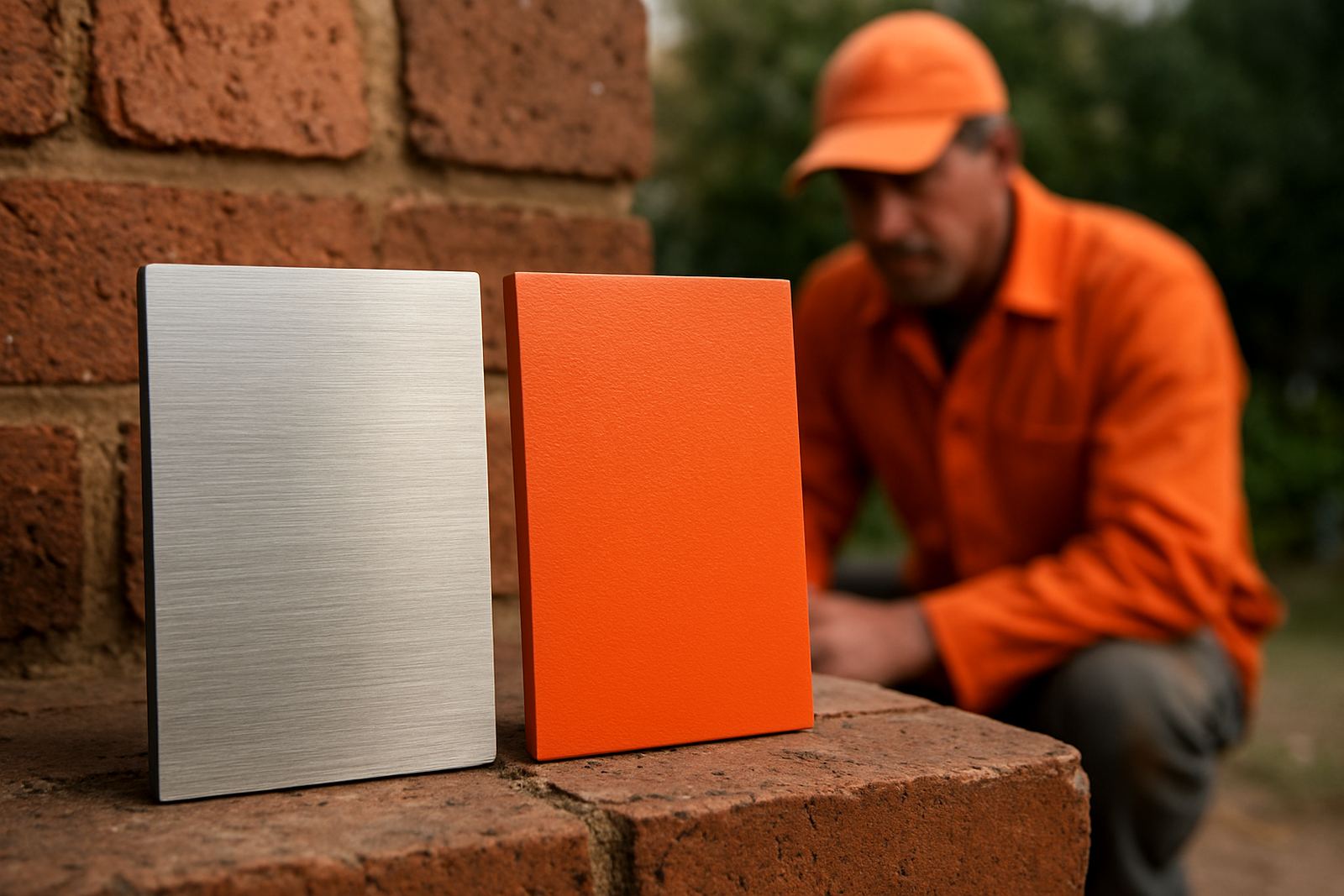
Finish prep is another issue. On stainless, weld cleaning and surface restoration must be done properly because a curved handrail catches light from many angles. Any dull patch, heat mark or grinder line stands out. On coastal jobs in Plettenberg Bay or Mossel Bay, that finish matters even more because salt air exposes poor workmanship quickly.
Fixings and supports decide whether the curve feels solid
A curved rail can look beautiful and still feel loose if the supports are not set correctly. The spacing between posts, the fixing method and the base material all affect the feel of the final handrail. In some cases the curve needs extra support at the start, at the change of direction or where people naturally lean harder, such as the landing at the top of a staircase.
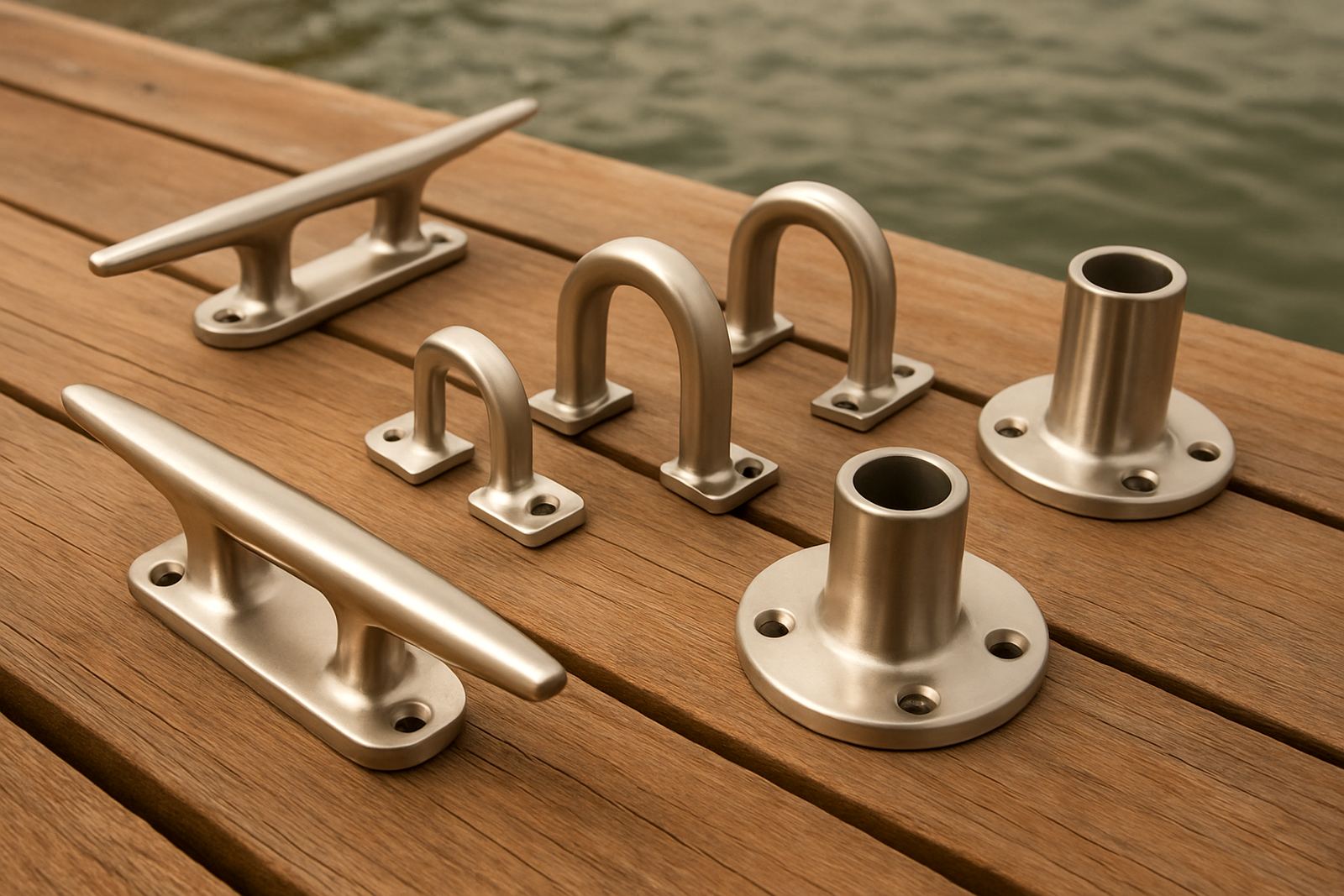
We also think about how the rail will be used day to day. A family home is one thing. A guesthouse balcony, marine walkway or commercial entrance is another. Where there is heavy use, we look closely at gate hardware fitment, wall anchors and corrosion exposure. On the coast, a fastening that is acceptable inland may not last the same way near the ocean.
- Use fixings suited to the base material, not just the rail.
- Keep post spacing consistent so the curve reads cleanly.
- Check that hand contact points feel natural along the full run.
- Allow access for future maintenance and inspections.
Local conditions around Knysna add pressure to the detail
Garden Route conditions change the way stainless work performs. High humidity, salt in the air and driving rain can expose small defects. In winter, moisture sits on fittings for longer. In summer, strong sun can highlight any mismatch between sections. A curved rail on an exposed deck in Wilderness does not have the same demands as a sheltered interior stair in town.
Load-shedding can also affect planning. If the workshop loses power during a fabrication stage, the team needs to know exactly where every cut and weld stands before switching off. That is why careful records, marked parts and organised sequencing matter. Curved rails are not forgiving of lost pieces or guessed measurements.
Municipal requirements matter too, especially where a rail forms part of a balustrade on a balcony, public access point or commercial property. The height, spacing and fixings must meet the applicable safety requirements. The safest approach is to measure properly, fabricate to spec and leave enough adjustment for installation without weakening the finished line.
A Knysna example: when the view and the structure disagree
A recent curved rail job in the Knysna area started with a simple brief. The client wanted a stainless balustrade to follow a curved edge along a raised deck with a strong view over the water. The structure underneath was not perfectly even, and the outside edge opened slightly as it moved away from the house. That meant the rail had to follow the deck line without looking bowed or pinched.
The solution was to measure the curve in sections, confirm the fixing points and build the rail with controlled allowances for final alignment on site. The result looked calm and continuous, but that outcome came from a lot of small decisions. If we had treated it like a straight run, the ends would have landed badly and the spacing would have drifted before the middle.
That is the real difference with curved work. It is not just more material. It is more thinking, more checking and more care at each stage. Siyabonga Mthembu and the Sisonke Stainless team handle those jobs with the same practical rule every time: measure properly, fabricate to the line, and install so the rail feels right in the hand as well as the eye.
What to ask before you approve a curved rail quote
If you are comparing quotes for a curved stainless rail, ask questions that reveal how the job will be managed. A lower price is not useful if the rail arrives on site too stiff, too loose or impossible to fit without cutting into the finish. The best quote is the one that shows a real plan for the curve.
- Will the site be measured before fabrication starts?
- Are shop drawings included for approval?
- How will the bend be formed and checked?
- What allowance is there for final adjustment on site?
- Will the same team that fabricates also handle installation?
These questions matter because curved stainless work is a sequence, not a single task. When the sequence is right, the rail feels natural and lasts well in local conditions from Knysna to George. When it is wrong, even a small curve can become a costly correction.