Why stainless steel still marks near the sea
Stainless steel resists corrosion because of its protective surface layer, but that layer can be affected by salt air, iron particles from nearby work, cement dust and poor cleaning after installation. In coastal towns like Sedgefield or Mossel Bay, even a handrail that looked perfect on day one can pick up tea staining within months if it sits near spray, timber tannins or blocked drainage.
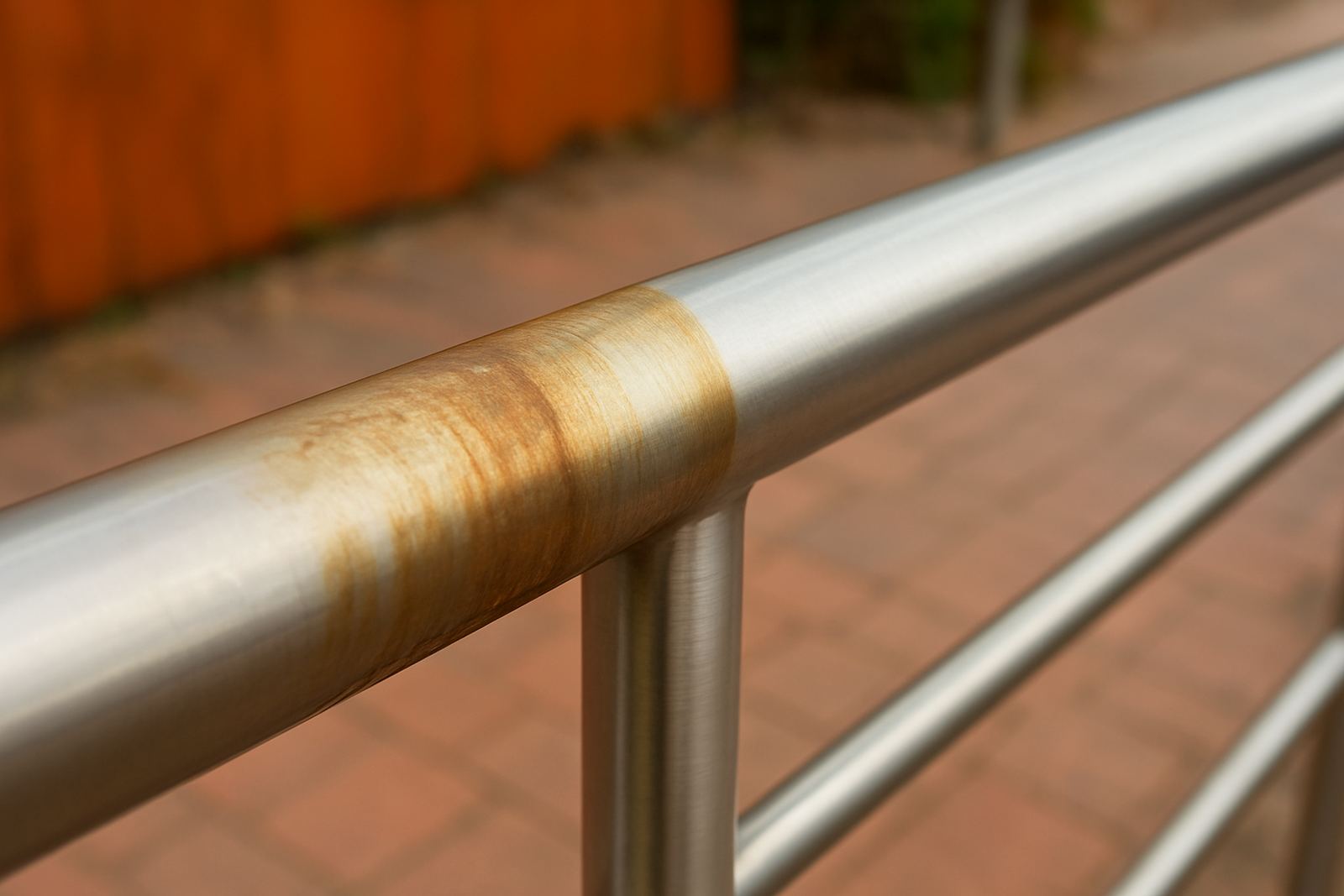
The key point is simple: surface rust is often contamination sitting on top of the metal. If the stain is light and the steel has not been deeply pitted, there is a good chance it can be removed and the finish can be kept serviceable without replacing the part.
Check the stain before you reach for chemicals
Before cleaning, look closely at the affected area in daylight. If the mark is orange-brown, patchy and mostly on the surface, it is usually tea staining or light contamination. If you can feel deep pits, flaking, rough edges or bubbling around welds, that is more serious and may need repair or replacement.
- Wipe the area with clean water and a soft cloth first.
- Check if the stain returns after drying.
- Look at welds, cut edges and drilled holes, these are common problem points.
- Inspect nearby carbon steel tools, angle grinders or drill bits that may have transferred iron particles.
If the stain is localised around a fitting, hinge or bracket, the source is often the real issue. Cleaning the stain without fixing the cause means it will come back, sometimes in only a few weeks.
Safe cleaning steps for light surface contamination
For light staining, start gently. Harsh treatment can scratch the finish and make future cleaning harder. Use clean water, a soft cloth and a mild detergent first. Rinse well, then dry the surface so no salt remains on the steel. On brushed finishes, always wipe in the direction of the grain.
For more stubborn tea staining, use a cleaner suitable for stainless steel and follow the instructions carefully. Test on a small area first. Never use wire wool, ordinary steel brushes or coarse abrasives, because they can leave iron behind and cause more staining later. If you need to use a non metallic pad, keep the pressure light and even.
- Wash off salt and dirt before any polishing.
- Use dedicated stainless cleaning cloths, not workshop rags with carbon steel dust.
- Rinse and dry fully after cleaning.
- Do not use strong bleach based cleaners on stainless fittings.
A neat finish matters. A quick rub with the wrong pad can turn a small stain into a wider dull patch, and that makes the job look untidy even if the rust is gone.
When polishing is enough and when you need repair
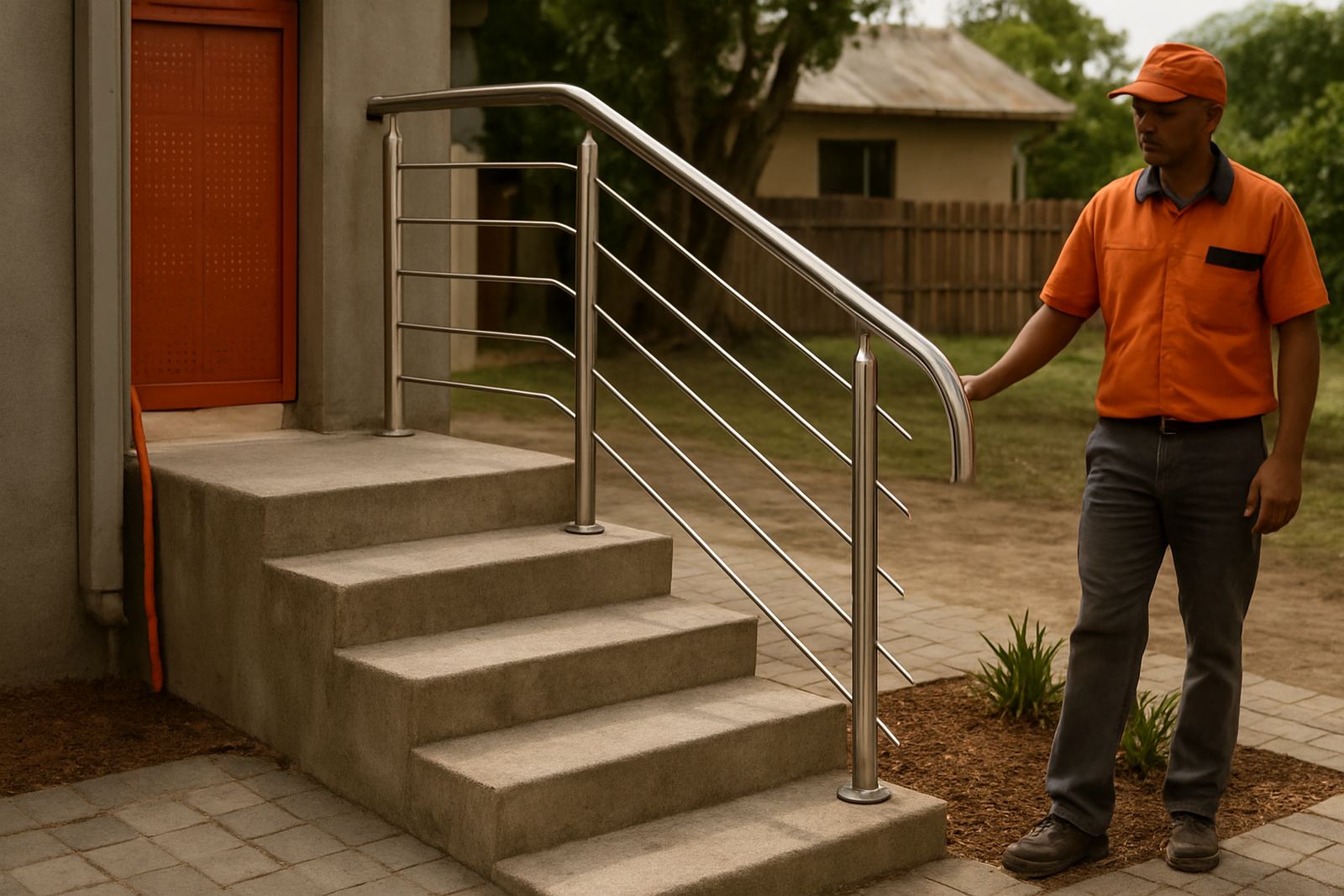
If the rust is only on the surface, polishing can restore the look quite well. This is common on balustrade posts, handrails, gate frames and marine fittings where salt settles but the metal is otherwise sound. The cleaning should remove the discolouration without thinning the part.
If the steel has pits, cracked welds or areas where moisture sits behind brackets, polishing alone will not solve it. In those cases the contamination has already worked its way into damaged areas. That is where inspection, grinding back affected sections or replacing small components may be the better option.
At our Knysna Industria base, we see this often on coastal properties where a balustrade was fitted close to a braai area or where irrigation spray hits the bottom rail. The fix is not always expensive, but it has to be done properly.
A Knysna example from a coastal balcony
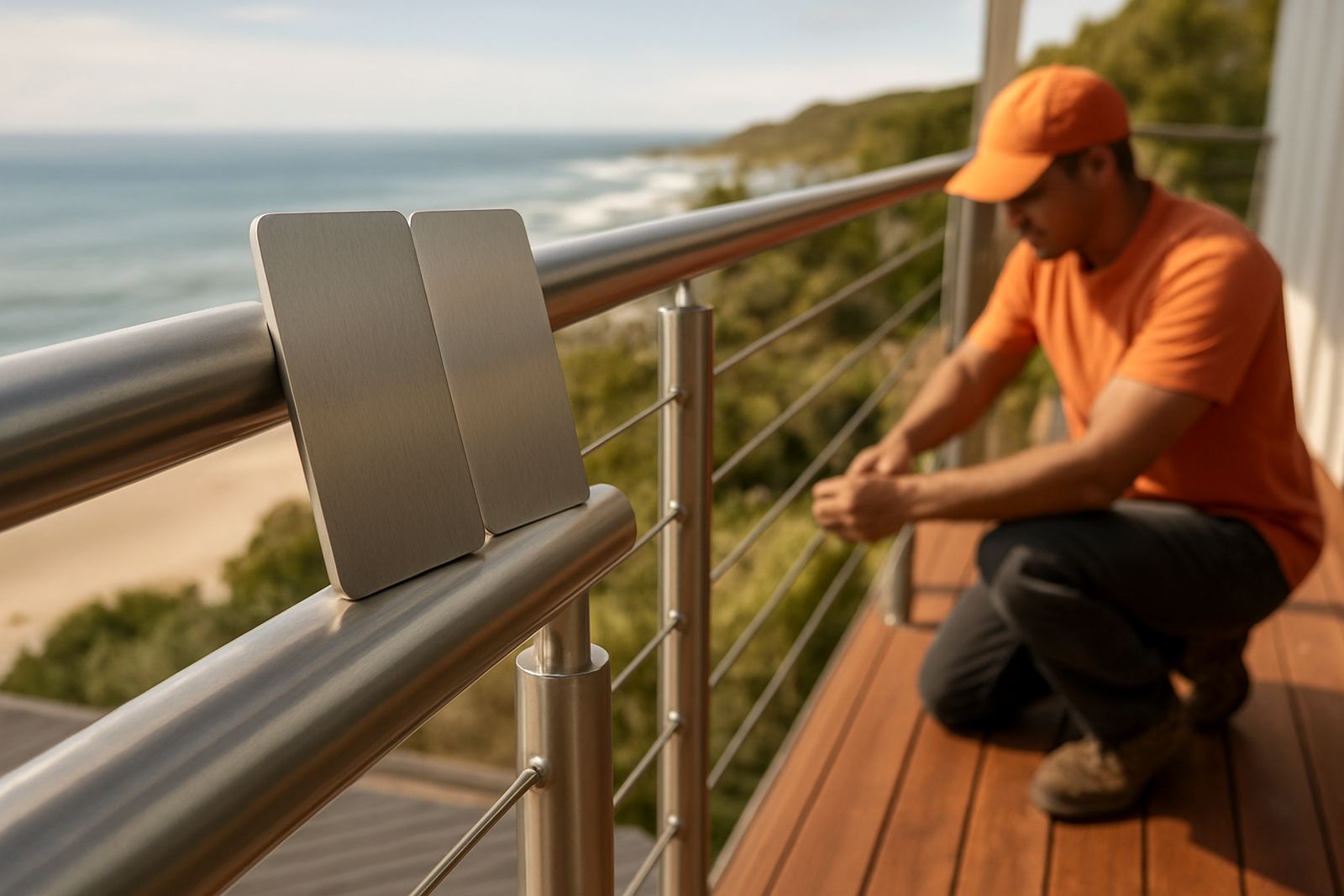
We recently looked at a balcony handrail on a property between Knysna and Buffalo Bay. The owner had noticed brown spotting around the lower sections after winter rains and windblown salt. At first glance it looked like the whole rail had failed, but the marks were mostly surface contamination around fasteners and a few welds.
We cleaned the affected areas, checked the joints, and found that rinse water from above was drying on the rail instead of running off. Once the staining source was identified, the owner adjusted the drainage above the balcony and committed to a simple wash down routine every few weeks. The rail was left in good condition, no need for a full replacement.
This kind of case is common across the Garden Route. The steel itself was fine, but the environment needed a bit of attention.
How to stop tea staining coming back
Once the stain is removed, prevention matters more than the polish. Coastal stainless needs regular washing, especially after strong wind or long wet periods. A quick fresh water rinse can make a big difference on gates, handrails and exposed brackets. If the property is near the sea, near a pool or next to a workshop with grinding work, check it more often.
- Rinse salt off regularly with clean water.
- Keep drainage clear so water does not sit on flat sections.
- Avoid mixing stainless parts with carbon steel offcuts or tools during maintenance.
- Inspect fixings after storms, load shedding repairs or building work nearby.
- Book maintenance checks for fittings exposed to heavy weather or marine air.
For commercial sites, schools and apartment blocks, a simple planned wash down can save a lot of repair work. It also keeps the finish looking right, which matters on visible entrances and stair rails.
When to call in a fabricator
If the stain keeps returning, if the finish is badly marked, or if you can see damage around welds and joints, it is worth getting a stainless fabricator to inspect it. The problem may be poor fitment, unsuitable hardware, trapped moisture or contamination from earlier work. In those cases, a proper assessment can prevent repeat failures.
Sisonke Stainless works from Knysna and covers Plettenberg Bay, Sedgefield, Wilderness, George and Mossel Bay. We handle site measuring, surface restoration, repairs and maintenance checks for balustrades, handrails, gates and custom stainless parts. If you need a clean-up, a fix or a second opinion on a stained fitting, it is better to sort it before the rust gets deeper.