Why tight sites need a different gate plan
Many properties in Knysna, Sedgefield and Plettenberg Bay have short driveways, side passages or boundary walls that leave very little room for a gate to move. If you choose the wrong opening style, the gate can block parking space, foul a wall, or force you to keep reversing in and out at an angle. On a narrow site, those small frustrations add up fast.
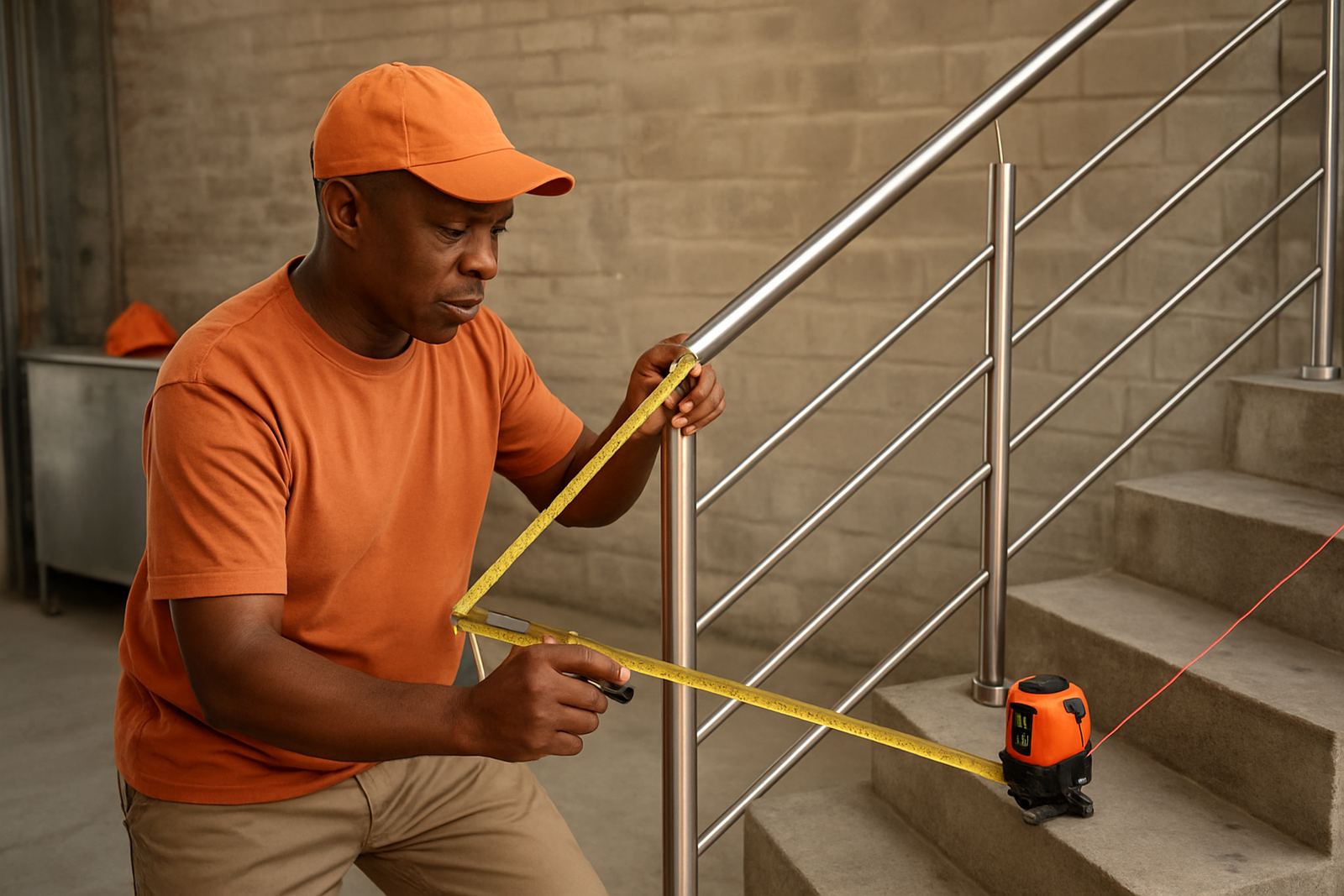
The first question is not which gate looks better, but what the available space allows. Measure the clear opening, the turning room inside the yard, the slope of the driveway, and where a vehicle stops before the gate. If there is a pedestrian path or a second vehicle bay, that affects the answer too. A good layout should suit daily use, not just the front view from the street.
In coastal towns, you also need to think about wind and corrosion. Salt air near Wilderness and Mossel Bay can be tough on fittings, so the gate design should leave room for proper hinges, rollers or track gear and allow for maintenance checks later.
When a swing gate still makes sense
A swing gate works well if the site has enough clear space for the leaf to open inward or outward without hitting cars, walls or planting. For small homes, a single leaf is often easier than a wide double leaf because it needs less hardware and fewer moving parts. If the driveway is short but there is room beside the entrance, a swing gate can still be a practical choice.
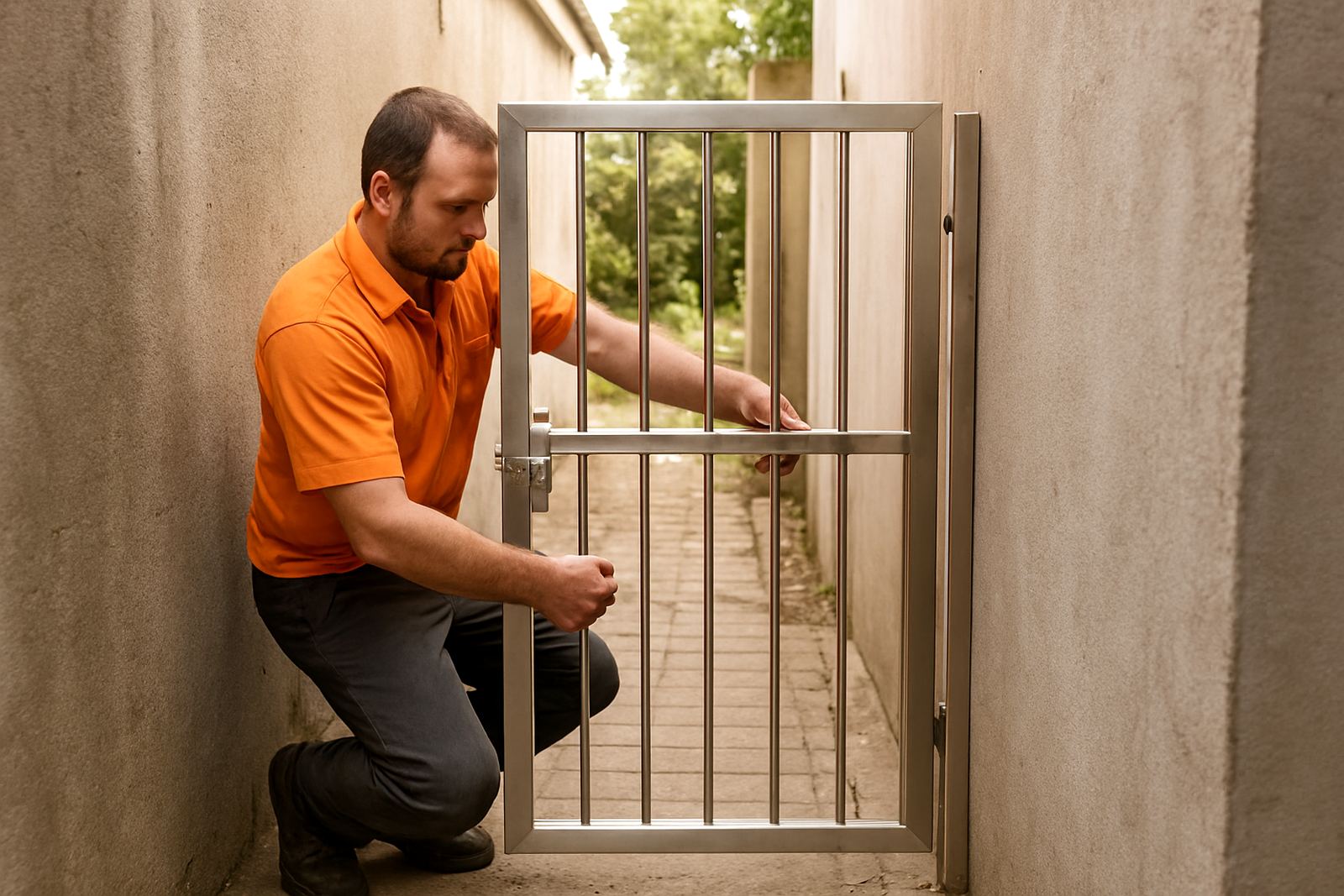
Swing gates are often used where the ground is fairly level and the opening area stays clear. They can be fitted with a pedestrian wicket section, a lock box, or a simple latch depending on the security needs of the property. For custom stainless gates, the fabrication can be kept neat and plain, which suits modern homes as well as older properties in town.
- Works best where there is open space inside or outside the boundary
- Can suit a smaller opening if the leaf width is kept sensible
- Needs careful hinge alignment to avoid dragging on uneven paving
- Should be checked for clearance around lights, walls and water pipes
Where sliding gates solve the problem
Sliding gates are usually the better option when there is no room for a leaf to swing open. On a tight side passage or a short driveway, the gate moves along the boundary instead of taking up precious parking space. That makes them popular for town plots in George and compact coastal homes where vehicles need to stop close to the entrance.
A sliding gate needs enough side runback for the full width of the gate plus a little extra for stops and hardware. If there is a wall, planter or fence line already in place, that space must be clear and level. The track or cantilever arrangement should match the site conditions. On a sandy or leaf-covered driveway, for example, a track needs more attention than a raised system because debris can build up and affect movement.
For security, a sliding gate can be a strong fit because the gate does not rely on a wide opening arc. That said, it still needs correct footing, proper support posts and a practical manual release if power is off during load-shedding.
What to check before you choose hardware
Good gate performance starts long before fabrication. The site measure should record not only the opening width but also the slope, wall positions, paving levels and the condition of the existing posts. In many cases the old posts are not straight enough for new hardware and need to be replaced or reinforced.
It also helps to think about the daily load on the gate. If the property gets delivery vehicles, school runs or contractor traffic, the hardware needs to cope with repeated use. A gate for a holiday home in Sedgefield may have different needs from a busy business yard in Knysna Industria. The finish matters too because coastal humidity can mark cheap fittings quickly.
- Clear opening width and available runback space
- Ground level changes, slopes and drainage lines
- Vehicle type, turning angle and parking position
- Manual operation during power cuts and routine maintenance access
- Compatibility with locks, latches, motors and gate stops
A Knysna example from a narrow side entrance
We recently looked at a narrow side access in Knysna where the owner needed vehicle entry but had only a short run between the boundary wall and the neighbour’s fence. A double swing gate would have opened into the parking area and made turning in difficult. The better answer was a sliding layout with enough side runback inside the boundary, plus a smaller pedestrian opening for everyday use.
The site also had a slight fall toward the street, so the gate had to be measured carefully to avoid scraping at the lowest point. The fitting team checked the line of the paving, the wall returns and the lock position before fabrication started. That extra care meant the gate opened cleanly and did not block the garage access. It was a simple fix, but it needed the right layout from the start.
That kind of job shows why tight sites should be treated as measuring jobs first and fabrication jobs second. Once the wrong opening style is chosen, the install becomes harder and more expensive than it should be.
How stainless steel helps on coastal properties
Stainless steel is a practical choice for gates close to the sea because it handles moisture and salt better than many common alternatives. In places like Wilderness and Mossel Bay, fittings can corrode fast if the material choice is poor or the finish is left rough. A properly made stainless gate, with tidy welds and the right hardware, gives a cleaner result and is easier to keep in service.
That does not mean every part of the gate must be the same. The layout can include stainless frames, support pieces, brackets and custom hardware fitment while still being shaped to the site. Surface restoration and routine maintenance checks also help keep the movement smooth, especially where sand, dust and sea air are part of daily life.
Choosing the right layout for your property
If your driveway is tight, start by asking one question: where can the gate move without getting in the way? If the answer is across open space, a swing gate may work. If the answer is along the boundary, a sliding gate is usually the cleaner option. The right choice depends on space, slope, use and access for people and vehicles.
For homeowners and small businesses along the Garden Route, the best results come from proper site measuring, clear shop drawings and installation that matches the real conditions on the day. A gate should open easily, close properly and stay out of the way when you need to reverse, park or carry goods through the entrance.
At Sisonke Stainless, we measure, fabricate and install gates for compact sites across Knysna, Plettenberg Bay, Sedgefield, Wilderness, George and Mossel Bay. If your entrance is awkward, we can help you work out the layout before any metal is cut.