What tea staining actually is on stainless steel
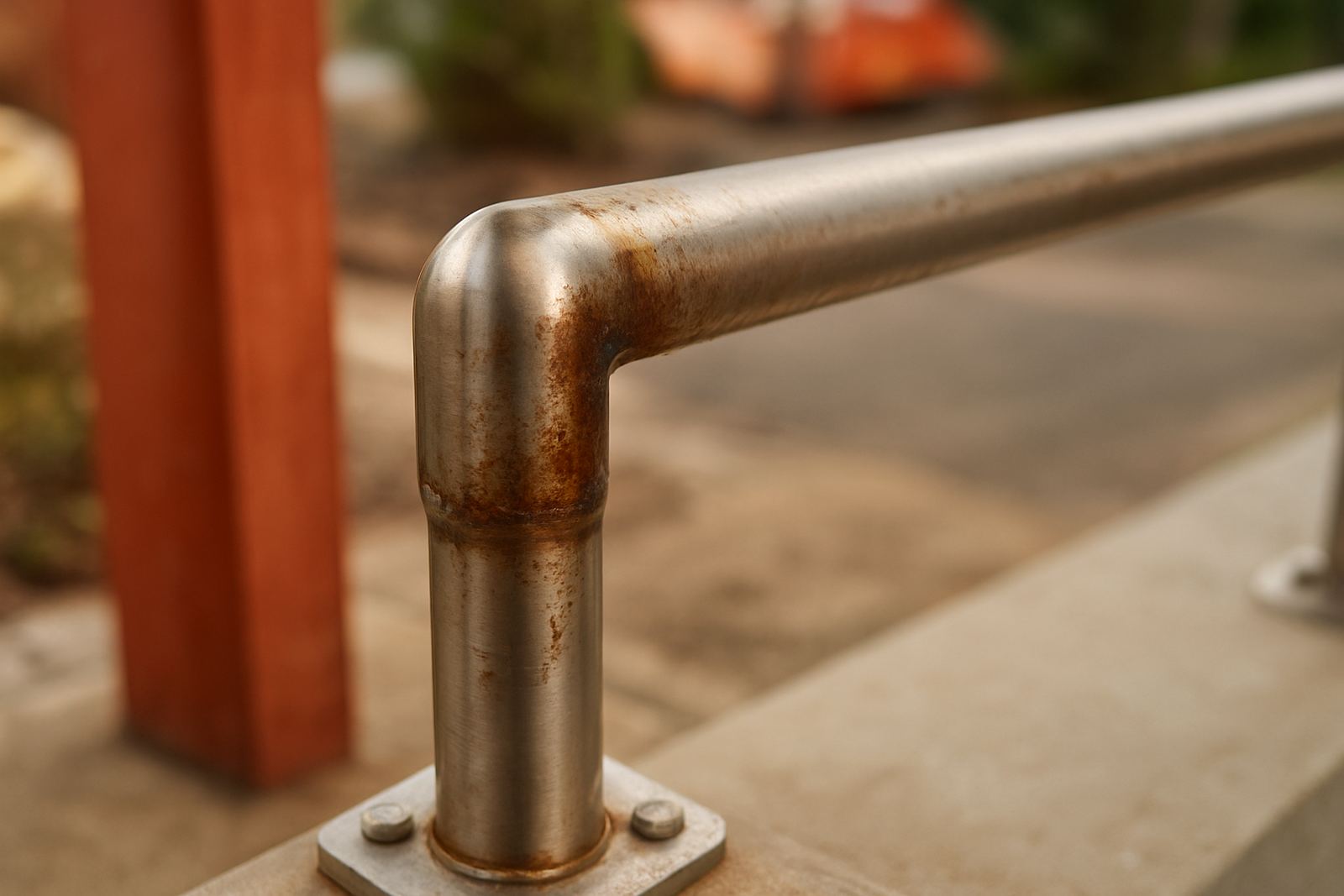
Tea staining is not the same as rust-through. It is a brown or tea coloured film that forms on the surface of stainless steel, usually in salty or damp conditions. The metal underneath may still be sound, but the finish looks tired and neglected, especially on handrails, gate frames, balcony balustrades and marine fittings.
In the Garden Route, the combination of sea air, wind driven salt and regular rain means stainless gets more surface contamination than inland. If the item is not cleaned properly after fabrication or installation, tiny deposits of iron, dust and salt can sit on the surface and start the staining process. Once it starts, it often spreads in spots first, then across the exposed areas.
- It is mainly a surface issue, not full corrosion.
- It shows up faster near the coast than inland.
- Crevices, welds and fixings are often the first spots affected.
Why coastal conditions in Knysna make it worse
Knysna, Sedgefield, Wilderness and Plettenberg Bay all see moisture in the air for much of the year, and that moisture carries salt particles. On a balcony or a street facing gate, those particles settle on the metal and stay there if there is not enough rain wash or manual cleaning. Under load shedding, homeowners sometimes delay wash downs because pumps, water features or pressure systems are off, so the salt sits longer than it should.
Buildings close to the lagoon, river mouths or open ocean face extra exposure. Even a properly fabricated stainless handrail can show tea staining if it is installed with the wrong fasteners, left with weld heat tint, or cleaned only once in a while. The problem is not always the steel itself, its often the environment and the upkeep around it.
- Sea spray reaches further than most people think.
- Shaded areas stay damp for longer after rain.
- Airborne dust from construction and roads can cling to the surface.
The hidden causes we see during site inspections
When we do site measuring and maintenance checks, tea staining usually points to a few common issues. Sometimes the item was fabricated well, but the surface was never properly passivated after welding. In other cases, mild steel grinding dust has landed on the stainless during nearby work and left tiny iron particles behind. Poor drainage can also trap water at the bottom rail or around a hinge plate, which is a recipe for staining.
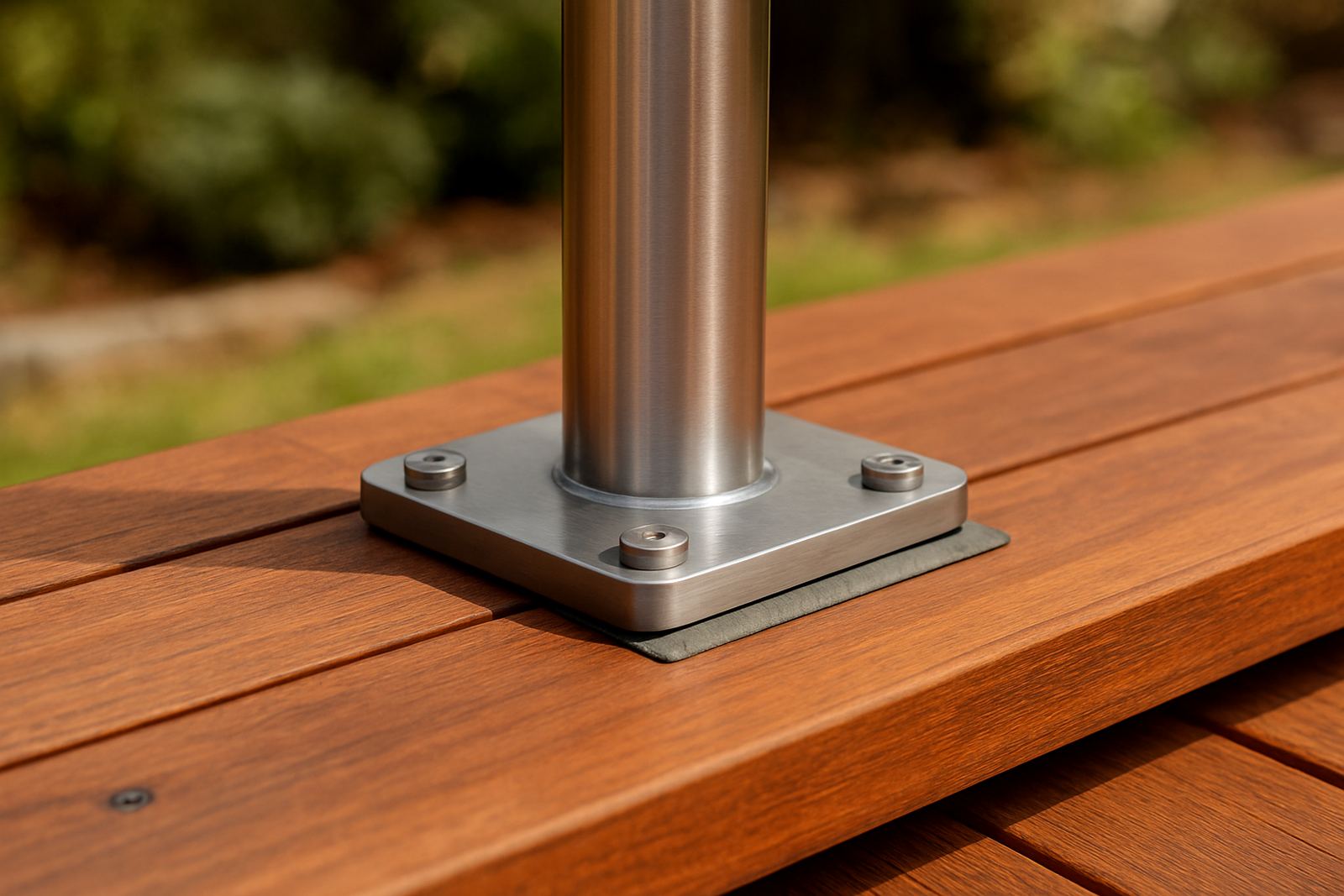
We also see problems from mixed materials. If the handrail uses stainless sections but ordinary steel screws or brackets, those parts can bleed into the surrounding surface. On coastal homes and commercial sites in George or Mossel Bay, one bad fixing can leave a line of brown marks that keeps coming back. That is why the full detail matters, not just the main tube or panel.
- Weld heat tint left uncleaned.
- Contamination from tools used on ordinary steel.
- Water traps around brackets, posts and base plates.
- Wrong fasteners or fittings in coastal installations.
How to reduce tea staining before it starts
The best prevention starts before fabrication is finished. Correct material choice, neat shop drawings and careful workshop handling all make a difference. For coastal sites, the finish needs to suit the exposure level and the detailing needs to let water drain instead of sitting in corners. A clean installation today saves a lot of maintenance later, and that is especially true for gates, balustrades and marine fitouts.
At Sisonke Stainless, we look at where the item will live, not just how it will look on the day of installation. A handrail on a shaded porch in Wilderness needs a different approach from a balustrade facing the sea in Plettenberg Bay. The fixing method, the weld finish and the cleaning steps all need to match the site. If one part is rushed, tea staining can show up within weeks.
- Choose the right stainless grade for the exposure.
- Remove weld marks, grinding dust and heat tint properly.
- Use compatible fixings and fittings throughout.
- Allow for drainage and easy wash down access.
What routine cleaning should look like in a coastal town
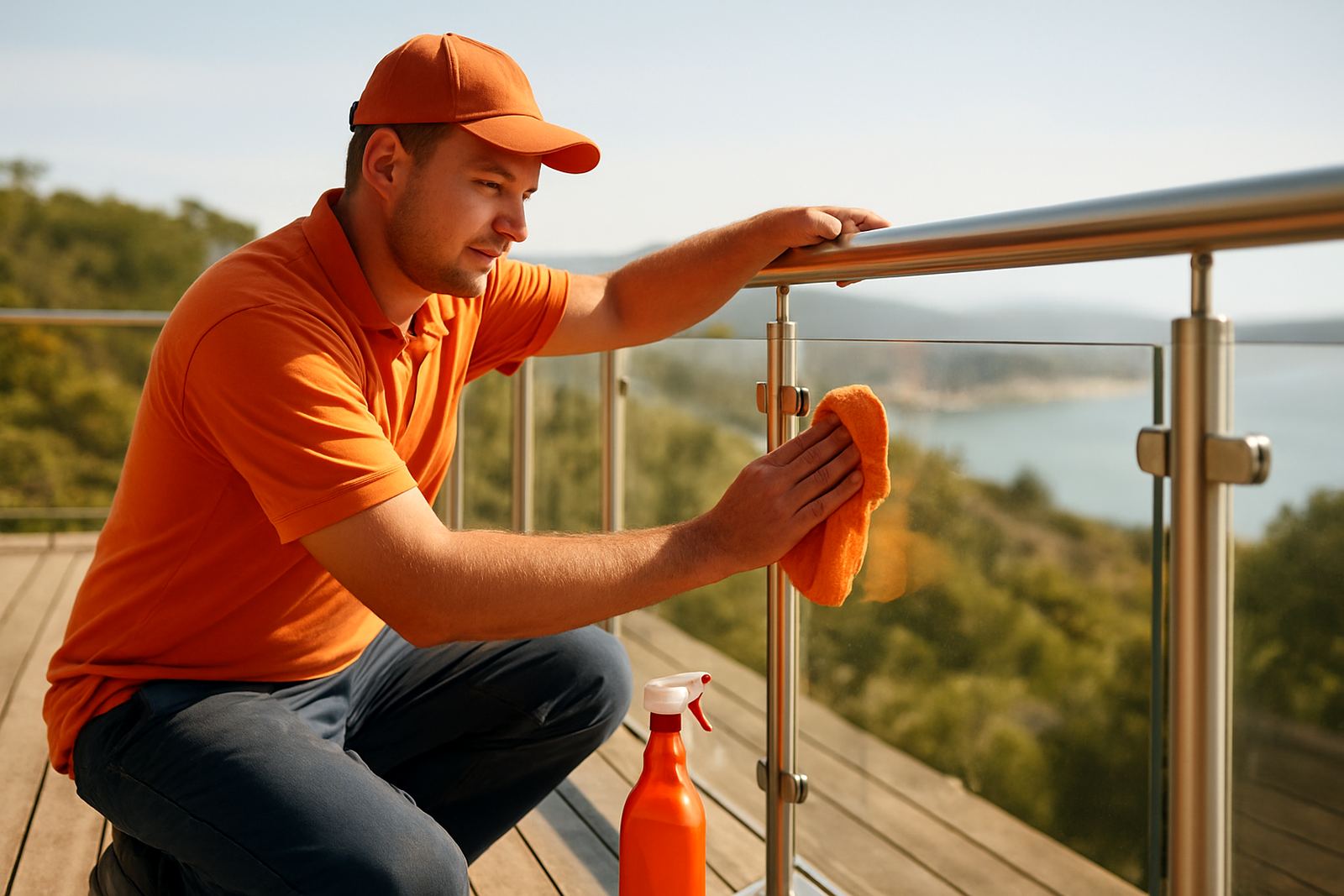
Cleaning stainless is simple, but it has to be regular. Fresh water rinsing is often enough if done consistently, especially on exposed coastal balustrades and gate panels. In busier areas, or where the surface gets a lot of salt mist, mild detergent and a soft cloth help remove residue before it bonds to the metal. Avoid harsh abrasives and steel wool because they can scratch the finish and leave more particles behind.
A monthly clean is a sensible starting point for many homes and businesses in the Garden Route, but high exposure sites may need attention more often. After heavy wind or a storm, give the surface a quick check. If a few brown specks appear, deal with them early. The longer they sit, the harder they are to remove and the more likely they are to return. A bit of routine care goes a long way, no need to wait until the rail looks bad.
- Rinse with clean water first.
- Use mild soap and a soft cloth if needed.
- Dry the surface where practical.
- Check welds, joints and bottom edges for trapped dirt.
A local example from the Garden Route coastline
We recently looked at a stainless balcony rail on a coastal property between Knysna and Sedgefield that had started showing tea staining near the fixings and along the lower rail. The main issue was not a failure of the structure. It was a mix of salt spray, poor rinse down, and a few spots where debris had settled after nearby maintenance work. The surface had a dull brown haze in places, but the steel underneath was still serviceable.
After cleaning, surface restoration and a few small detail changes to reduce water trapping, the rail was easier to maintain. The owner now does a quick wash down after strong wind or rain and keeps an eye on the fixings. That kind of practical upkeep matters in coastal areas. If you wait too long, tea staining can become a repeated problem instead of a one off issue.
For businesses in George, Mossel Bay and Knysna Industria, the lesson is the same. Build for the site, install with care, then keep to a simple maintenance routine. That is how stainless stays presentable and lasts longer in salty air.