Why timber needs more than a surface screw
Timber looks simple, but it moves. It swells with rain and coastal humidity, then shrinks again when the weather dries out. A rail fixed only to the top board will start to wobble, especially where people lean hard on it every day.
For stainless rail work, we look for solid structure below the finish timber. That may be a joist, stringer, concrete edge or a steel subframe hidden under the deck. The main aim is to transfer the load into something that can carry it long term, not just into one board.
- Fix into structural timber, not only deck boards
- Use proper backing plates where the load is spread over a wider area
- Allow for timber movement without crushing the board
- Keep fasteners clear of water traps and standing moisture
Best fixing points on decks and stair flights
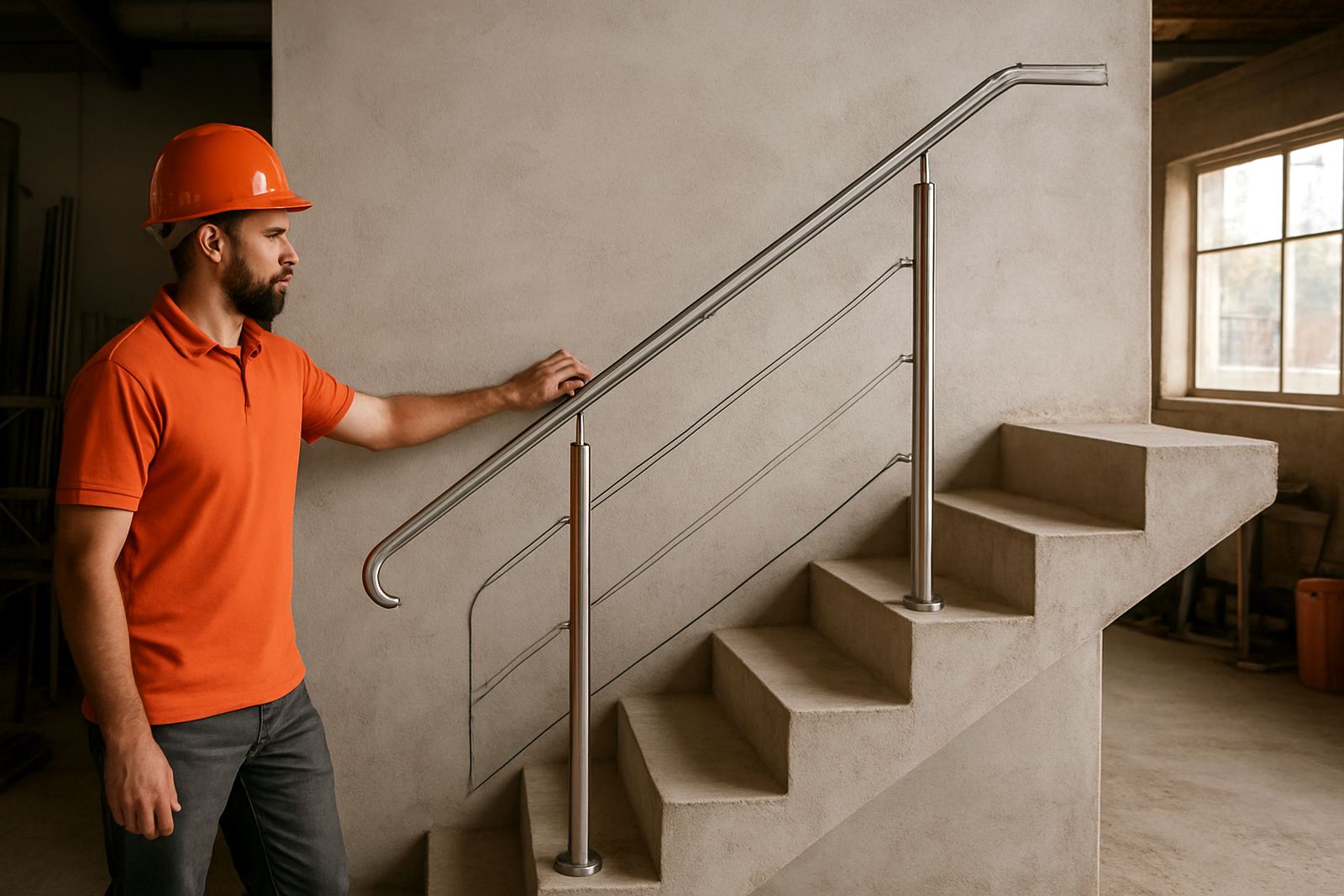
Each deck is different, but the strongest points are usually the posts, the joists near the edge, or the stair stringers. On stairs, the top and bottom landings often give better support than the middle run. If the rail line is long, we sometimes add hidden reinforcement so the handrail does not flex between brackets.
On older homes around Knysna and Sedgefield, we often find timber that looks sound on the outside but has soft patches underneath from years of weather. In those cases we test the fixing point before drilling, because a neat rail is no help if the substrate pulls out. One weak board can cause alot of trouble later.
- Top and bottom landing points are usually strongest on stairs
- Edge joists can take a rail bracket if they are thick enough
- Posts should be checked for rot, splitting and hidden movement
- Old timber may need replacement or reinforcement before installation
For timber near the coast, the grain can be active and fasteners need enough bite length to stay secure as the board expands and contracts.
Choosing fixings that suit stainless and timber together
When stainless meets timber, the fastener choice matters. We use fixings that suit the environment, the timber thickness and the load on the rail. A decorative screw is not enough for a safety rail. You need the right diameter, the right length and the right fixing detail under the surface.
Where possible, we separate the stainless from direct moisture pockets and use washers, sleeves or spacer pieces to reduce crushing. That helps protect the timber and keeps the rail from loosening. In salty air areas like Wilderness, George and Mossel Bay, we also pay close attention to dissimilar metal contact and corrosion points.
- Use fixing lengths that reach solid material beyond the timber skin
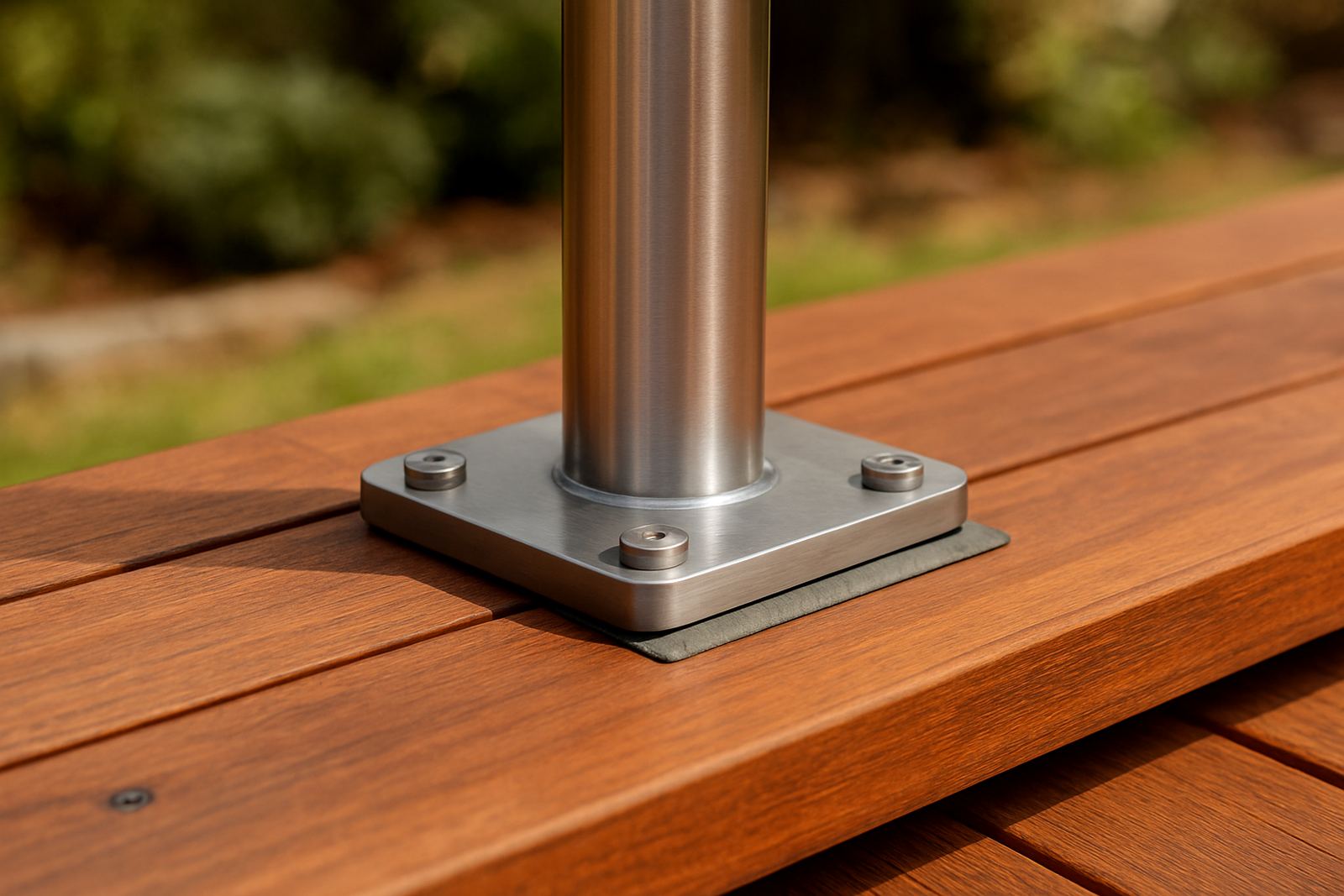
- Choose washers and backing plates to spread the load
- Keep holes clean and seal exposed timber around penetrations
- Match the fixing method to the site, not just the rail design
How we handle waterproofing and timber movement
A rail can be installed neatly and still fail if water gets into the fixing holes. Once moisture starts sitting inside a drilled opening, the timber may soften or split and the fastener loses grip. That is why we seal cut edges, treat exposed holes where needed and avoid leaving raw timber around critical fixings.
We also leave for movement where the detail allows it. Timber decks in Plettenberg Bay and Knysna are often exposed to sun on one side and shade on the other, so the boards move unevenly. If the rail is pinned too rigidly, the movement is forced into the fixing points. A little allowance now saves a repair later.
- Seal drilled holes and exposed timber edges
- Do not overtighten fixings into soft or thin boards
- Allow for seasonal timber movement
- Check drainage so water does not sit around the base plates
Common mistakes we see on Garden Route timber jobs
A lot of railing problems start with shortcuts. The most common is fixing straight through a deck board without checking what is below. Another is using too few anchor points, so each bracket carries too much strain. We also see handrails mounted too low or too far out from the stair line, which makes them awkward and less safe.
On some jobs the installer uses the right rail but the wrong site detail. For example, a coastal deck with hidden water exposure needs better sealing than an inland patio. In areas near the lagoon or in shaded gardens, fixing points can stay damp for longer and need extra care. If the timber has already split around old holes, we often recommend repair before any new stainless work goes in.
- Fixing only to deck boards instead of structural timber
- Too few brackets along longer runs
- Ignoring timber rot, split grain or previous holes
- Leaving exposed penetrations unsealed
A local example from a Knysna timber staircase
We recently worked on a timber stair run in Knysna Industria with a rail line that had started to move after a few seasons. The original fixings were shallow and only part of the load reached the support below. Every time people used the stairs, the handrail shifted slightly and the brackets began to mark the timber.
We stripped the weak points back, checked the stringers, added better backing and reinstalled the rail with proper fixing depth and sealing. The result was a cleaner line and a tighter feel under hand. That kind of repair is common on the Garden Route because timber and coastal weather are always working against each other.
If you are planning a new rail, or replacing an older one, it is worth getting the fixing detail right from the start. It saves time, keeps the stair safe and gives the timber a longer service life.