What a Stainless Balcony Rail System Includes
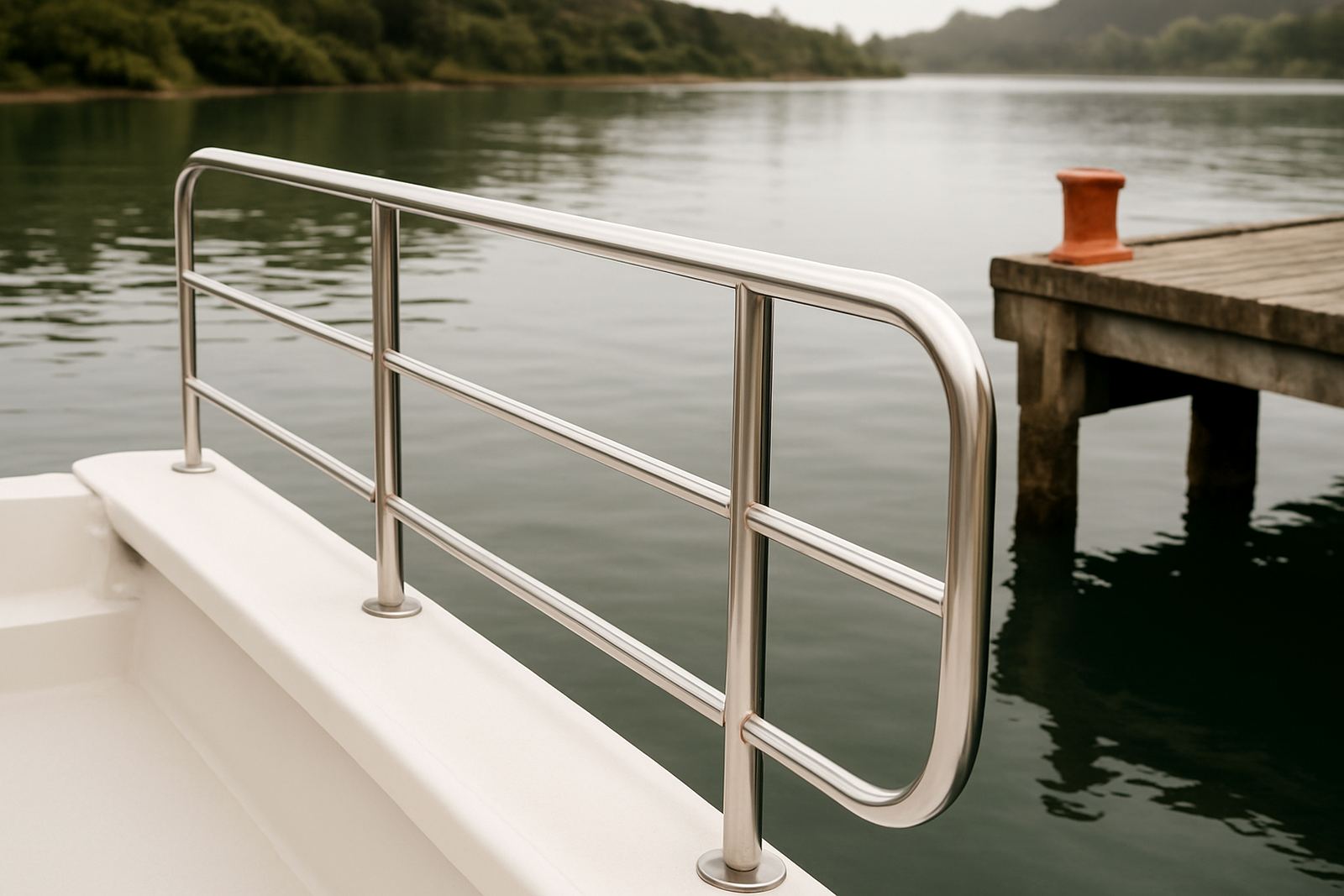
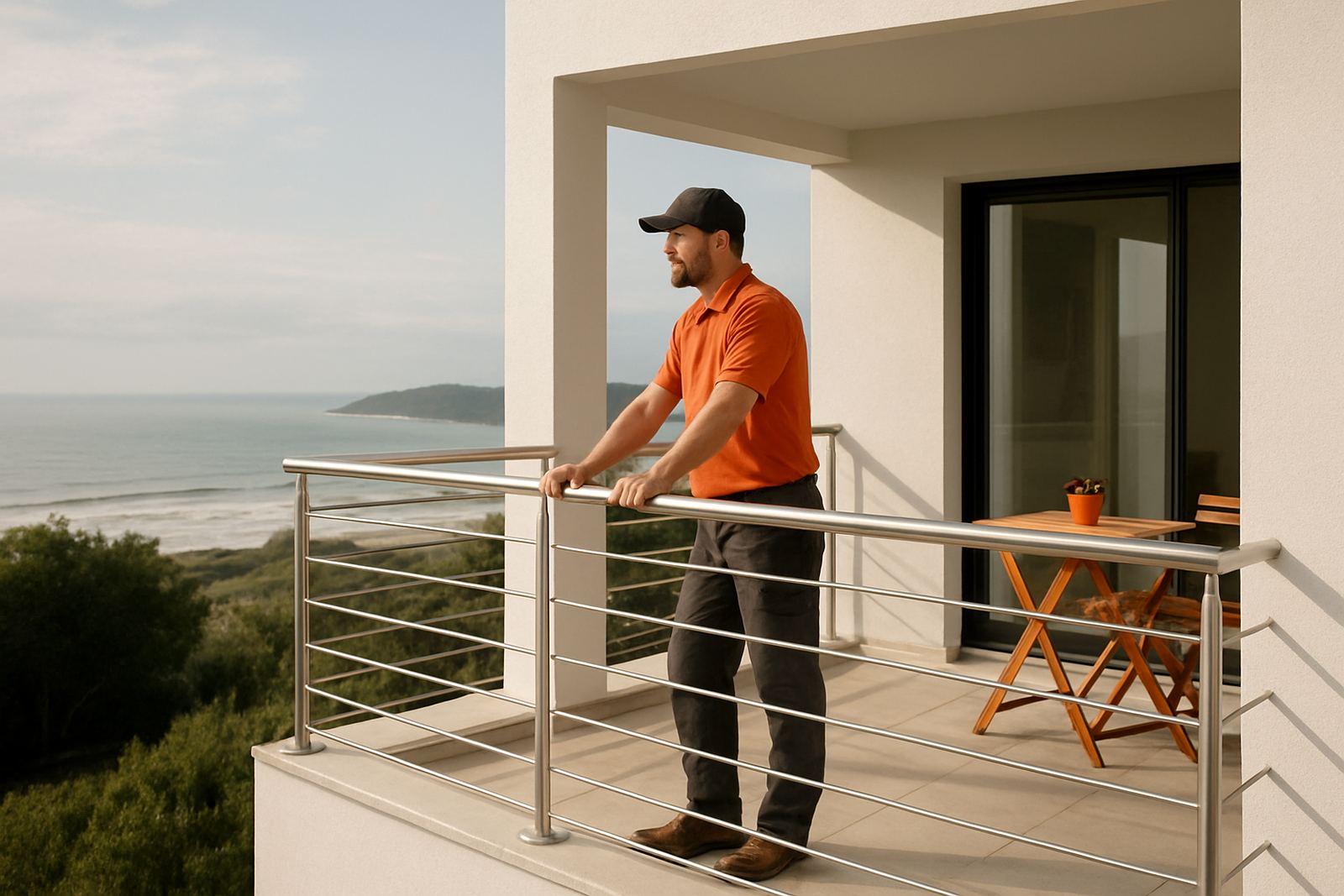
A balcony rail system is more than the top rail you see from outside. It normally includes posts or side-mounted supports, handrail tubes, infill bars or glass panels, fixings, end caps and any required brackets for stairs or balcony edges. For coastal properties in Knysna, Plettenberg Bay and Sedgefield, stainless is often chosen because it handles salt air better than ordinary painted steel, and it keeps its appearance with simple care.
We make each rail to suit the structure on site. Some balconies need face fixing to concrete, others need top fixing into slab edges, and some need a mix of both. If the edge is uneven, old tile work is loose, or the parapet wall is too narrow, we can work out a fixing method that still meets the safety requirement and looks neat from below.
- 304 stainless for inland or sheltered positions
- 316 stainless for coastal exposure and sea spray
- Tube, square or mixed profiles available
- Options for bar infill, cable infill or glass fitment
Sizes, Heights and Build Options That Fit Real Balconies
Most balcony rails are built at a finished height of 1 000 mm to 1 100 mm, depending on the opening and the expected use of the building. We can also make custom heights where a municipal plan, body corporate rule, or existing structure calls for a specific level. Clear opening between posts, spacing between bars and glass thickness all matter, because the rail must be safe for children, guests and everyday use.
Typical tube sizes are 38 mm, 42.4 mm or 50.8 mm for the top rail, with post sizes matched to the span and the fixing method. We commonly fabricate rails in module lengths of 1 m to 2.4 m for easier handling, but long runs are possible with proper support. Corner returns, staircase transitions and wall terminations are measured separately so the final line stays straight and practical.
- Standard rail height: 1 000 mm to 1 100 mm
- Common post spacing: 900 mm to 1 500 mm
- Glass infill: toughened safety glass, sized to suit the frame
- Fixing styles: top mount, face mount or side mount
Where Balcony Rails Work Best in the Garden Route
Balcony rails suit homes, guesthouses, apartments, decks and upper-level verandahs where people need a safe edge and an open view. In George and Mossel Bay, we often see rails used on new builds and additions where the owner wants clean lines and low upkeep. In Knysna and Wilderness, the same rail type is often fitted where timber has weathered, or where an older rail needs replacing because of rust and movement.
They also suit holiday accommodation, because they can be kept tidy with minimal cleaning between guest changeovers. If the property is near the water, on a hill with wind load, or exposed to morning mist, we will normally recommend 316 stainless and fixings that are suited to the environment. For sea-facing sites, the right fasteners and sealant matter as much as the rail itself.
- Residential balconies and upper-level patios
- Guesthouses, lodges and short-stay units
- Apartment blocks and sectional title buildings
- Stair landings, walkways and raised pool surrounds
Installation, Site Access and Power Requirements
We start with a site measure in Knysna, Sedgefield, George, Plettenberg Bay or the surrounding areas, then prepare shop drawings before fabrication. Most balcony rails are made in the workshop and brought to site in sections, which shortens installation time and keeps the finish cleaner. On site we check the slab edge, plumb lines, wall returns and any waterproofing that must not be damaged.
Installation usually needs standard hand tools, drilling equipment and fixing gear. If welding is required on site, we need access to power, though many jobs are completed with mechanical fixings and no gas work at all. We protect nearby paint, tile and glass while working, and we plan around load-shedding where possible so the job does not stall halfway through a fix.
- Workshop fabrication followed by on-site fitment
- Can be installed on new builds or during upgrades
- Power may be needed for drilling or site welding
- No gas supply is usually required unless a special repair calls for it
Care, Cleaning and Service Checks for Coastal Conditions
Stainless needs simple care, but it still benefits from regular washing, especially within a few kilometres of the coast. Dust, salt and bird mess can settle on the rail and leave marks if they are left too long. A mild soap and clean water are usually enough, followed by a soft cloth. Avoid harsh abrasives or steel wool, because they can scratch the surface and leave the finish looking patchy.
We also recommend a basic maintenance check once or twice a year on balcony rails near the sea. That check can pick up loose fixings, small signs of corrosion around dissimilar metals, cracked sealant, or movement in the base plates. If a section gets knocked, we can do stainless repairs and surface restoration before the problem spreads.
- Wash with fresh water and mild soap
- Check fixings after strong wind or heavy use
- Inspect sealant at base plates and wall returns
- Book maintenance on a yearly cycle for coastal properties
What to Check Before You Order Balcony Rails
Before ordering, have the opening sizes, balcony edge photos and any plan notes ready. It helps to know if the rail must match an existing handrail, whether glass is required, and if there are body corporate rules or municipal conditions that affect height or appearance. If the building is occupied, think about access for the installers and whether furniture or potted plants need to be moved before we arrive.
It also helps to decide on the look you want early. Some clients want vertical bars for a neat, practical finish. Others prefer glass for an open view, while some want a mixed system with stainless posts and a top rail only. If you are replacing an old rail, send clear photos of the base plates, the old fixing points and any rust or water damage. That lets us advise on repairs before the new rail goes in, and it avoids surprises on site.
- Opening width, height and fixing surface
- Preferred finish, tube size and infill type
- Coastal exposure and wind conditions
- Any existing damage to slab edges or wall returns
Key facts
| Material options | 304 stainless or 316 stainless for coastal exposure |
|---|---|
| Standard finished height | 1 000 mm to 1 100 mm |
| Common top rail sizes | 38 mm, 42.4 mm or 50.8 mm round tube |
| Typical module lengths | 1 m to 2.4 m sections, made to suit |
| Infill options | Vertical bars, cable, or toughened safety glass |
| Installation area | Knysna, Plettenberg Bay, Sedgefield, Wilderness, George and Mossel Bay |