Built For Salt, Spray And Constant Hand Contact
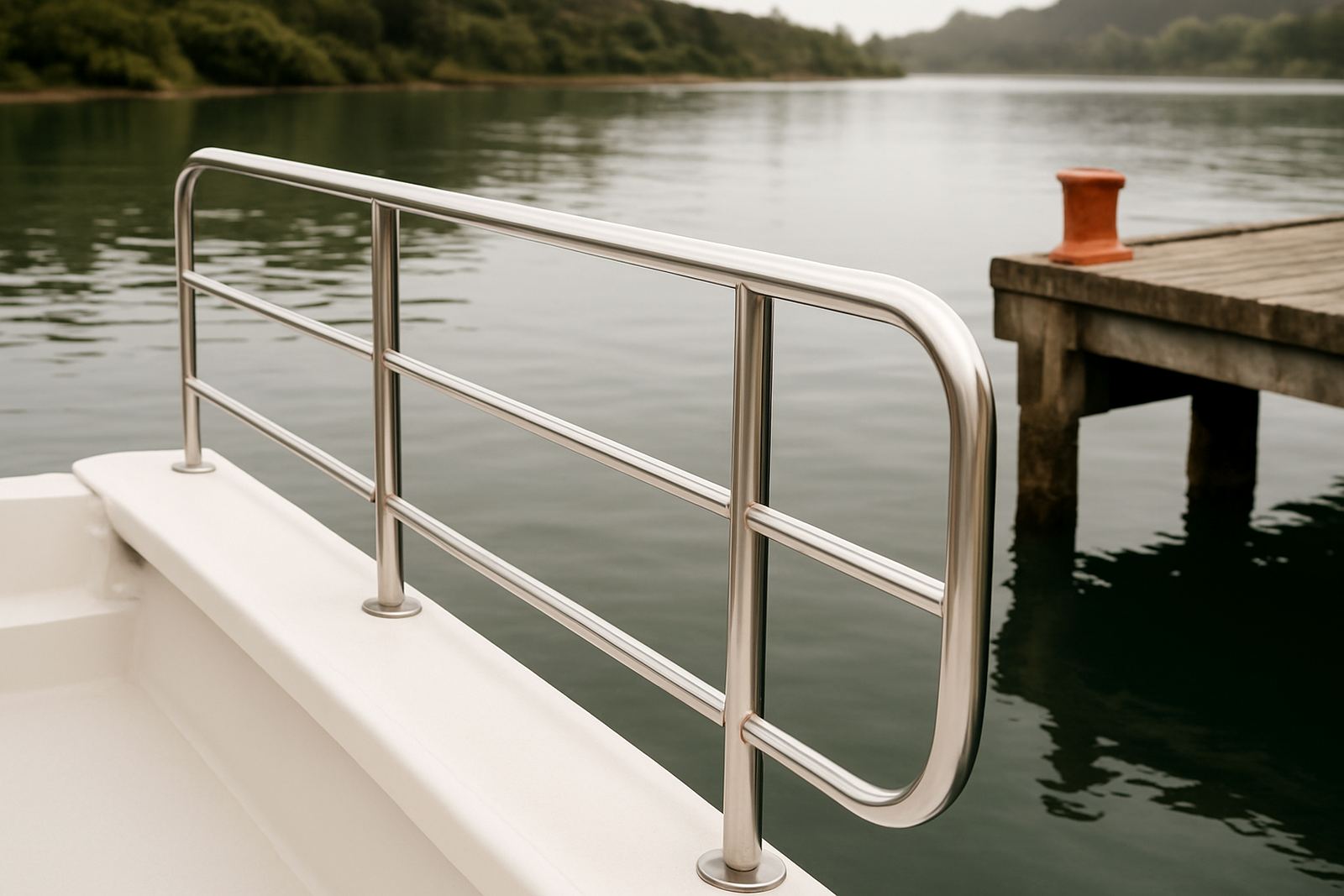
Boat rails are more than a neat finish. They are a working part of the craft, giving crew and passengers something solid to hold when stepping aboard, moving along a deck or leaning near the water. On small boats, ski boats, fishing boats, ski pontoons and harbour craft, the rail also helps protect edges and guide movement without taking up much space.
We fabricate marine stainless rails in a workshop setting and then fit them on site where needed. For coastal use we normally work in stainless suitable for salt exposure, with polished surfaces that are easier to keep clean. In Knysna, Sedgefield, Wilderness and George, the mix of humidity, salt air and regular washing means finish quality matters just as much as strength.
Rails can be straight, curved or stepped around hatches, seats and boarding points. We also make related items such as cleats, support brackets, grab handles and small guard rails where a boat needs a specific solution. If the craft has a tight layout, we measure carefully so the rail does not interfere with lines, covers or movement on board.
Sizes, Tube Options And Common Rail Layouts
Most boat rails are made to suit the craft, not the other way round. We work from site measurements or the boat itself, then set the tube size, height and fixing points to match the use. A neat rail should feel natural to grip, stand clear of fittings and allow enough room for cleaning and maintenance.
- Tube diameters commonly used: 25 mm, 32 mm and 38 mm
- Standard material thickness: 1.6 mm to 2 mm wall, depending on load and span
- Typical rail height: 450 mm to 900 mm above deck or mounting point
- Fixing base sizes: cut to suit deck plates, gunwales, pontoons or side structures
- Finish options: brushed or mirror polished, depending on the look and upkeep required
We can make single grab rails, perimeter side rails, bow rails, stern rails and short ladder-style handholds. For waterside use, such as jetties or mooring points, the same type of stainless work can be adapted for hand support and splash exposure. If the boat gets stored near the sea, a polished finish often stays easier to wipe down, though brushed surfaces can hide fine marks better.
Where Boat Rails Suit Best
Boat rails suit small craft that need practical support without heavy framing. They are commonly used on family boats, fishing boats, passenger craft, work skiffs, houseboats and marina access points. On compact boats, the right rail makes boarding safer and gives a cleaner line along the hull or deck edge.
They are also useful in waterside installations where people move between a jetty and a vessel. A well placed handrail can reduce slips, especially where wet timber, fibreglass or metal surfaces become slick after rain or spray. In Mossel Bay and Plettenberg Bay, where wind and salt can be hard on fittings, we allow for stronger fixing methods and a proper seal around fasteners.
Where the rail is exposed to sun all day, we choose layouts that are easy to wash and inspect. That helps prevent dirt build up around welds and fittings. It also makes it easier to spot loose hardware, worn gaskets or corrosion before it turns into a bigger repair.
Installation On Site, Access And Power Needs
We do site measuring, then fabricate the rail to size and install it at the boat, marina or workshop. Installation usually needs hand tools, drilling equipment and measuring gear. There is no gas or power requirement for the boat owner beyond normal access to the vessel, but for some repairs or modifications we may need a safe work area and a clear path around the craft.
When fitting on site, we check the deck material, the thickness of the mounting area and the space underneath before drilling. That matters because a rail fixed through thin or damp material can loosen over time. If backing plates are needed, we fit them to spread the load and reduce movement. On boats that live close to the water, every fixing has to be sealed properly or you end up chasing leaks later.
- We confirm the mounting surface before fabrication starts
- We check for cable runs, fuel lines and hidden structure before drilling
- We use suitable sealant and backing where the deck needs extra support
- We can work from the boat at our Knysna Industria base or on site across the region
For larger alterations, shop drawings help keep the layout clear and avoid wasted material. If the rail forms part of a gate, boarding step or custom fitout, we plan those details early so the final job lines up properly.
Care, Cleaning And Service In Coastal Conditions
Marine stainless still needs care, especially in salt air. Even good material can pick up tea staining, water marks or surface grime if it is never washed down. A simple rinse with fresh water after use goes a long way, and a mild detergent wipe now and then keeps the finish in good shape.
For boats used regularly, we recommend a maintenance check every few months. That is the time to look at loose bolts, cracked sealant, worn rubber bushes, damaged welds and movement at the base plates. If the craft is stored under cover or on a trailer, inspection is still important because dust and trapped moisture can sit in crevices. Coastal humidity in Knysna and Wilderness can work on fittings even when the boat is not in the water.
We also handle stainless repairs and surface restoration where a rail has been bent, scratched or marked by age. Sometimes a rail only needs re-polishing and a few hardware replacements. Other times a section has to be re-made to bring back proper strength. If a boat has seen a hard season, a service visit can save money before a small problem becomes a full replacement.
What To Check Before You Order
Before we start fabrication, it helps to know exactly what the rail must do. A good order gives us the right measurements, the right fixing type and the right finish from the outset. That cuts down on site changes and keeps the boat out of action for less time.
- Boat type, length and where the rail will be fitted
- Approximate lengths, heights and number of bends or corners
- Whether the rail is for hand support, edge protection or boarding access
- Deck material and fixing access from above or below
- Preferred finish, polished or brushed
- Any hardware already on the craft that the rail must clear
If you are not sure, we can measure on site and advise. That is common with older boats, rebuilt decks or mixed fitouts where nothing is quite standard. We work across Knysna, Plettenberg Bay, Sedgefield, Wilderness, George and Mossel Bay, so we are used to different boat layouts and local marine conditions.
For owners who need a matching set of rails, we can keep dimensions consistent across several pieces so the boat looks orderly. If you need a small run, a one-off bracket or a full set of marine handrails, we can build it to suit the job and install it properly the first time.
Key facts
| Material | Marine-grade stainless steel suitable for coastal use |
|---|---|
| Common tube sizes | 25 mm, 32 mm and 38 mm |
| Wall thickness | 1.6 mm to 2 mm depending on span and load |
| Finish options | Brushed or mirror polished |
| Typical applications | Small craft, pontoons, jetties, boarding areas and deck edges |
| Service area | Knysna, Plettenberg Bay, Sedgefield, Wilderness, George and Mossel Bay |