Stainless boarding ladders for proper boat access
A boarding ladder gives swimmers, skippers and crew a safe way to move between the water and a jetty, pontoon or vessel. In Knysna and along the coast, that means a ladder has to handle salt air, constant wetting, sand, algae and regular use without staining up too fast or working loose.
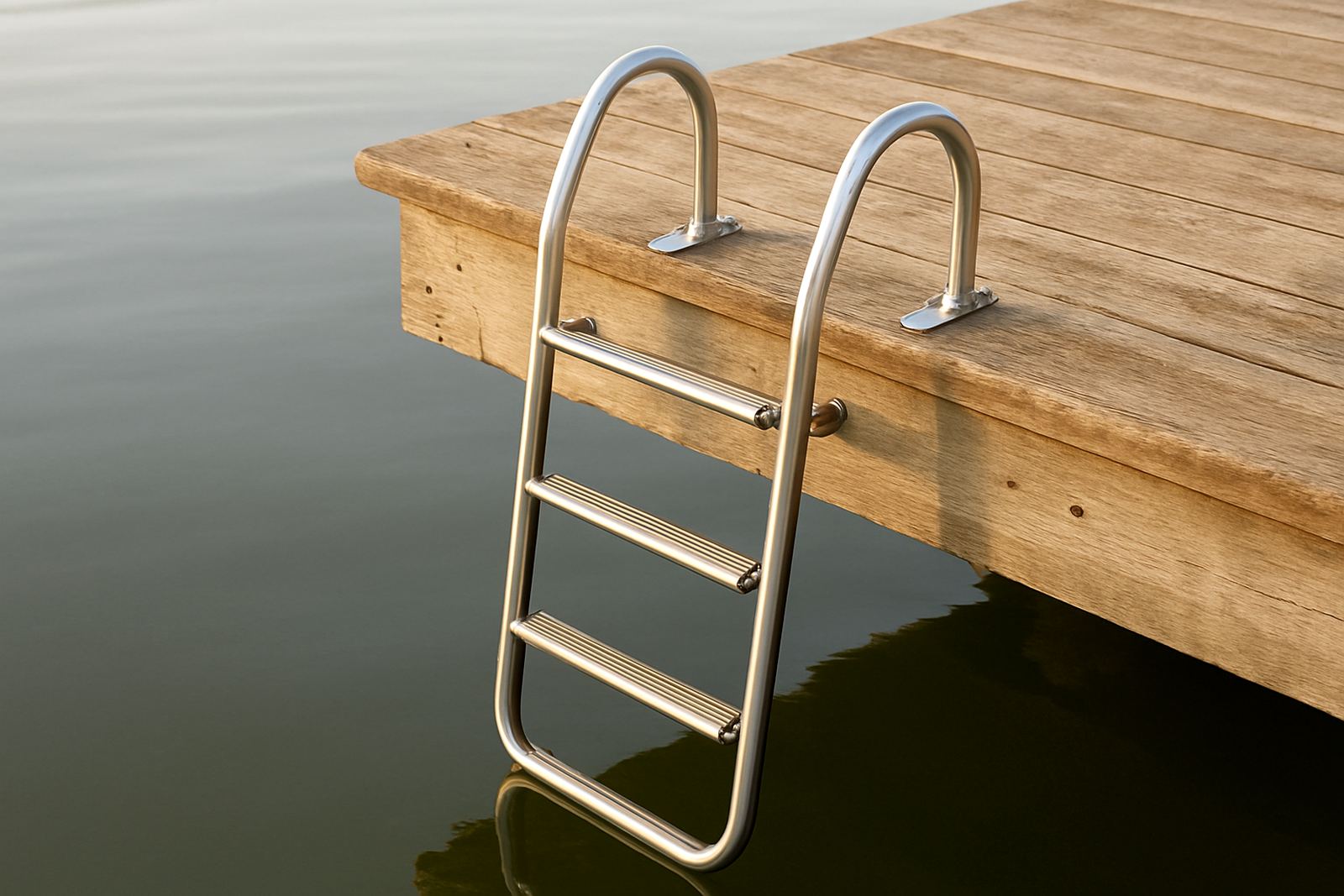
We make boarding ladders from stainless tube and plate, with rung spacing and width set to suit the access point. Most orders are for fixed ladders, but we also make folding and removable styles where the ladder must be lifted clear of the water or stored after use. For private jetties, marina pontoons, fishing access points and small harbour installations, the main job is simple: get on and off safely, with good grip under wet feet.
Common sizes, rung spacing and mounting options
Every site is different, so the first step is proper measuring. Water level, freeboard height, wall thickness, deck edge and the angle of approach all affect the final ladder. We can work from site measurements, photos and existing fixing points, then confirm the final layout before fabrication.
- Typical ladder widths: 350 mm, 400 mm or 450 mm clear opening
- Typical rung pitch: 250 mm to 300 mm centre to centre
- Projection from fixing face: made to suit the jetty or pontoon edge
- Mounting: face fixed, top mounted, side mounted or bracket supported
- Finish: brushed stainless or polished finish on request
- Options: hand grips, anti-slip tread detail, lifting eyes and lockable stowage
For higher access points we often add a longer top section or a stepped lower run so the ladder is easier to climb. If the ladder is being used by children, older users or crews carrying gear, we can widen the rung spacing slightly and add extra grip features. Small changes like that make a big difference in daily use.
Where these ladders suit best around the Garden Route
Boarding ladders are used where there is regular water access and not enough space for a full stair. They suit private waterfront homes, slipways, marina fingers, canal edges, fishing platforms, maintenance pontoons and boat club jetties. In places like Knysna, Sedgefield, Wilderness, Plettenberg Bay, George and Mossel Bay, salt exposure and wind matter just as much as the layout, so material choice and fixing detail need attention.
For coastal installs, we normally recommend stainless steel with fixings suited to wet conditions, plus enough clearance so the ladder does not bind against timber, concrete or fibreglass surfaces as levels move. On jetties with tide or swell movement, we allow for motion and check that the lower end of the ladder will not strike the structure at low water. If the site is exposed to marine growth, we can also help with an access plan that makes cleaning easier.
Installation, power needs and site work
Most boarding ladders are installed with standard hand tools and site drilling only. No power or gas is needed for the final fixing on site unless a custom bracket or support has to be altered during the fitment. When we handle the job, our team does the measuring, fabrication and installation, and we bring the required stainless fixings and anchors for the substrate.
Before we install, we check the mounting surface, the condition of any timber or concrete, and whether there is enough access under or beside the jetty for safe fixing. On some jobs we work from a boat or from a lower platform if the water side is the only way to reach the point. If the site is live and used daily, we plan the work to keep disruption low and to avoid leaving open edges overnight.
- Site measuring and bracket checks before fabrication
- Safe fitment to timber, concrete or steel structure
- Fasteners selected for marine exposure
- Can be installed as part of a larger jetty or marine fitout
- Useful for new builds and replacement ladders
Care, cleaning and service intervals
Stainless boarding ladders still need care, especially near the sea. Salt spray, hand oils and standing water can leave surface marks over time, and if the ladder is fixed to mixed metals or poor fasteners, corrosion can start at the connection points. A quick rinse with fresh water makes a real difference, particularly after windy weather or heavy use.
We recommend regular checks on the fixings, the rung condition and the top brackets. If the ladder has moving parts, keep hinges and locks free of sand and grime. A mild detergent wash, soft brush and clean water is usually enough for surface cleaning. Avoid harsh abrasives that can scratch the finish and hold dirt. Where there are early signs of tea staining, we can assist with surface restoration and maintenance checks to keep the ladder looking right and working properly. It is a simple bit of upkeep, but it saves money later.
What to check before ordering a boarding ladder
Good ordering starts with the right measurements and a clear idea of how the ladder will be used. Tell us the access height, how far below the fixing point the ladder must reach, and whether the water level changes a lot. If there is a boat deck, pontoon floatation or a tidal range to allow for, we need that information upfront so the ladder lands in the correct position.
- Fixing height from top edge to water line
- Available width and space for hands and feet
- Whether the ladder must fold, lift off or stay fixed
- Type of surface for mounting: timber, concrete or steel
- Any guard rails, handholds or step extensions needed
- Exposure to salt water, spray and algae build-up
- Access for installation crew and tools
If you are replacing an old ladder, send photos of the existing unit, the fixing points and the damaged areas. That helps us see where the old setup failed and how to improve it. In many cases we can keep the ladder footprint close to the original while upgrading the detail, the fasteners and the finish.
Custom fabrication for coastal access points
Some sites need more than a standard ladder. We fabricate custom pieces for marine access points, including brackets, top plates, handrails, gate hardware fitment and repair work where a section has been bent or welded out of square. Our workshop in Knysna Industria handles the full process from shop drawings through to fitment, and we work across Knysna, Plettenberg Bay, Sedgefield, Wilderness, George and Mossel Bay.
If your boarding ladder forms part of a larger marine layout, we can coordinate it with balustrades, handrails or other stainless components so the finish matches. That helps with appearance, but it also helps with long-term service because the hardware is matched and easier to maintain. For coastal owners and operators, a well-made ladder is one less thing to worry about when the water is up and the weather turns.
Key facts
| Material | Marine-grade stainless steel suitable for coastal use |
|---|---|
| Typical widths | 350 mm, 400 mm or 450 mm clear opening |
| Typical rung spacing | 250 mm to 300 mm centre to centre |
| Mounting styles | Face fixed, top mounted, side mounted or bracket supported |
| Finish options | Brushed or polished stainless |
| Supply and install area | Knysna, Plettenberg Bay, Sedgefield, Wilderness, George and Mossel Bay |