Single and Double Swing Gates Built for Local Access
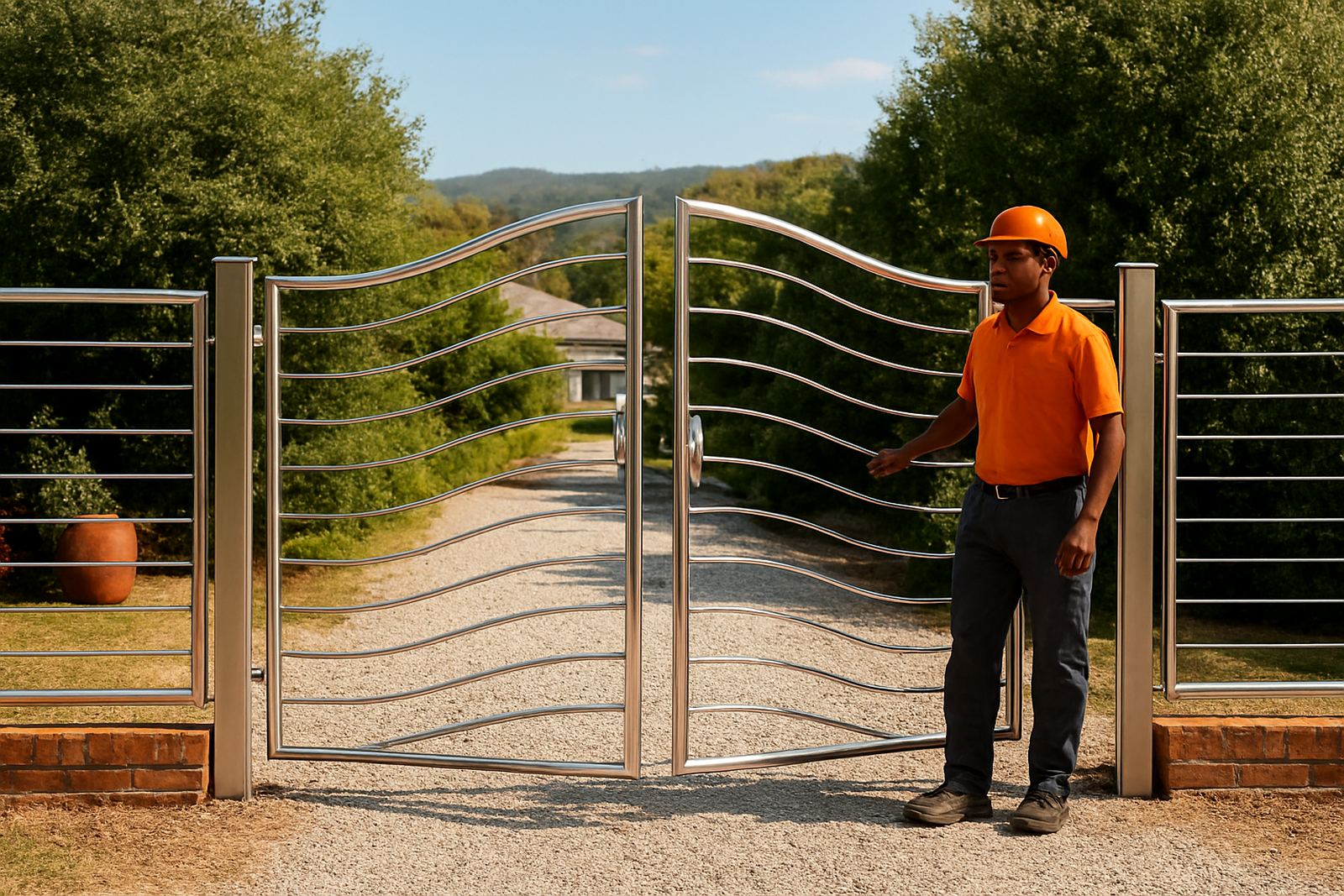
Swing gates are hinged gates that open inward or outward on one or two leaves, depending on the opening width and the way the driveway or entry is used. A single gate works well for narrow openings, side entrances and pedestrian or light vehicle access, while a double gate suits wider driveways, shared entrances and small commercial yards. We make the gate to suit the opening rather than forcing a standard size into place, which matters when the ground falls away, walls are not square, or the existing posts need repair.
For homes in Knysna, Sedgefield and Wilderness, stainless steel gives a clean finish and handles coastal humidity well. For small facilities in George or Mossel Bay, it also gives a practical, low-maintenance option where a gate must look tidy, open daily and keep working through wet weather, salty air and load-shedding related interruptions to automated access systems.
Sizes, Frame Styles and Finish Options
We build gates from measured openings, with the final size set after site checking. Common single gates are often 900 mm to 1200 mm wide for pedestrian use, while double swing gates are usually made from about 2.4 m up to 6 m overall opening width. Height is normally matched to the boundary wall or fencing, often between 1.2 m and 2.1 m, but higher gates can be made where security or privacy needs call for it.
- Stainless tube or box frame, sized to the span and weight of the gate
- Solid or open infill using stainless bars, flat bar patterns or combined materials
- Powder-coated or brushed stainless finish, depending on the look required
- Gate stops, drop bolts and latch plates fitted to suit the opening
- Prepared hinges for manual use or for future motor fitment
We can also make gates with viewing gaps, pet-safe spacing, and clear openings for wheelie bins, scooters or maintenance access. If you need something more specific, the gate can be matched to balustrades, handrails or nearby stainless work so the property keeps one clean line of finish.
Where Swing Gates Work Best
Swing gates suit places where there is enough clearance for the leaves to open without striking a vehicle, wall, planter or pavement. That makes them a good fit for boundary entries, domestic driveways, courtyard openings, service yards and small business entrances. They are often the simplest choice when the opening is level enough and the owner wants a gate that can be opened by hand with little fuss.
They are also useful where a sliding gate would need a long run-back space or extra ground works. In older Knysna and Plettenberg Bay properties, that can save a lot of site changes, especially where walls are close, drainage is already set, or there is limited side space. For small facilities, they can be used as a primary entry gate or as a controlled side access gate for staff and suppliers.
- Homes with driveways that slope slightly or have limited side room
- Court yards and walk-in access points
- Guest houses, body corporate properties and small offices
- Light industrial or service entrances where daily traffic is moderate
Installation, Hinges and Power Requirements
Every gate starts with site measuring and shop drawings so the frame, hinges and stops suit the actual opening. We check post positions, ground levels, wall strength and the swing direction before fabrication starts. On installation day the gate is hung, aligned and tested for clearance, latch action and smooth movement. If the gate is being motorised, we allow for the operator, control gear, safety sensors and cabling path from the start so there are no awkward changes later.
Manual swing gates need no power at all. Automated swing gates need electricity for the motor and control unit, and in load-shedding areas we usually recommend a backup battery or an alternative opening plan. Gas is not needed. For coastal sites, we also pay attention to hinge selection and fixing points so the gate does not sag or seize after a season of salt and moisture. If the gate is set on a wall that is not plumb, we adjust the hinge line and latch position so it closes properly and does not scrape.
Care, Servicing and Coastal Maintenance
Stainless steel is low-maintenance, but it still needs basic care. In a coastal town like Knysna or Wilderness, regular rinsing helps remove salt film and keeps the finish looking clean. Moving parts need to be checked now and then, especially where sand, dust or garden debris can work into the hinges and latch. If the gate is automated, the motor, brackets and sensors should be inspected after heavy rain or power interruptions.
We offer maintenance checks, stainless repairs and surface restoration when a gate has picked up marks, minor corrosion from mixed metals, or wear from years of use. Small issues are easier to sort early, before the hinge line drops or the latch starts to miss. A quick service can save a lot of trouble, especially on gates that carry daily traffic. Keep the hinges lightly lubricated, clear the track area if there is a ground stop, and avoid hanging extra weight on the leaves.
- Wash down salt and dust every few weeks in coastal areas
- Check hinge bolts and latch alignment twice a year
- Do not let soil, gravel or garden edging block the swing path
- Service motors and batteries after load-shedding events or storm damage
What to Confirm Before Ordering Your Gate
Before we start fabrication, it helps to confirm the clear opening width, opening direction, height and whether the gate will be manual or automated. We also need to know if the gate must swing inwards or outwards, whether there is enough clearance on the driveway side, and if there are any uneven walls or existing posts that need repair. A small mistake at this stage can lead to a gate that fits but does not work well, so measurements need to be proper.
It is also worth checking local site conditions. On a sloping driveway, for example, a gate may need a raised hinge point or a split leaf arrangement. If the area is subject to wind, a lighter open design may be better than a solid leaf. If children, pets or public access are part of the picture, the spacing, latch height and opening clearance should all be planned in advance. We can handle the measuring, drawings, fabrication and installation in one process, which keeps the job moving and cuts down on confusion between trades.
When you order from Sisonke Stainless, you get a gate made for the site, not a general item that must be forced into place. That means cleaner lines, better closing action and a finish that lasts in Garden Route conditions, even when the weather turns wet, windy or salt-heavy.
Key facts
| Gate type | Single swing or double swing |
|---|---|
| Typical widths | 900 mm to 6 m overall opening |
| Typical heights | 1.2 m to 2.1 m, made to order |
| Material | Stainless steel frame and infill, with optional mixed materials |
| Use | Homes, courtyards, guest houses and small facilities |
| Services | Site measuring, fabrication, installation, hardware fitment and servicing |