Driveway Gates Built For Garden Route Properties
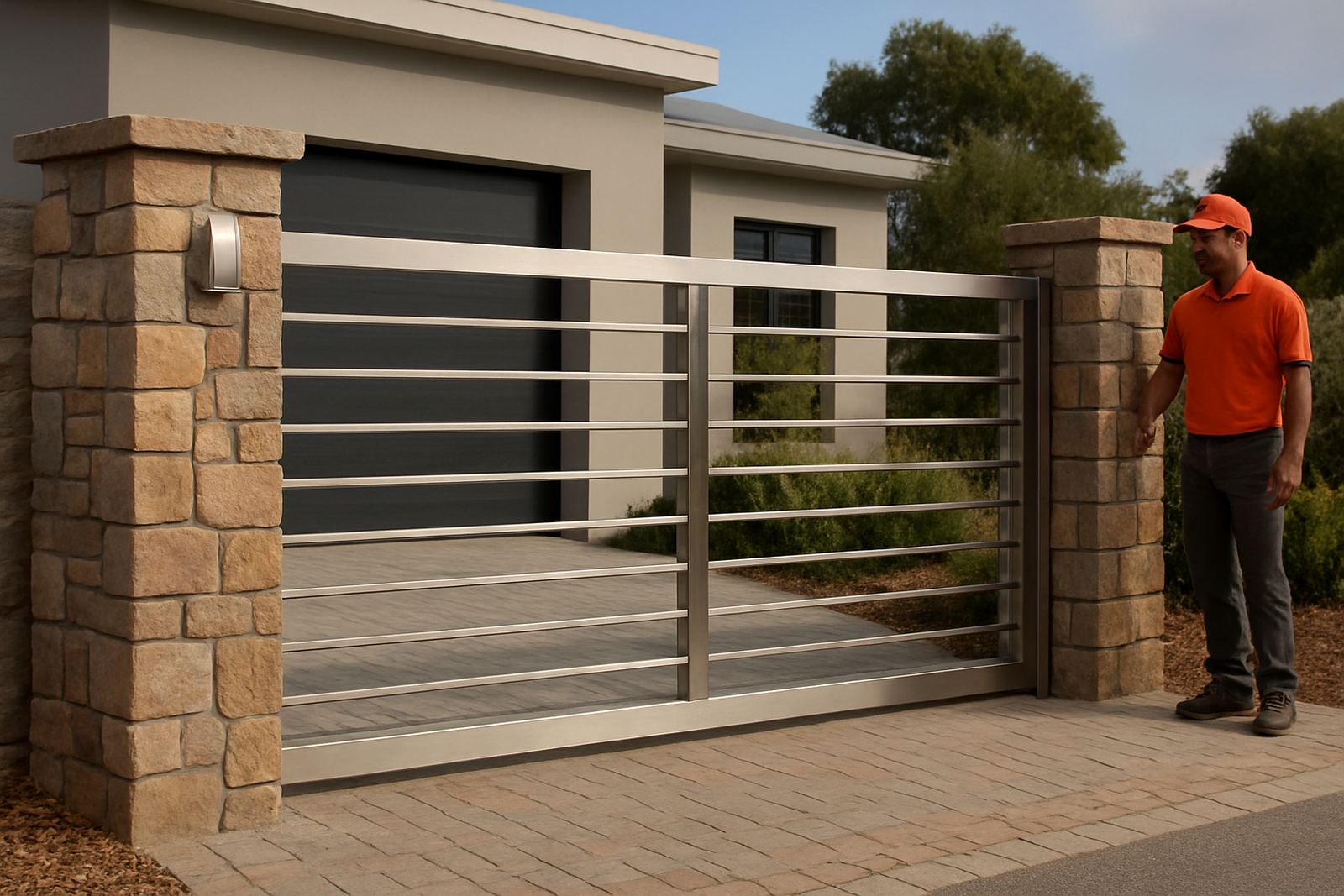
Our driveway gates are made in stainless steel for coastal conditions, where salt in the air, wet winters and strong sun can shorten the life of ordinary metalwork. We fabricate gates for new builds, replacements and upgrades, with sizes and finishes matched to the look of the boundary wall, driveway and entrance pillars. A well-made gate should open cleanly, latch properly and still look neat after years of daily use, not just when it is first fitted.
We work from our Knysna Industria base and cover Knysna, Plettenberg Bay, Sedgefield, Wilderness, George and Mossel Bay. Gates are commonly supplied as swing gates, sliding gates or pedestrian combinations, depending on the space available and how the driveway is used. For narrow entrances, sloped driveways or sites with tight turning space, a sliding option may suit better than a swing gate. If the property is exposed to wind or sea spray, the gate design can be adjusted for stronger bracing and easier movement.
Sizes, Styles And Common Options
Every driveway opening is different, so we measure first and fabricate to suit the actual space. Typical residential driveway gates range from about 2,400 mm to 5,500 mm wide, with heights from 1,200 mm to 2,100 mm depending on privacy and security needs. Larger or heavier gates can be made for small commercial entrances, parking yards and shared access points. If the opening is not square or the pillars are out a little, we allow for that in the shop drawings before fabrication starts.
Clients can choose a clean stainless frame, mixed material panels, or a gate with infill that allows more privacy. We can also fit glass sections where the design calls for it, although that is usually more common on pedestrian gates than vehicle gates. Hardware can be supplied for manual use or for motorised operation. Where the site calls for extra strength, we use thicker wall sections and proper bracing so the gate does not twist over time.
- Single or double leaf swing gates
- Sliding gates for short driveways or sloped sites
- Manual or motor-ready gate frames
- Privacy infill, open bar spacing or decorative layouts
- Pedestrian gate matching the driveway entrance
Where Stainless Driveway Gates Make Sense
Stainless driveway gates suit coastal homes, holiday properties, guesthouses, body corporates and businesses that want a cleaner finish with less ongoing rust treatment. In places like Knysna, Sedgefield and Wilderness, humidity and salt exposure can mark ordinary painted steel fairly quickly, especially on gates that are handled every day. Stainless is also a good choice where the gate needs to stay presentable for visitors, tenants or customers.
We also see strong demand from clients who want a gate that works well with modern boundary walls, stone pillars or glass and stainless features. For rental properties, a solid gate reduces maintenance calls and helps keep the entrance tidy. On commercial sites, the gate can be matched to access control, delivery times and staff movement, which helps avoid repeated fixes later on. A good gate should suit the property first, then the motor and hardware can be chosen around that.
- Coastal homes and seafront properties
- Guesthouses, estates and small body corporates
- Business yards and secure parking entrances
- Homes with sloped or uneven driveways
- Sites needing low maintenance and a neat entrance
How We Measure, Fabricate And Install
Our process starts with a site measurement and a practical check of the opening, slope, wall line and fixing points. We then prepare shop drawings so the client can see the gate size, layout and hardware approach before fabrication begins. This helps avoid problems with pillar spacing, vehicle clearance and gate swing. If there is existing automation, we check whether the new gate can work with it or whether changes are needed.
Fabrication is done in the workshop using proper jigs and alignment checks so the gate remains square. Once ready, the gate is delivered and installed on site, with hinges, catches, tracks or rollers fitted where required. If a motor is part of the job, we allow for the gate weight, opening length and access layout so the installation works properly from day one. For sites with load-shedding or unreliable supply, a manual override is worth considering so the gate can still be opened without drama.
We also install related items like gate hardware fitment, stainless repairs and maintenance checks. On a busy site, that means one team can handle the gate frame, the final fitment and the small adjustments that are often needed after the first few weeks of use. We keep the job practical, because a gate that is 3 mm out of line can give trouble for years, no matter how good it looked in the shop.
Power, Hardware And Site Conditions
Driveway gates themselves do not use power unless they are automated, but the site layout must still allow for the motor, wiring and control gear if that is being included. In coastal areas, motors and control boxes should be protected from spray, rain and direct ground moisture. We can advise on the gate frame, but the final automation setup is usually set by the installer or the client’s electrical team. If the gate is manual, the focus shifts to smooth hinges, proper latch alignment and a handle that is easy to use.
For stainless gates near the coast, we often suggest simple design choices that reduce future service issues. Good drainage around the bottom of the gate, enough clearance for leaf litter or sand, and proper anchoring into concrete all help. If the entrance sits in a windy spot, the gate may need more structural support or a different opening direction. That kind of planning costs less than repeated repairs, and it keeps the entrance working properly during busy seasons.
- Allow for motor clearance if automation is planned
- Check where power will be run from and protected
- Make sure the driveway has enough swing or slide space
- Allow for drainage, slope and vehicle turning room
- Ask about manual release for power cuts
Care, Servicing And Long-Term Use
Stainless steel is low maintenance, but it still needs a bit of care, especially near the sea. A rinse with clean water now and then helps remove salt and grit. If the gate is close to the ocean or a busy road, a light clean more often is better than leaving deposits to build up. Hinges and moving parts should be checked for wear, and any loose fasteners should be tightened before they start causing movement or noise.
We can carry out maintenance checks, minor stainless repairs and surface restoration if a gate has picked up marks or needs attention after years of use. If there is staining from contact with mild steel tools or fittings, that can often be dealt with before it becomes permanent. The main thing is to keep the gate moving freely and make sure the hinges, latch and bottom clearances stay in line. Small issues left too long usually turn into bigger bills later on, so it pays to look after the gate once or twice a year.
What To Check Before You Order
Before ordering a driveway gate, measure the clear opening, note the height you want and check whether the gate must open inward, outward or slide across. It also helps to know if there are slope issues, existing pillars, a motor in place or a need for pedestrian access next to the vehicle gate. If the site has municipal or estate requirements, those details should be shared early so the gate can be made to suit. A clean plan at the start avoids delays later and keeps the job moving.
Clients should also think about how the gate will be used every day. Is it for one family car or repeated deliveries, is privacy more important than visibility, and will it need to cope with frequent opening and closing? If you are replacing an old gate, send us photos of the opening, hinges, latch points and any problem areas. That gives us a better picture before we attend the site. For larger properties or busy entrances, it is worth planning the gate with future use in mind, not just what fits right now.
- Clear opening width and preferred gate height
- Swing or sliding layout
- Manual use or motor-ready design
- Pillar type, wall thickness and fixing points
- Privacy level and finish preference
- Any slope, wind exposure or coastal conditions
Key facts
| Material | Stainless steel fabricated for coastal and inland use |
|---|---|
| Typical width | 2,400 mm to 5,500 mm, larger on request |
| Typical height | 1,200 mm to 2,100 mm |
| Gate types | Swing, sliding and pedestrian combinations |
| Finish options | Brushed, polished or mixed-material layouts |
| Service area | Knysna, Plettenberg Bay, Sedgefield, Wilderness, George and Mossel Bay |