Stainless grab rails for safer everyday support
Grab rails give a steady handhold where slips are most likely, especially in wet rooms, shower corners, beside toilets and along short steps or ramps. At Sisonke Stainless we make each rail to suit the wall line, user height and fixing surface, so it feels natural to use and does not interfere with the room layout. The aim is simple: reliable support without looking bulky.
Because these fittings are used every day, material choice matters. Stainless steel is a good option for coastal areas like Knysna, Sedgefield, Wilderness and Plettenberg Bay, where moisture and salt in the air can be hard on lesser metals. It also suits busy guest houses, retirement rooms and family homes where cleaning needs to be quick and practical.
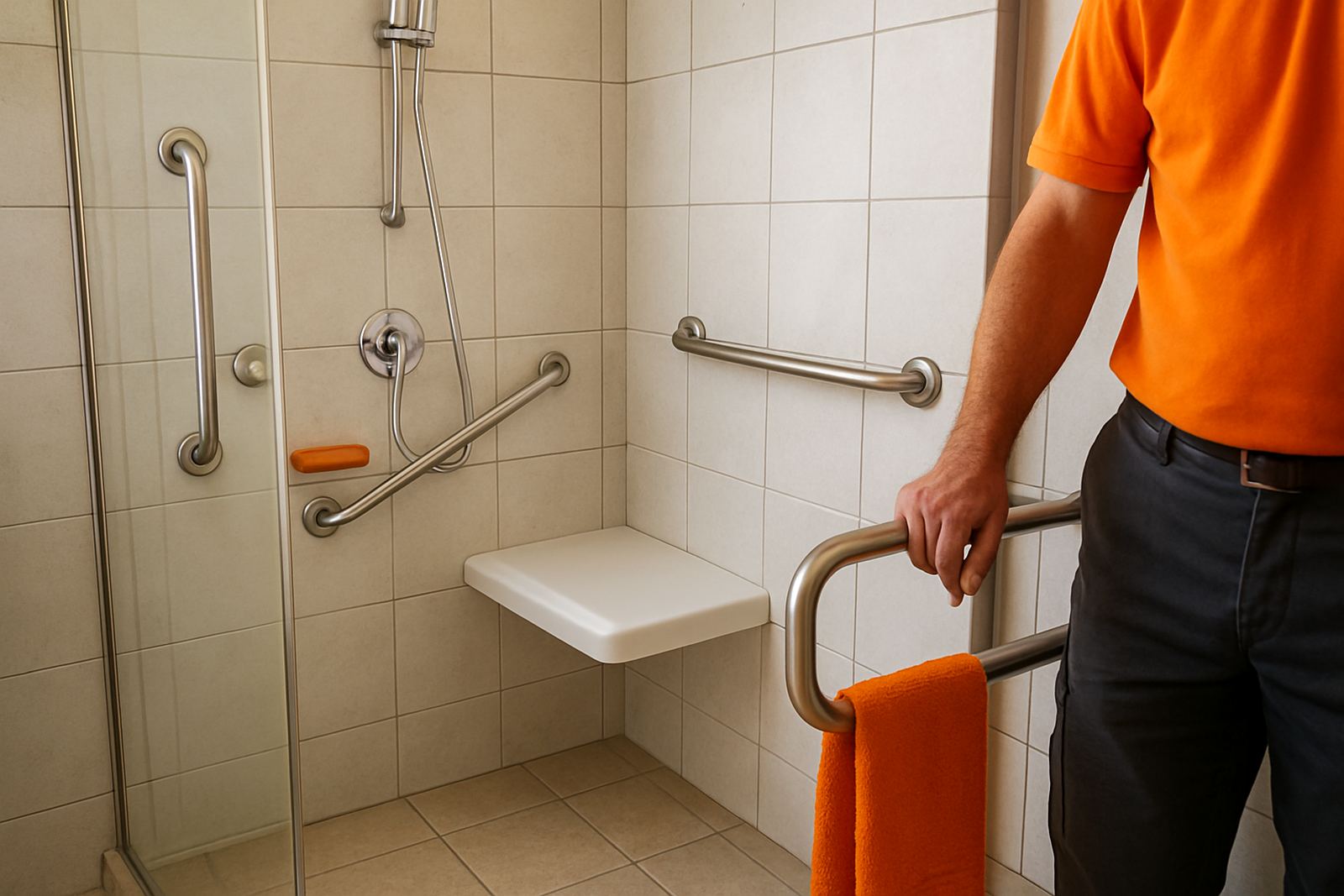
We supply grab rails for straight walls, corner positions and longer runs where a person needs support over a few metres. For some jobs we also make paired rails on opposite walls, or a continuous rail that helps with movement from the shower entrance to the seat or turning area.
- Suitable for bathrooms, showers, passages, ramps and assisted living spaces
- Made to suit wall height, user reach and fixing position
- Commonly used in homes, lodges, clinics and care rooms
- Can be matched to other stainless fittings in the same room
Sizes, bend styles and fixing options
Most grab rails are made from round stainless tube, with a smooth hand feel and no sharp edges. A common tube size is 32 mm outside diameter, which gives a comfortable grip for most adults. Smaller 25 mm tube can suit lighter support points, while 38 mm can be useful where a fuller grip is preferred. Wall clearance is usually set between 50 mm and 75 mm, depending on the hand space needed and the type of finish around the rail.
Lengths are made to order. Short rails of 300 mm to 600 mm work well beside a toilet or near a shower entrance, while 800 mm to 1200 mm rails are common for longer support runs. If the wall layout allows, we can bend the rail to create a return, U-shape or angled transition for easier hand placement. We also fabricate custom corner rails when a shower or bathroom needs support in two directions.
Fixing plates are usually made with solid stainless back plates and neat countersunk fixings. The number and spacing of fixings depends on the load, wall structure and rail length. A properly fixed rail should take body weight without movement, so we always check the substrate before finalising the design.
- Tube diameters commonly supplied: 25 mm, 32 mm and 38 mm
- Typical lengths: 300 mm, 600 mm, 800 mm, 1000 mm and 1200 mm
- Wall standoff usually 50 mm to 75 mm
- Available in straight, corner, angled and return configurations
Where grab rails suit best in the Garden Route
These rails are used in private homes, guest houses, lodges, retirement units and accessible bathrooms across the Garden Route. They are especially useful in showers with tiled floors, at bath edges, next to raised steps and in areas where a person needs a stable handhold when standing up or turning. In coastal towns, stainless is often the better choice because it copes well with humid air and the cleaning routines that come with guest accommodation.
We often fit grab rails in Knysna Industria, Buffalo Bay holiday units, Sedgefield family homes, George retirement flats and Mossel Bay holiday properties. For public or shared spaces, we can position the rail to support a clear access route and keep it away from door swings, soap trays and other fittings that get in the way.
Where there is limited wall space, we can combine the rail with other stainless accessories or adjust the fixing line to suit tile joints and waterproofing details. If the area is still under construction, it is best to involve us early so the mount points can be planned before the final finish goes in.
- Bathrooms and showers in homes and guest accommodation
- Assisted living rooms and care facilities
- Near steps, ramps and short passages that need extra support
- Wet areas exposed to coastal humidity and frequent cleaning
Installation, building conditions and power or gas needs
Grab rails are fitted mechanically to the wall and do not need power or gas to function. However, the wall build and finish are important. Tiled plasterboard, brick, concrete and masonry all need different fixings and spacing. We check the wall type, look for waterproofing, and confirm where hidden services may run before drilling. If the rail is going into a shower with a membrane or on a newly tiled wall, the fixing plan must be set carefully so the waterproof layer is not compromised.
Our team handles site measuring, shop drawings, fabrication and onsite installation. In many cases we can work around occupied homes with minimal disruption. For properties with load-shedding backup systems, there is usually no impact on rail installation, although we do need safe site access, working lights and a clean area for drilling and sealing. If the job is part of a larger bathroom upgrade, we can coordinate with tilers, plumbers and builders so the finished rail lands in the right position.
Installation time depends on the number of rails and the wall conditions. A single straight rail can often be installed in a short visit, while full bathroom sets or multi-unit projects need more planning. Once fixed, the rail is checked for alignment, firmness and comfortable hand position before we leave site.
- No power or gas required for use
- Mechanical fixing suited to wall type and load needs
- Waterproofing and tile positions must be checked before drilling
- Can be installed as a single item or as part of a larger bathroom project
Care, cleaning and long-term servicing
Stainless grab rails are low maintenance, but they still need basic care. Regular wiping with warm water and a mild cleaner helps remove soap, chlorine residue and coastal dust. In shower areas it is worth drying the rail after heavy use now and then, especially in homes close to the sea where salt can settle on the surface. Avoid harsh abrasives and strong acidic cleaners, as these can mark the finish over time.
If the rail is installed in a guest house, school or clinic, we can include it in a regular maintenance check. That usually means checking for loose fixings, worn sealant around the plates and any movement caused by repeated use. If the finish has picked up light staining or surface marks, we can assist with restoration and re-polishing where needed.
A good grab rail should feel solid every time someone uses it. If there is any wobble, scrape sound or water ingress around the wall plate, it should be inspected early rather than left to worsen. Small fixes now are cheaper and safer than a full replacement later.
- Clean with mild soap, water and a soft cloth
- Dry off salt spray or standing water where possible
- Check fixings and sealant regularly in busy facilities
- Ask for surface restoration if the finish becomes marked
What to check before you order
To make the right grab rail, we need a few practical details. First, measure the space and note where the user needs support most. Then check the wall type, whether the rail must go over tiles or onto bare masonry, and whether there is enough room for the hand to pass comfortably. It helps to know if the rail is for a right-hand or left-hand position, or if both sides need support.
We also need to know how the rail will be used. A rail beside a toilet may need a different height from one in a shower or along a ramp. If the person using it has limited reach, reduced grip strength or uses a mobility aid, that affects the tube size, wall clearance and fixing position. For shared spaces, it is worth planning the rail placement so it does not block a doorway or interfere with cleaning.
When you send through an enquiry, include photos, rough measurements and the town or site address. That helps us prepare a better quotation and decide whether a site visit is needed before fabrication starts.
- Exact area and intended use
- Wall type and finish, including tiles or waterproofing
- Preferred length, height and left or right hand position
- Any nearby fittings, doors or shower screens that affect placement
Key facts
| Material | 316 stainless steel or 304 stainless steel, selected to suit location and use |
|---|---|
| Tube size | 25 mm, 32 mm or 38 mm outside diameter |
| Common lengths | 300 mm, 600 mm, 800 mm, 1000 mm and 1200 mm |
| Wall clearance | Typically 50 mm to 75 mm |
| Fixing type | Stainless plates with mechanical anchors suited to wall build |
| Service area | Knysna, Plettenberg Bay, Sedgefield, Wilderness, George and Mossel Bay |