Built for lagoon edges, slipways and tidal movement
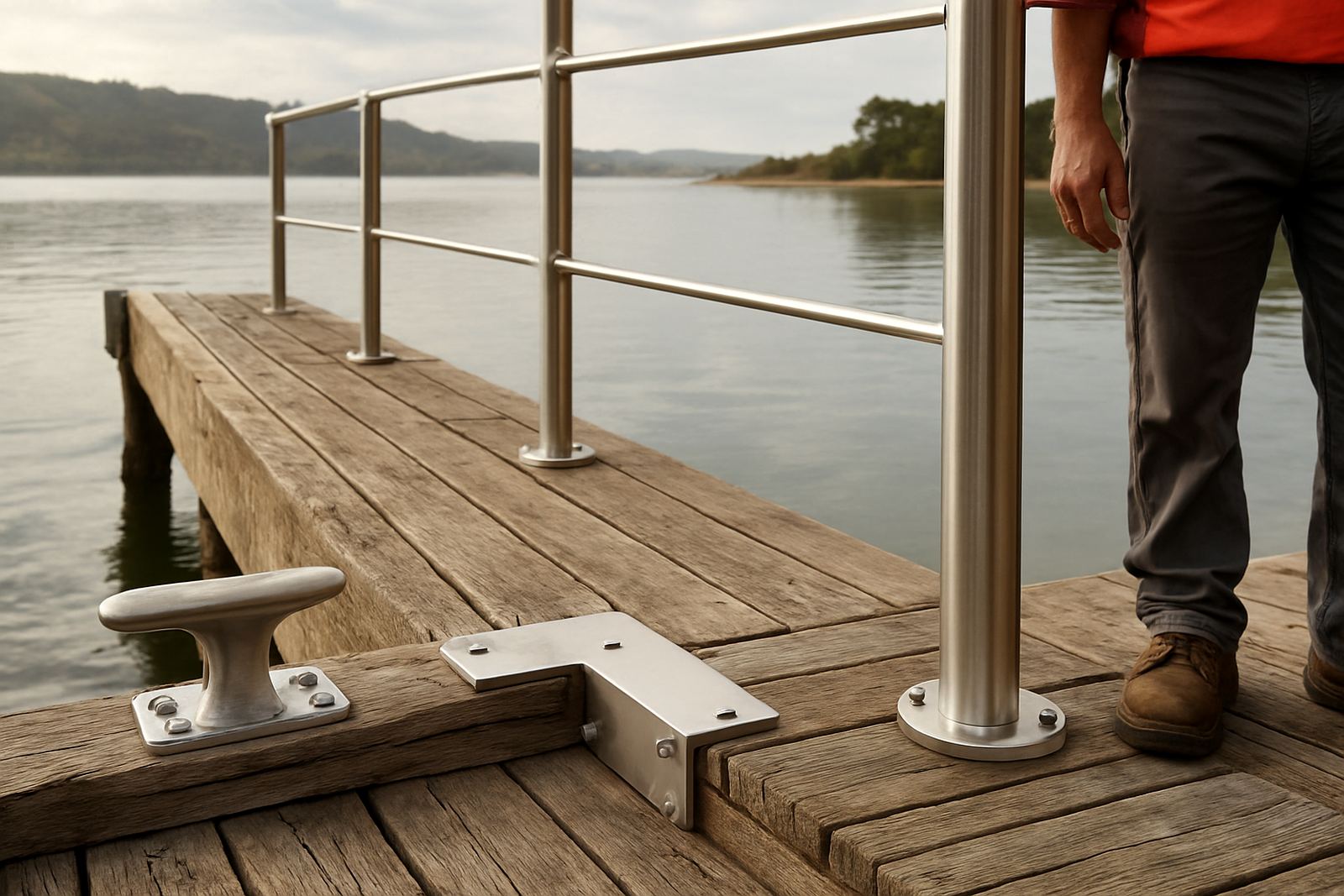
Jetty fittings are the stainless parts that make a jetty safer and easier to use. They include brackets, cleats, tie points, ladder fixings, guide plates, hinge parts, handhold mounts and protector pieces where timber, concrete or composite decks meet water. In Knysna and along the coast, these fittings have to cope with salt spray, algae, movement underfoot and the constant wet and dry cycle that comes with tidal areas.
We make each fitting to suit the structure in front of us, rather than forcing a standard part onto a site. That matters on lagoon jetties, private moorings and marine access structures where the deck width, post spacing and fixing points are rarely the same. A good fitting must line up properly, spread the load and stay serviceable after years of use. If it is too light it bends, too heavy and it can damage the base material or make the structure awkward to use.
Our work is done from the Knysna Industria base and installed across Knysna, Sedgefield, Wilderness, George, Plettenberg Bay and Mossel Bay. For jetty work we plan around tide, weather and access, because a fitting that is perfect in the workshop still has to go on cleanly at the water's edge.
Common fitting types and useful size options
We supply a range of custom stainless jetty fittings for new builds, upgrades and repairs. Sizes depend on the deck layout, post size, expected foot traffic and whether the jetty is for private use, visitor access or light service work. Where needed we can make matching sets so the finished structure looks consistent and is easier to maintain.
- Cleats and mooring points: typically 8 mm to 12 mm plate, with hole patterns matched to the base frame
- Handrail and ladder brackets: made to suit 32 mm, 38 mm or 50 mm tube, depending on the hand contact area
- Deck edge protectors: formed to cover exposed corners and high-wear points
- Hinge and pivot parts: sized to suit access gates, gangway sections and lift-out panels
- Guide plates and stop plates: used where boats, trolleys or moving sections need a positive end point
- Custom tie-down fittings: made with eyelets, slots or welded loops as required
Material choice usually depends on exposure. For sheltered lagoon jetties, grade 316 is often preferred because it handles coastal humidity and salt better than general purpose stainless. In some low-exposure inland or covered areas, other grades may be suitable, but we will always look at the site conditions before recommending anything.
Where jetty fittings suit best
These fittings are made for places where people step, lift, tie off or move equipment around water. That includes private lagoon jetties, boating access points, fishing platforms, maintenance jetties, small harbour structures and marine walkways with hand contact points. They are also useful where timber or composite structures need stronger tie points, or where an old fitting has rusted through and only the affected piece needs replacing.
In the Garden Route, the big issues are corrosion, fast weather changes and wear from constant use. Coastal humidity can creep into folds, corners and welds if the fitting was not made or sealed properly. That is why we take time on weld finish, drainage and fixing layout. A fitting should not trap water in a pocket where salt can sit for weeks. We also keep an eye on sharp edges, because bare feet, ropes and wet hands all find them quickly.
- Knysna lagoon jetties and canal access points
- Plettenberg Bay private marine access structures
- Sedgefield and Wilderness waterfront properties
- George and Mossel Bay coastal service jetties
- Marine access platforms for maintenance or equipment loading
Measuring, installation and site power requirements
Jetty fittings start with site measuring. We check the deck thickness, post centres, handrail heights, fixing access and the condition of the surrounding timber, concrete or frame. On older structures we also look for movement, soft spots and previous repair points. That lets us make fittings that sit square and do not force the installer to drill in the wrong place. If the jetty is over water or on a tidal edge, we plan the sequence so the work can be done efficiently before the access window changes.
Installation is usually carried out with battery tools, hand tools and small site equipment. For welding and cutting, power may be needed on site depending on the job scope, but many fittings are prepared in the workshop and bolted into place. If the site has no reliable mains supply, we can plan the work around temporary power or complete more of the fabrication off site. Gas is used where welding or stainless repair work is required, although not every job needs it. The aim is to keep disruption low and get the jetty back in service as quickly as possible.
We work neatly around municipal or body corporate rules where access is controlled, and we keep the area tidy because jetty work is often in view of neighbours, guests and property users. A good installation should leave no loose swarf, no rough holes and no wondering whether the fitting will hold under daily use.
Care, servicing and corrosion checks
Even stainless fittings need basic care in coastal areas. Salt film, bird droppings and trapped sand can all shorten the life of a fitting if they are left too long. A simple wash with clean water every few weeks is often enough for most private jetties, but more exposed sites may need monthly rinsing and a closer check after strong winds or heavy rain.
We recommend servicing the fittings at least once or twice a year, depending on use. During a maintenance check we look for loose fasteners, cracked welds, movement around the base plate, staining around fixings and any signs of crevice corrosion. If a fitting is starting to mark the surrounding material, it may need a new isolator, larger backing plate or a full replacement. Catching those faults early usually saves a lot of repair work later on.
- Rinse with fresh water after salt exposure
- Check fixings after storms or high use periods
- Keep gaps clear so water can drain
- Remove algae and grit from around base plates
- Book a service if the fitting shows movement, rust staining or pitting
What to check when ordering your jetty fittings
Before we make a fitting, it helps to know exactly what it has to do. A cleat for a small mooring line is not the same as a bracket supporting a handrail or a hinge carrying a lift-out section. If you can give us photos, rough sizes and a simple sketch, we can usually narrow the job quickly and avoid delays on site. Where an existing part is being replaced, bring the old item if possible so we can copy the fixing pattern and working angles.
Please check the following before ordering: the measured opening or span, the hole centres, the deck material, whether the fitting must be removable, the expected load, the water exposure level and the preferred finish. If the structure is shared or public-facing, it is also worth confirming the required height and clearance with the relevant site manager or municipality. That avoids a nice fitting being made to the wrong size, which happens more often than people think.
We can assist with site measuring, shop drawings, custom fabrication, onsite installation and repairs. For jetty fittings in Knysna and the Garden Route, that full service approach keeps the job practical from first measure to final tightening.
Key facts
| Material | Typically marine-grade stainless steel, often grade 316 for coastal exposure |
|---|---|
| Thickness range | Commonly 3 mm to 12 mm depending on load and fixing type |
| Tube sizes | 32 mm, 38 mm or 50 mm for matching handrail and bracket work |
| Fixing method | Bolt-on, welded or mixed fixing depending on access and structure |
| Finish options | Brushed, polished or restoration finish to suit the site |
| Service area | Knysna, Plettenberg Bay, Sedgefield, Wilderness, George and Mossel Bay |