What stainless machine guards do on site
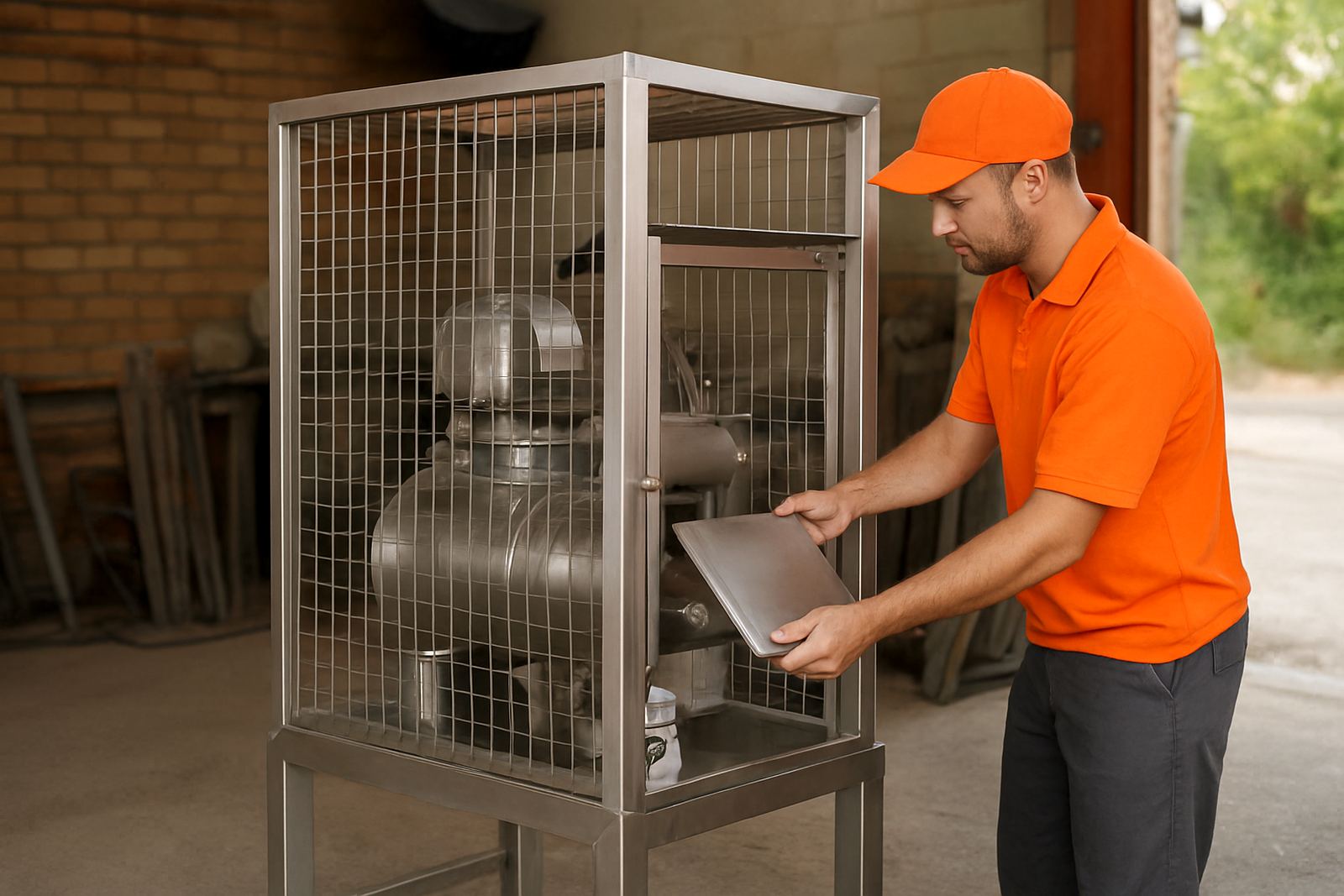
Machine guards are fitted barriers or covers that help separate people from moving parts, hot surfaces, spray, dust and cleaning chemicals. In coastal towns like Knysna, Sedgefield and Plettenberg Bay, stainless is often chosen because it handles salt air better than plain steel and keeps its finish longer with less maintenance. These guards are made to suit the actual equipment, not the other way round, so access points, inspection panels and latch positions can be set around the machine layout.
We make guards for processing lines, pumps, mixers, small conveyors, compressor areas and general plant rooms. They can be fixed panels, removable covers, mesh sections, access doors or a mix of these depending on how often the equipment needs to be reached. Where hygiene or washdown is part of the routine, smooth surfaces and fewer dirt traps help with cleaning between shifts.
Common sizes, layouts and finish options
There is no single standard size because machine spaces differ from site to site. We build to measured dimensions, but we do work to practical ranges that suit most small to medium equipment bays. Panel height often starts around 900 mm and can go up to 2 100 mm or more, while widths are made to fit the exact opening and access clearances. Frame members, flat bar edging and support legs are selected to suit the weight and the level of contact expected on site.
Material choice depends on the environment. For indoor general use, stainless sheet and tube offer a clean finish and good durability. For coastal or chemical exposure, we look at heavier gauge material and tighter detail on joints, fasteners and fixings. Where visibility matters, we can include perforated sections, mesh infill or clear sight panels in selected areas. We also make guards with brushed or polished finishes where the equipment sits in a customer-facing or food-related space.
- Typical sheet thickness: 1.2 mm, 1.5 mm or 2.0 mm
- Tube and frame sizes matched to the load and span
- Fixed, hinged, sliding or removable panel options
- Matt brushed or polished surface finish available
Where machine guards are a practical fit
These guards suit workshops, light industrial plants, marine service areas, pumping stations, food prep areas and outside equipment bays. Around the Garden Route, we often see equipment exposed to salt in the air, high humidity and frequent cleaning. That combination can shorten the life of painted steel covers, especially where chips, scratches and water sitting in corners start the rust process.
Machine guards are also useful where staff move past the same equipment every day and need clear boundaries. In a small factory or maintenance yard, a well made guard can keep hands clear of danger points, reduce accidental bumps and help with housekeeping. If your equipment area is outside or under a lean-to roof, we can shape the guard to suit wind exposure, rain run-off and the way the team actually works around it.
- Knysna, Sedgefield and Wilderness sites with coastal exposure
- George and Mossel Bay workshops with regular washdown cleaning
- Plettenberg Bay and surrounds for plant near hospitality or marine spaces
- Maintenance yards where equipment is moved or serviced often
Installation, access and power or gas considerations
We start with site measuring and shop drawings so the guard fits properly and does not block service points. Installation can be done on site with mechanical fixings or welded supports where that is the better option. If the guard is going around powered machinery, we make sure the layout leaves room for lock-off access, cable entry points, inspection space and door movement. For gas-fed or heated equipment, we keep clearances practical and make allowances for heat, hoses and safety access.
In many cases the installation is planned around production time, so we work to reduce downtime and keep the area safe while the fitting takes place. Some guards are made in sections for easier handling through narrow doors, stairs or tight plant rooms. If the site has load-shedding backups, generator power changeovers or limited access hours, we can schedule accordingly. A good fit is important because a guard that rattles, binds or blocks maintenance will not be used properly.
- Site measuring before fabrication
- Shop drawings for approval where needed
- Onsite installation with brackets, anchors or welded supports
- Clearance planned for doors, cables, pipes, heat and gas lines
Care, cleaning and servicing over time
Stainless guards still need basic care to keep them looking and working properly. Regular wipe-downs remove dust, grease and salt deposit before they mark the surface. In coastal areas, washing with clean water and a mild detergent helps keep the finish even, especially if the guard sits near open doors or outside service yards. Harsh abrasives should be avoided because they can leave the surface dull and make cleaning harder later.
We can also do maintenance checks and surface restoration if the guard starts showing wear, staining or loose fixings. Hinges, catches and fasteners should be checked from time to time, especially on doors that are opened every day. If a site has vibration from running plant, it is worth checking for small movement at the brackets and support points. That sort of early attention can prevent bigger repairs later on.
- Wipe down weekly in normal indoor conditions
- Rinse more often near the coast or after chemical cleaning
- Check hinges, latches and mounting bolts during routine servicing
- Repair dents, loose sections and worn fasteners early
What to have ready when you order
To quote and make a guard correctly, we need the equipment type, the area to be protected and the clear space around it. Photos are helpful, but measurements matter most. If you already have an existing guard that needs replacing, send the overall size, fixing points and a few pictures of how it is attached. If it is a new installation, we can measure on site and confirm the layout before fabrication starts.
It also helps to know whether the guard must be removable for maintenance, whether it needs a locked access door, and whether the site has washdown, fumes, outdoor exposure or regular contact with salt air. If there are any municipal or workplace rules affecting the installation, tell us early so the design can be set up correctly. For busy sites in Knysna, George or Mossel Bay, a clear brief saves time and avoids delays once the fabrications begins.
- Equipment type and location
- Overall width, height and depth required
- Photos of the area and fixing points
- Access needs for servicing, cleaning and inspection
Key facts
| Material | Stainless steel, selected to suit indoor, outdoor and coastal conditions |
|---|---|
| Typical thickness | 1.2 mm to 2.0 mm sheet, with heavier sections where needed |
| Common formats | Fixed panels, hinged doors, lift-off covers, mesh sections and full enclosures |
| Finish | Brushed or polished, with cleaned welds and detailed edge finishing |
| Use areas | Equipment guards, plant covers, service barriers and machine surrounds |
| Service area | Knysna, Plettenberg Bay, Sedgefield, Wilderness, George and Mossel Bay |