Built for exposed Garden Route decks
Deck rails are the safety edge around a raised timber or composite deck, balcony or stoep. On a coastal property they have to do more than look tidy. They need to cope with wind, moisture, salty air and regular cleaning without staining the deck boards or loosening at the fixings.
We make stainless deck rail systems in our Knysna Industria workshop for homes in Knysna, Sedgefield, Wilderness, George, Plettenberg Bay and Mossel Bay. Most clients want a railing that does not rust out after a few seasons, and that can be kept neat with basic washing. Stainless also suits decks that see a lot of visitors, because it holds up well when used daily and it does not need repainting every year.
- Suitable for timber decks, composite boards, concrete edges and steel framed platforms
- Common on verandas, pool surrounds, stair landings and first floor balconies
- Can be matched to modern straight line homes or more traditional coastal properties
Size options and common railing layouts
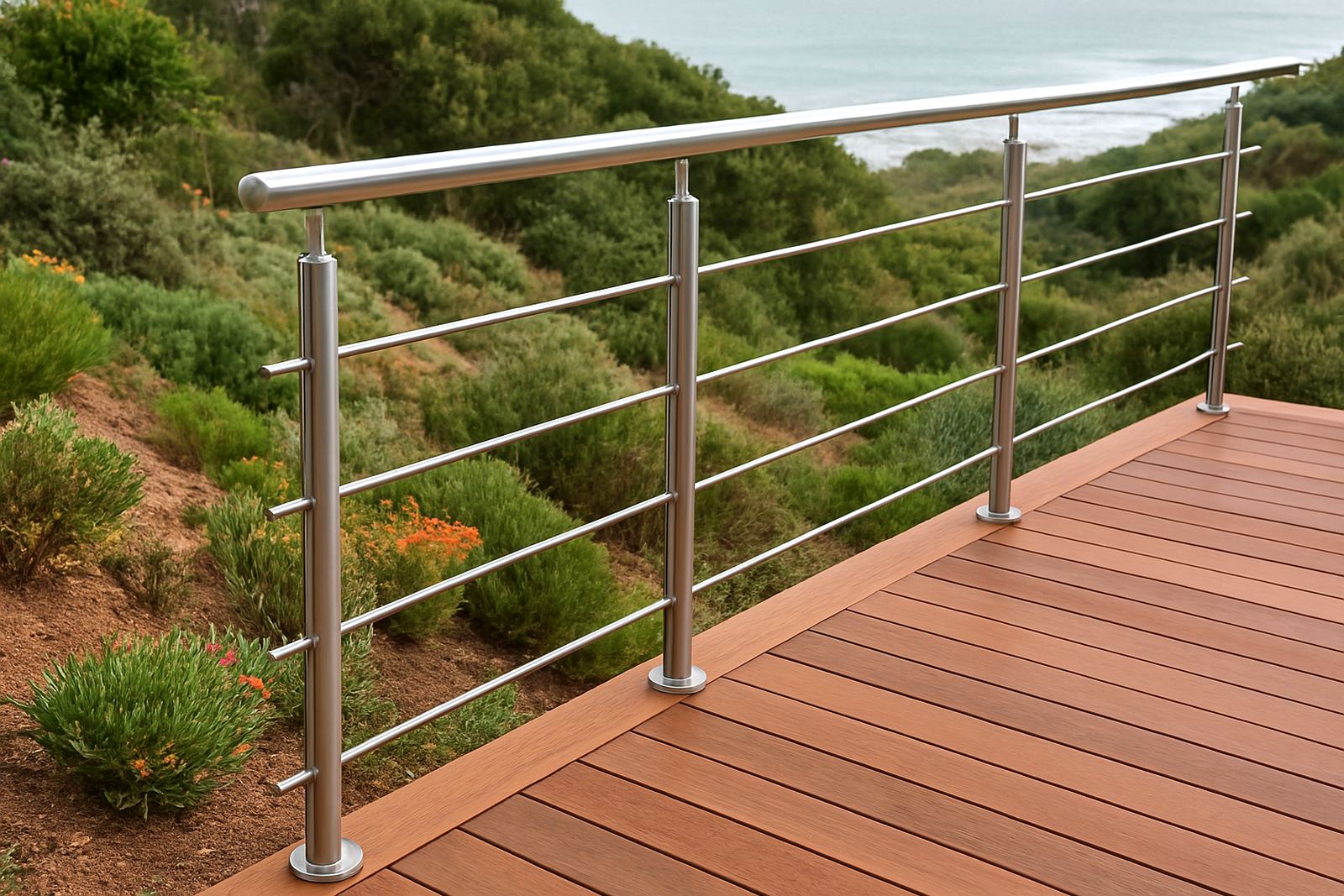
Deck rails are usually made to the measured height and edge length of the deck. A typical top rail height is 900 mm to 1000 mm above finished deck level, though we set final dimensions to suit the site and the local safety requirements. Post spacing, infill spacing and fixing detail are chosen for the deck span and the look the owner wants.
For most residential jobs we work with 38 mm to 50 mm stainless tube for handrails and top rails, with posts from 38 mm square tube or round tube depending on the design. Infill can be vertical bars, horizontal bars or glass panels. Where children are expected on site, we often recommend a tighter infill to reduce climb points. For wider decks, we can break the railing into sections so that transport, installation and future maintenance are easier.
- Top rail tube: 38 mm to 50 mm diameter, or matching square section
- Posts: generally 900 mm to 1100 mm high depending on deck level
- Infill spacing: set to the design, with tighter spacing for family homes and guest use
- Finish: brushed satin for a cleaner coastal look, or polished where requested
Where deck rails work best
These rails suit places where the deck is exposed to weather and people move through the space often. We see a lot of demand from holiday homes, small guesthouses, family decks, restaurant terraces and seaside properties where hardware must stand up to humidity and frequent cleaning.
They also work well where the deck edge is uneven or where there are steps, corners and changes in level. Stainless can be fabricated to suit awkward runs and small returns, so the finished line follows the deck properly instead of looking forced. When a deck faces strong wind, we can adjust the frame and fixings to suit the local exposure and the structure underneath.
- Homes near the sea or the estuary
- Upper decks with views and open edges
- Pool decks that need clear sight lines and good safety control
- Hospitality spaces that need a hardwearing railing with low upkeep
Installation, fixing and site power needs
We start with site measuring so the rail follows the actual deck edge and any finished board levels. After that, we prepare shop drawings and fabrication details before the frame is made in the workshop. On site, our installation team drills and anchors the posts, checks levels and makes sure the rail is properly aligned before final tightening.
Most deck rail jobs need only normal workshop power for fabrication and standard site tools for installation. Where a job includes glass fitment, gate hardware fitment or special finishing, we may need temporary site power for cutting, drilling and polishing equipment. If the property is in a load-shedding area, we plan the work sequence so the critical fixing and fitment can still go ahead. Gas is generally only used for specific fabrication tasks in the shop, not on site.
- Site measuring before fabrication to reduce waste and errors
- Mechanical fixing into timber, concrete or steel structure, depending on the deck build
- Can be fitted as a straight run, corner run or stepped section on stairs
- Final checks include plumb, level, fixing tightness and gate swing where a gate is included
Care in coastal weather and simple servicing
Stainless deck rails do not need much attention, but they do better with regular rinsing, especially close to the sea. Salt build-up can leave marks if it is left too long, so a quick wash with clean water helps. On sheltered inland jobs, the main concern is dust, spider webs and dirt around the posts and brackets.
We recommend a maintenance check after the first season and then as needed, especially if the deck sees heavy use or if the property is in an exposed spot. If a rail gets knocked, a loose post or a worn fixing should be sorted early before movement starts to spread. A brushed finish usually hides small marks better than a polished one, which is useful for busy family spaces.
- Rinse with clean water every few weeks in salty conditions
- Wipe down with a soft cloth and mild soap if needed
- Check fixings, post bases and weld areas after storms or heavy use
- Ask for a surface restoration visit if tea staining or dulling starts to show
What to check before ordering deck rails
Before we quote or fabricate, it helps to know the deck height, edge length, stair positions and the type of surface the posts will fix into. Timber decks, composite decks and concrete edges all need different fixing detail. If the deck is still under construction, send the board layout or builder’s measurements so we can allow for the final finished level. A small shift of 10 mm can change the whole rail line, so accurate measurements matter more than most people expect.
It also helps to decide on the look early. Some owners want open bars for the sea view, others want glass panels near a pool or a finer infill around young children. We can guide you on what suits the site, but the more detail you share at the start, the smoother the job goes. For houses in Knysna, George or Plett where weather can change quickly, we also check wind exposure and drainage around the deck edge.
- Deck type: timber, composite, concrete or steel framed
- Exact lengths, heights and any stair or corner sections
- Preferred infill: bars, glass or mixed layout
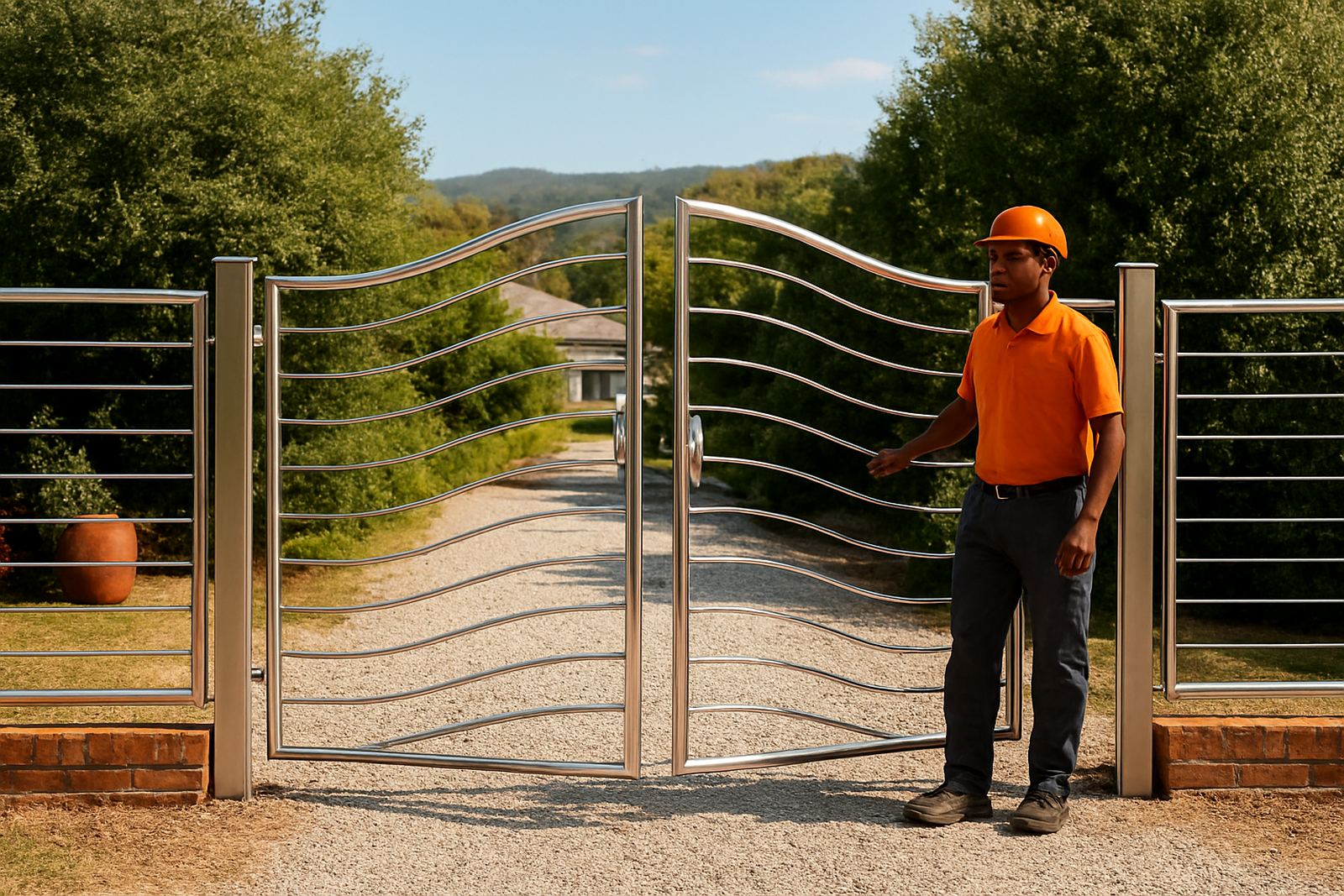
- Any gates, latch points or child safety needs
- Coastal exposure, shade cover and whether the deck gets regular washing
Why clients call Sisonke Stainless
Our work is made locally and fitted by people who know Garden Route conditions. We handle site measuring, custom fabrication, onsite installation, repairs and surface restoration from our Knysna base, with work carried out across the coastline and inland as needed. That means one team can manage the rail from first measure to final handover, which keeps things simpler for owners and builders.
We also work around active sites, holiday changeovers and occupied homes. If the deck is already in use, we plan the install so disruption stays limited and the area can be handed back clean. For many clients, that practical approach matters as much as the finish. It is not fancy work, it just needs to fit properly, last well and look right on the deck.
Key facts
| Material | Stainless steel for coastal and general residential use |
|---|---|
| Typical top rail height | 900 mm to 1000 mm above finished deck level |
| Common tube sizes | 38 mm to 50 mm round or matching square section |
| Infill options | Vertical bars, horizontal bars or glass panels |
| Finish options | Brushed satin or polished finish |
| Installation areas | Knysna, Plettenberg Bay, Sedgefield, Wilderness, George and Mossel Bay |