What a stainless signage frame does on site
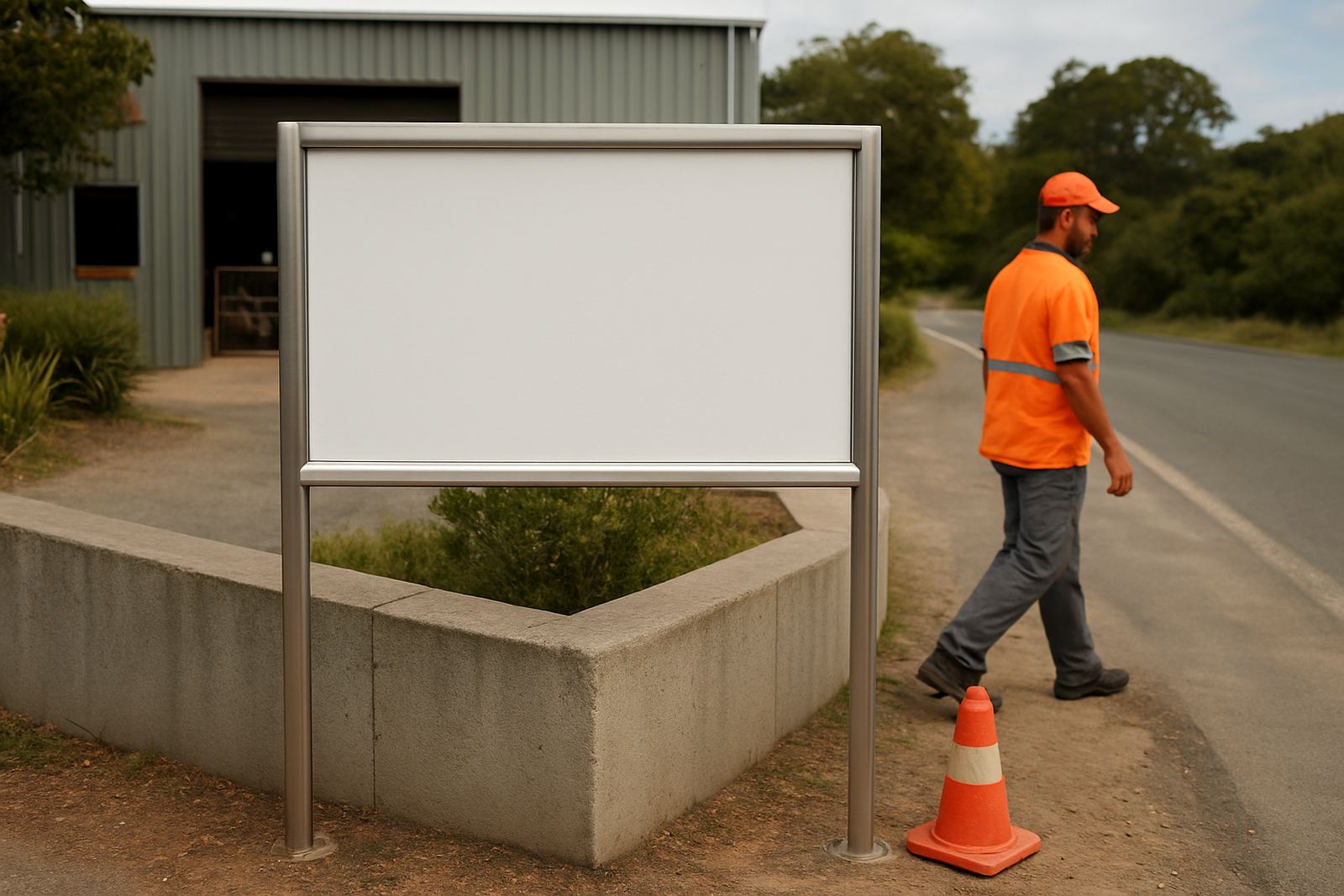
A signage frame gives your sign a fixed, straight support so the panel sits properly and stays readable. It can be wall-mounted, standoff mounted, post-supported or built as a freestanding structure, depending on where the sign needs to live and how much exposure it gets. In Knysna and along the coast, the frame matters just as much as the panel because moisture, salt spray and strong wind can move cheaper supports out of shape over time.
We fabricate frames for acrylic, aluminium composite, PVC sheet, timber inserts and glass signage panels. Frames can be made with visible edges for a clean finished look, or with concealed fixings where the sign face should look neat and uncluttered. For business parks, shopfronts and estate entrances, the right frame also helps with maintenance, since the sign panel can often be replaced without rebuilding the full support.
- Interior reception signs
- Shopfront fascia signs
- Directional signs and estate boards
- Marine-side and high-moisture locations
Sizes, profiles and finish choices
Each frame is made to the panel size you need, with allowances for fixing points, expansion and the chosen sign material. We regularly make compact frames for entrance plaques and larger frames for shopfront panels or roadside signs. A common build might use 25 x 25 mm or 40 x 40 mm stainless tube, but we also make flat bar frames, boxed frames and mixed section builds when the sign needs extra stiffness. If the sign will be seen from both sides, we can make a double-sided frame with internal bracing.
Frames are usually manufactured in 304 or 316 stainless steel, depending on location. For inland and sheltered areas, 304 stainless is often suitable. For coastal exposure, 316 stainless is the safer choice because it handles salt in the air better. Brushed finishes are popular for a neat, low-glare look, while polished finishes are used where the sign must look more decorative. If you need powder coating over stainless for branding colour, that can be arranged after fabrication and surface preparation.
- Standard section sizes from 20 mm to 50 mm and above
- Flat bar, angle, round tube and square tube options
- Matt, brushed or polished finishes
- Single-sided or double-sided construction
Where signage frames work best around the Garden Route
These frames suit a wide range of sites, from small retail signs in Knysna town to larger direction boards in Plettenberg Bay, Sedgefield, Wilderness and George. They are also useful for Mossel Bay sites where the sea air is constant and regular maintenance matters. We often build signage frames for offices, guest houses, workshops, medical practices, estate entrances and marine-related businesses that need a tidier long-life support than mild steel will give them.
For outdoor signs, the frame can be designed to handle wind load, vibration and rain run-off. For indoor signs, the design can be lighter and more discreet, especially in reception areas or under canopies. If the sign is in a public area, we can shape the frame so there are no sharp exposed corners and less chance of tampering. On busy roads, a well-fixed stainless frame keeps the sign straight and legible for longer, which helps with wayfinding and compliance where visibility is important.
- Shopfronts and trading entrances
- Estate name boards and directional signs
- Reception walls and interior branding panels
- Workshop, warehouse and site signage
Installation, fixings and power needs
We handle site measuring, shop drawings, fabrication and installation. A signage frame is only as good as its fixings, so we check the wall material, post size, available anchoring points and the weight of the panel before we make it. On block, brick, concrete and steel structures, we select fixings to suit the substrate. On cladded walls or timber features, we may add spreader plates or backing plates to stop movement and stress cracks. If access is awkward, we plan the install to suit ladders, cherry pickers or scaffold where needed.
Most signage frames need no power at all. If your sign includes lighting, we can leave allowance for cable entry, conduit paths or back panel gaps, but the electrical connection itself is usually handled by a qualified installer. Gas is not required for signage frames. For illuminated signs, we recommend checking where the power point sits, how the cable will be concealed, and whether the sign will need to remain serviceable without removing the full frame.
- Wall-mounted, post-mounted or free-standing installs
- Fixings selected for brick, concrete, steel or timber
- No gas required
- Power only needed where lighting or electronic parts are included
Care and servicing in coastal conditions
Stainless steel needs less attention than painted mild steel, but it still benefits from regular care, especially close to the sea. Dust, salt mist and bird droppings can sit on the surface and dull the finish if left too long. A wipe-down with clean water and a soft cloth is usually enough for routine cleaning, and a mild non-chloride soap can be used when needed. Avoid abrasive pads and strong chlorine cleaners because they can damage the surface and leave marks.
We can also do maintenance checks, especially where signage is high up or difficult to reach. During a service visit we inspect fixings, look for movement, check for surface staining and make sure the sign panel still sits correctly in the frame. If there is damage from wind, impact or corrosion around mixed metals, we can repair or replace the affected part. It is cheaper to catch a loose bracket early than to replace a bent frame after a storm, so a quick check before winter or after heavy wind makes good sense.
What to confirm before you order a frame
If you are sending through a sign request, the more detail we get up front, the better the frame will fit first time. We prefer a panel size, a photo of the site, and a note on whether the sign is inside, outside or close to the coast. If the frame will carry glass, a heavy composite panel or a lit sign face, tell us the finished weight so we can size the support properly. Measured twice, cut once is still the safest way to work on site.
It also helps to know how the sign will be fixed, whether you want hidden fasteners or visible hardware, and if there are any building rules, estate rules or municipal limits that affect where the sign can sit. For businesses in Knysna, Plettenberg Bay and George, we often work from photos and measurements first, then confirm the final details during site measuring. That keeps the install cleaner and avoids delay once fabrication has started.
- Panel width, height and thickness
- Indoor or outdoor location, plus coastal exposure
- Mounting surface and access for installation
- Need for lighting, cable entry or hidden fixings
Key facts
| Material options | 304 stainless steel or 316 stainless steel |
|---|---|
| Typical section sizes | 20 mm to 50 mm standard, larger on request |
| Finish options | Brushed, polished or coated after fabrication |
| Mounting types | Wall-mounted, post-mounted, free-standing or double-sided |
| Installation area | Knysna and the Garden Route, including Plettenberg Bay, Sedgefield, Wilderness, George and Mossel Bay |
| Maintenance | Simple wash-down cleaning, with repair and inspection services available |