What a stainless sliding gate does on a busy site
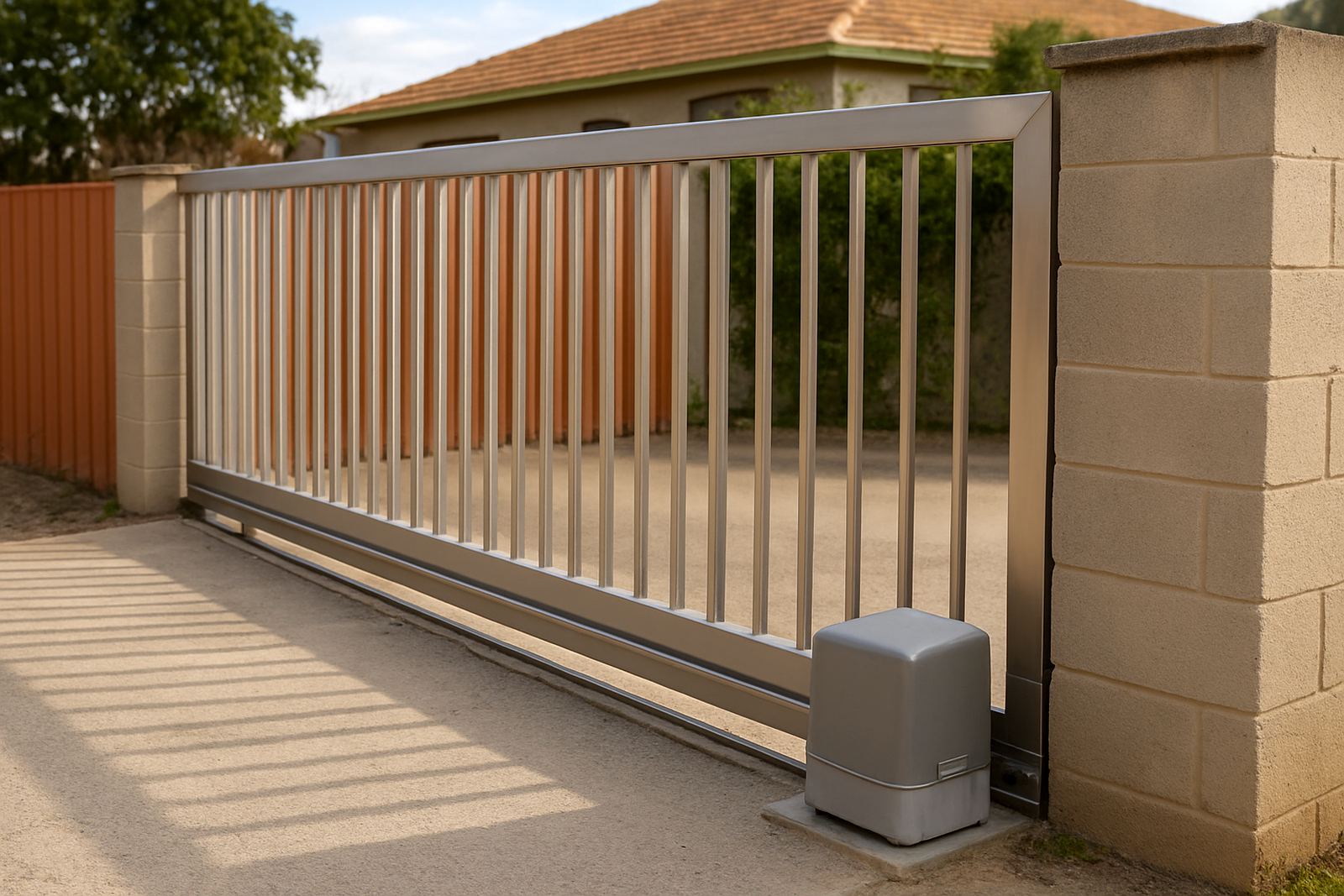
A sliding gate moves sideways along a straight line, so you do not lose driveway space to a gate leaf opening inward or outward. That makes it a good fit for properties with limited turning room, narrow entrances, shared access lanes, workshop yards and security entrances where vehicles come and go through the day.
Our sliding gates are built in stainless steel for local conditions where moisture, salty air and regular gate movement can cause faster wear on ordinary steel. For Knysna, Sedgefield, Wilderness, George and Mossel Bay, that matters. The frame, track and moving parts must all be set correctly so the gate rolls true, latches cleanly and does not drag after a heavy rain or during a power cut.
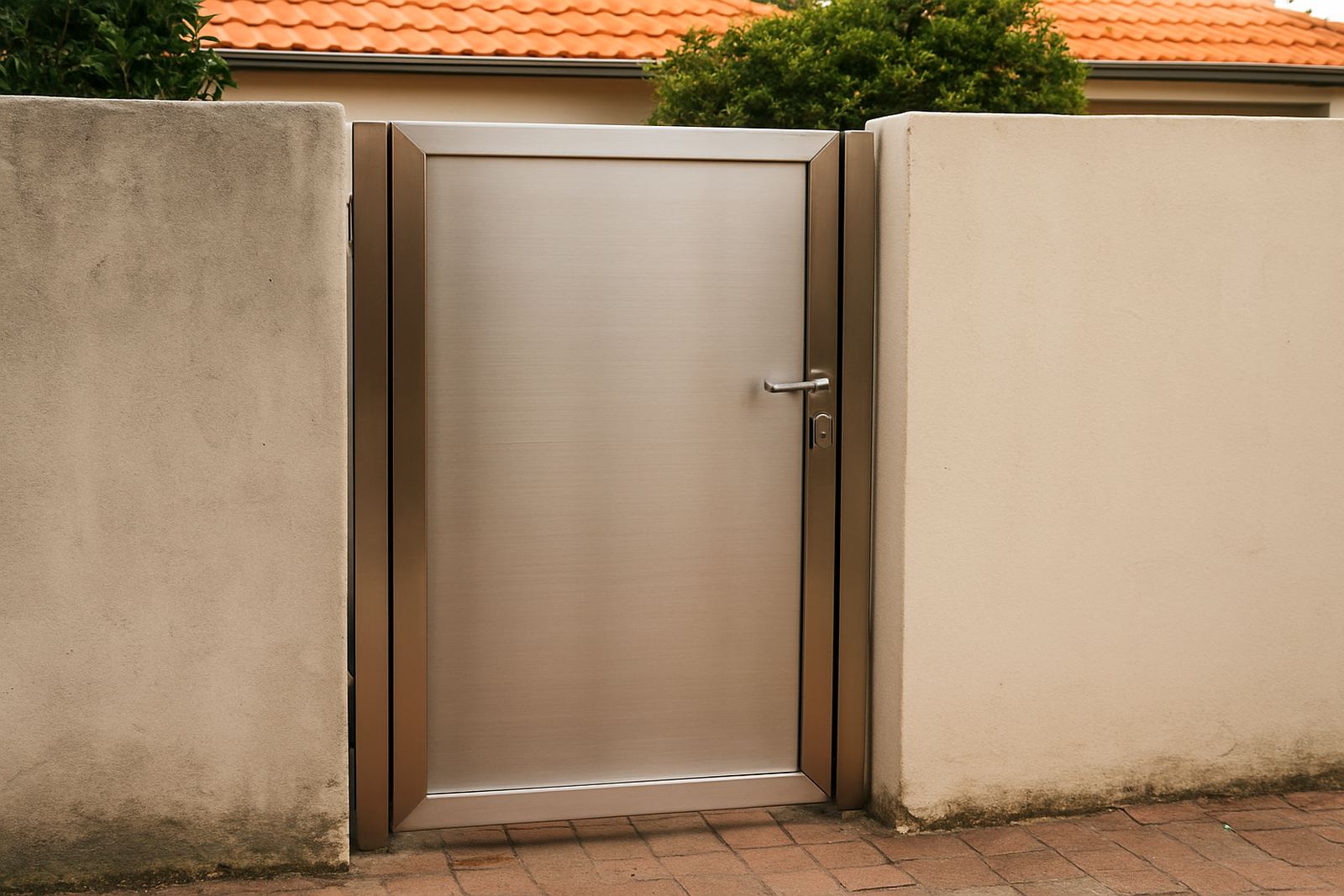
We manufacture gates to suit pedestrian use, vehicle access or wider entrance points for light commercial traffic. If you need a gate that is easy to keep tidy, stands up well near the coast and can be made in a plain or more finished style, stainless gives a practical result without extra fuss.
Sizes, layout options and finish choices
Sliding gates are made to the opening on site, not to a fixed shop size. That means we can work from a small pedestrian opening of about 1 m wide through to larger vehicle entrances of 4 m to 6 m or more, depending on the available run-back space. Gate height is usually set between 1.2 m and 2.4 m, although higher or lower options can be made where site rules allow it.
The gate can be supplied as a solid privacy style, a spaced bar style, a framed panel gate or a custom pattern to match the property. In coastal areas, many clients prefer a cleaner stainless finish because it is easier to wash and inspect. Where extra privacy is needed, inserts can be arranged, but the gate still needs to stay balanced and not become too heavy for the opening.
- Opening width made to measure after site check
- Single or double track setups for wider entrances
- Manual or motor-ready arrangement
- Locking points, guide posts and stop positions included as required
- Powder coating or mixed-material details can be discussed for appearance, but stainless remains the main structure
The final layout depends on wall space, driveway slope, the direction of run-back and whether there is enough room for a gate to park fully open without blocking a path or parking bay.
Where sliding gates work best in the Garden Route
Sliding gates suit homes in cul-de-sacs, small estates, rental properties, apartment access points and business yards where a swing gate would hit a wall or hold up traffic. They are also useful on sloped driveways because the gate can stay on a level line instead of swinging across uneven ground.
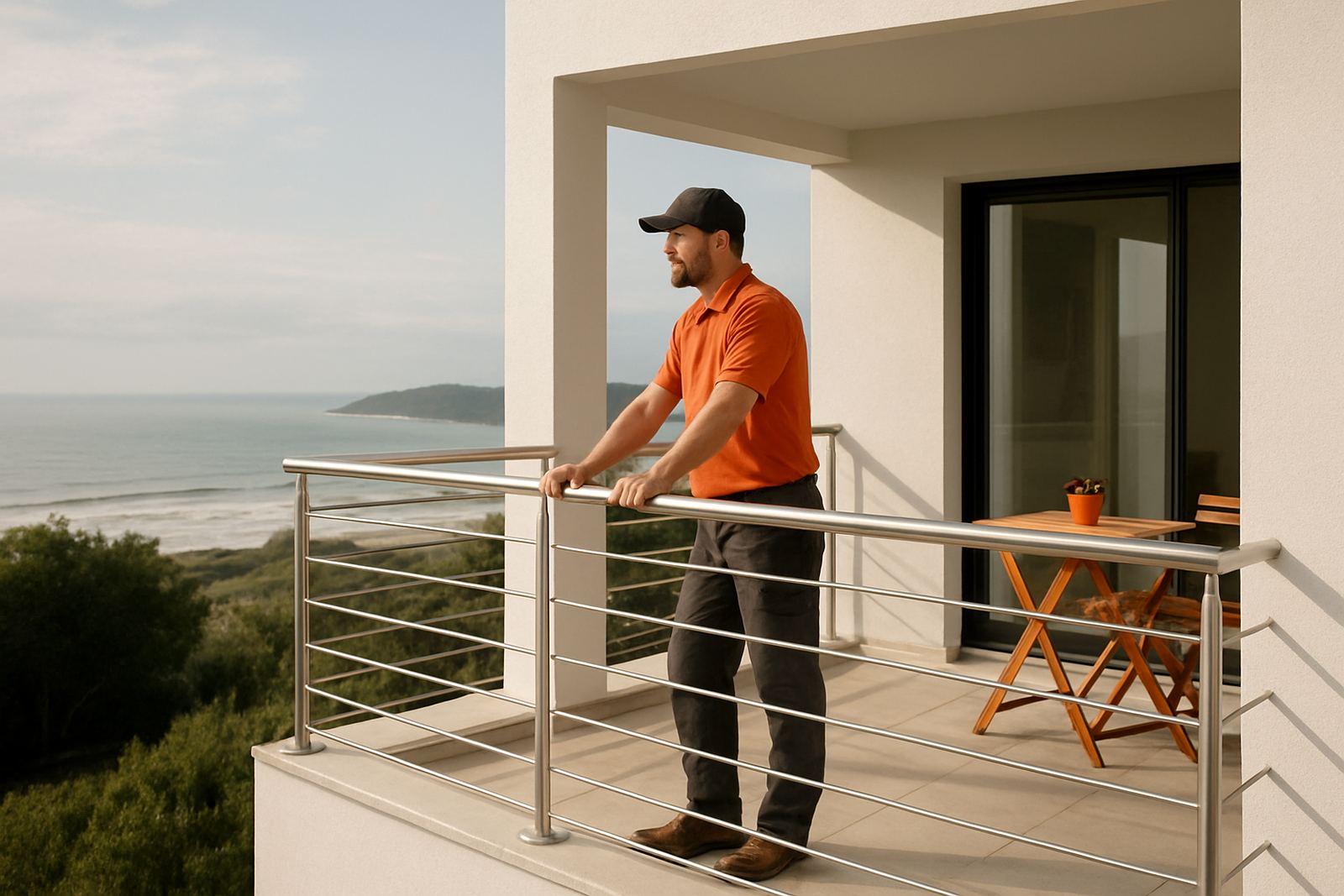
For coastal towns, stainless sliding gates are especially useful where rust and staining are a problem. Sea air can be hard on mild steel, hardware and fixings. A stainless build, with the correct bearings and track support, gives a cleaner long-term result and less fighting with swelling, binding or chipped paint.
They also make sense for:
- Workshops with limited entrance depth
- Guesthouses and small complexes
- Properties with pedestrian and vehicle access beside one another
- Boundary walls that sit close to the pavement
- Sites where by-laws or site conditions restrict outward opening gates
We work across Knysna, Plettenberg Bay, Sedgefield, Wilderness, George and Mossel Bay, and can advise on the best opening direction, track position and gate height once the site has been measured.
Installation, track work and power needs
Correct installation matters as much as the gate itself. A sliding gate needs a straight run, a sound base, proper support for the track or cantilever system, and accurate alignment for the catch, guide rollers and stop points. If the foundation is out by even a few millimetres, the gate can rub, drift or knock the motor under load.
Our team handles site measuring, shop drawings, fabrication and onsite installation. Where a gate motor is needed, we prepare the gate for motor fitment and can include rack, brackets and gate stops. Power supply needs depend on the chosen setup, but the motor point normally needs safe electrical supply and a clean route for cabling. In places where load-shedding is common, a battery backup or manual release setup is worth planning from the start.
- Level base required for smooth running
- Track, wheels or cantilever frame selected to suit the site
- Manual operation possible if power is not available
- Motor-ready gates can be prepared during fabrication
- Backup power and manual release should be checked before final handover
We do not rush installation. A gate that is set out properly will move better, need less attention and last longer, especially near the coast where moisture and fine grit can work into moving parts.
Care, servicing and corrosion control
Stainless steel still needs basic care. Dirt, salt and leaf matter collect around the track and lower guides, and these can cause wear if they are left in place. A quick wash with clean water, followed by a wipe around the moving points, helps keep the gate running free. On sites near the sea, this should be done more often, especially after strong wind or heavy rain.
We recommend regular maintenance checks for gates in constant use. That includes checking rollers, hinges on any linked hardware, track alignment, guide wheels, end stops, latch points and surface condition. If a gate starts to scrape, slow down or leave a gap at the lock, it is better to sort it early than to wait for bigger damage.
Our workshop also handles stainless repairs and surface restoration where a gate has picked up damage from impact, misuse or poor previous work. Small dents, welded cracks and worn fittings can often be sorted without replacing the whole gate.
What to check before you order a sliding gate
Before ordering, it helps to know what the gate must do every day. A gate for a family home is not the same as a gate for a guesthouse driveway or a light industrial yard. If you give us the right details early, we can size the gate and prepare the fitting plan properly.
Please check the following:
- Opening width between walls, posts or pillars
- Available run-back space for the gate to slide open
- Driveway slope and ground level changes
- Whether the gate will be manual or motorised
- Preferred height and level of privacy needed
- Any existing lock, access control or intercom hardware to be reused
- Site access for installation vehicles and equipment
If you are unsure about any of the measurements, we can do the site measure and advise on the best layout. That is often the simplest way to avoid mistakes, extra welding or a gate that is too wide for the space once it arrives.
Made in Knysna for practical daily use
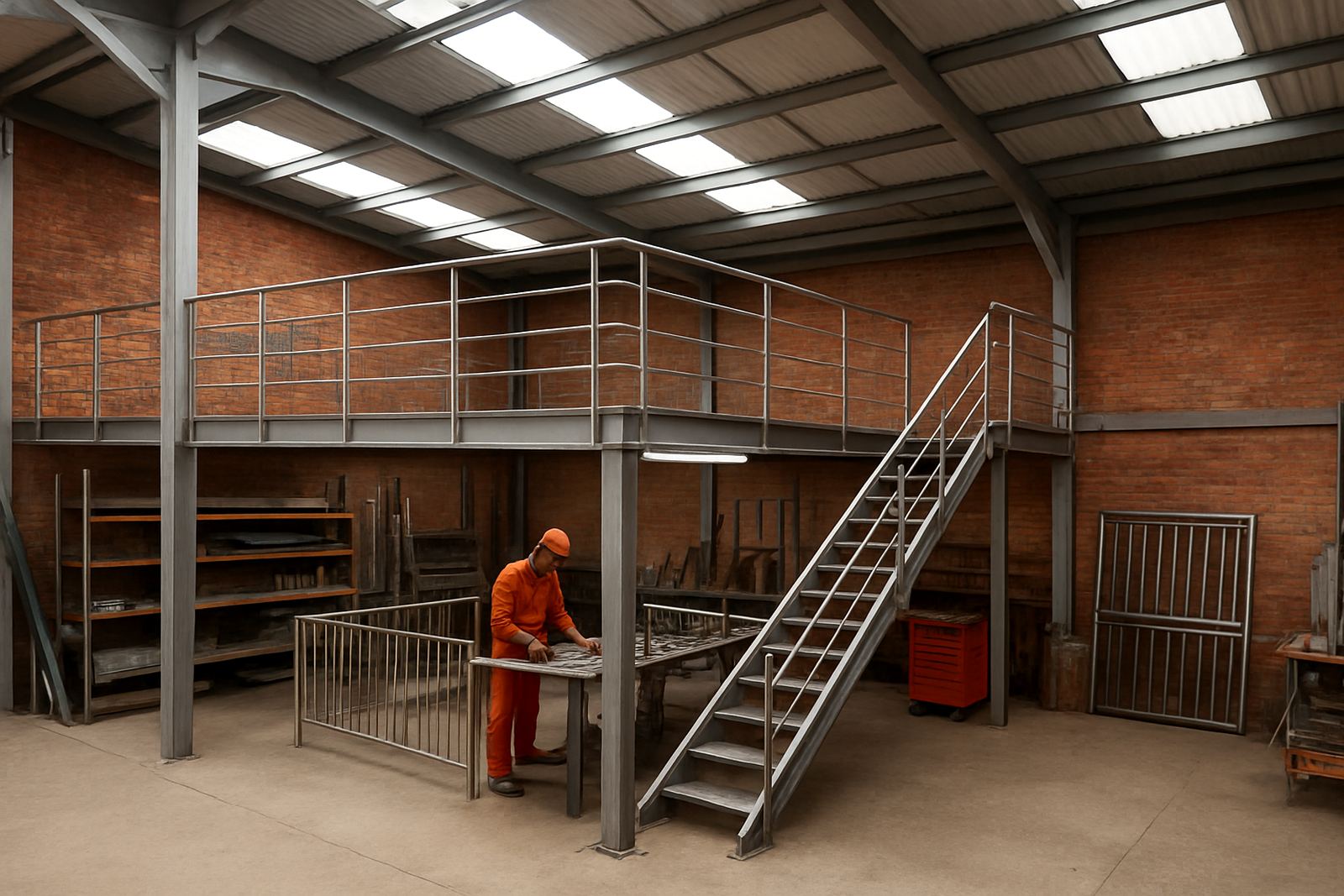
Our sliding gates are fabricated at our Knysna Industria base and installed across the Garden Route by a team that handles measuring, fabrication and fitment in-house. That keeps the job practical and easier to manage when a site changes slightly during the build. We also work with gate hardware fitment, maintenance checks and custom stainless parts, so the gate can be matched with the rest of the entrance properly.
For a clean, durable access solution in Knysna, Plettenberg Bay, Sedgefield, Wilderness, George or Mossel Bay, a stainless sliding gate is a sound choice where space is tight and regular use is expected. If you need a new gate, a replacement or a repair to an older one, we can look at the opening and advise on the best way forward.
Key facts
| Material | Stainless steel gate frame and fittings, suited to coastal conditions |
|---|---|
| Typical widths | About 1 m to 6 m plus, made to site measurement |
| Typical heights | About 1.2 m to 2.4 m, custom sizes available |
| Operation | Manual, motor-ready or motor-fitted depending on site needs |
| Installation | Site measuring, fabrication, track setup and onsite installation |
| Service area | Knysna, Plettenberg Bay, Sedgefield, Wilderness, George and Mossel Bay |