Handrails Built for Daily Use on Stairs
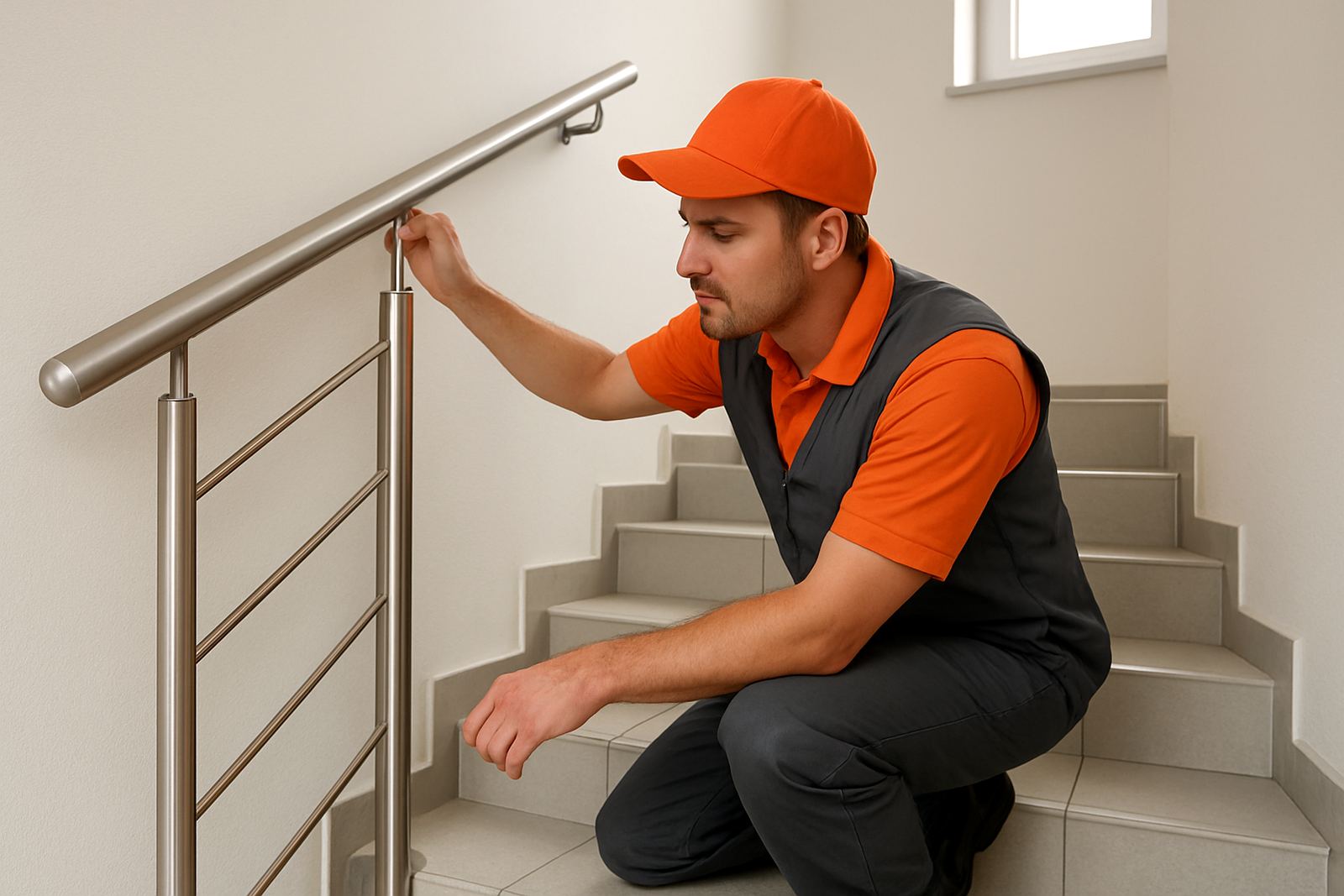
A stair handrail is the part you hold when going up or down steps. It gives support, helps with balance, and can make a stairway safer for children, older people, visitors and staff. We make handrails in stainless steel for internal and external stairs, from a simple straight run to a shaped rail that follows a landing, turn or winding staircase.
In Knysna, Sedgefield and the rest of the coast, a handrail has to deal with damp air, salt carried inland, and regular wear from shoes and hands. Stainless steel suits these conditions well because it does not rust in the same way as mild steel. It also keeps its finish better when it is cleaned properly, which matters in guest houses, rental units and busy family homes.
We work from the measurements on site and produce the rail to suit the stair pitch, wall line and fixing points. Where the stairs need a clean simple look, we keep the run light and neat. Where there is more traffic or a public use area, we can add stronger brackets and firmer end returns for extra support. If needed, the rail can be made to suit glass panels or a mixed balustrade and handrail layout.
Sizes, Tube Options and Finish Choices
Most stair handrails are made from round tube or square profile in stainless steel, depending on the look and the grip required. Common handrail tube sizes are 38 mm, 42 mm and 50.8 mm outside diameter. For wall mounted rails and lighter domestic use, 38 mm or 42 mm is often enough. For more exposed areas or places where a firmer grip is preferred, 50.8 mm is a practical option.
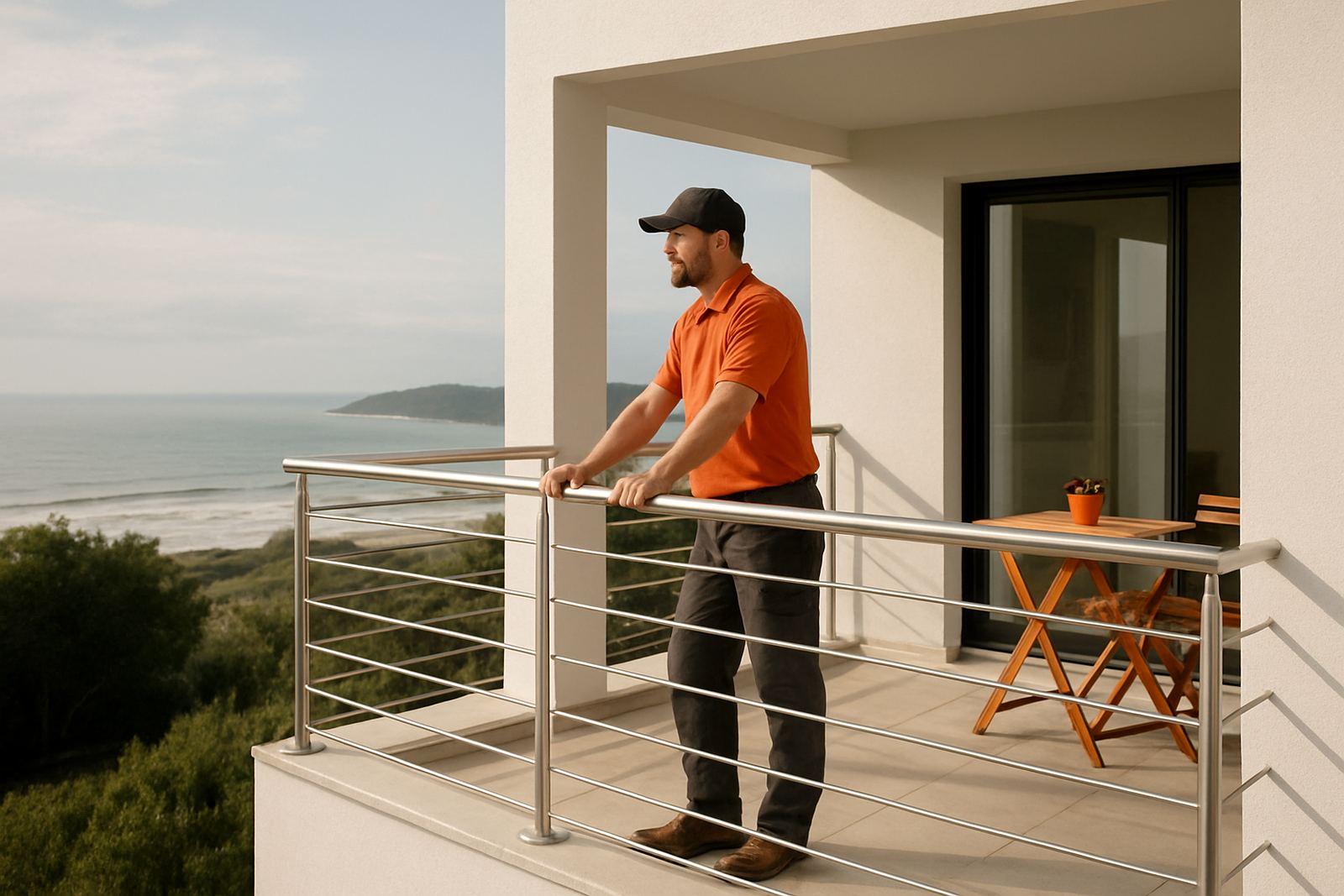
The rail can be supplied as a wall mounted handrail with brackets, or as part of a balustrade where the rail sits on posts. For shaped stairs, we form bends to match the stair angle and landing turns. If the stair flight is long, we can add a mid support point or adjust the bracket spacing so the rail feels steady when used every day.
- Round tube for a comfortable grip and clean line
- Square profile where a sharper architectural look is wanted
- Brushed finish for lower glare and easier maintenance
- Polished finish for a brighter appearance indoors
- Wall mounted or post mounted options
When a project is close to the sea, we may suggest a different grade or a more careful finish routine, especially where the handrail is exposed to wind and spray. Around Mossel Bay, Wilderness and the Knysna lagoon area, this matters more than people sometimes expect.
Where Stair Handrails Work Best
Stair handrails suit homes, guest lodges, office entries, shopfront stairs, apartment blocks and small public buildings. They are also useful for outside stairs to decks, split levels, raised entrances and garden paths with steps. In older homes around George and Knysna, a new rail can make an awkward stair easier to use without changing the whole structure.
We often fit handrails where there is limited room, for example against a wall on one side and a low return on the other. In these cases, the rail needs to be set at the right height and clear from the wall so fingers can wrap around it properly. That small gap is easy to get wrong if the rail is copied from another job without checking the site.
For business premises and guest houses, a well placed stair handrail helps with day to day use and can support safer movement when the stairs are busy. It is also a sensible choice for spaces where load-shedding leaves areas darker than usual. A steady rail makes the stair easier to use when lights are lower than normal, especially during evening arrivals.
- Private homes and holiday homes
- Guest houses, lodges and rental units
- Offices, clinics and reception entries
- External stair runs and raised stoops
- Covered walkways with steps
How We Measure, Make and Fit the Rail
Every stair handrail starts with site measuring. We check the stair width, rise, going, wall condition, landing points and any existing finishes that need to be protected. After that we prepare shop drawings so the rail, brackets and end details line up before fabrication begins. This saves time on site and avoids trimming parts after the fact.
Fabrication takes place at our Knysna Industria base, where the tube is cut, bent, welded and dressed. Fixing plates, wall brackets and end returns are set out to suit the job, not forced into a standard pattern. For some installations we fit the handrail only. For others we coordinate with glass fitment, gate hardware or nearby stainless repairs so the finished area looks planned rather than pieced together.
Onsite installation is handled by our team and the fixing method depends on the surface. On concrete we may use mechanical anchors. On timber or older masonry, we check the holding strength first. If there is an existing handrail that needs replacing, we remove it carefully and patch or reuse fixing points where suitable. Power is only needed for our tools during installation, and no gas supply is required. If the site is live or occupied, we can work around normal operating hours where practical.
Care, Cleaning and Servicing in Coastal Air
Stainless steel handrails are low maintenance, but they are not no maintenance. Dust, sea air and fingerprints can build up over time. A soft cloth, warm water and a mild detergent are usually enough for regular cleaning. On busy stairs, weekly wiping helps keep the surface neat and stops grime from settling into the brushed grain.
If the rail is installed near the coast, extra care helps it last longer. Rinse off salt film after windy weeks, especially on outside stairs and open landings. Avoid strong bleach or abrasive pads because these can mark the surface. We also recommend checking fixings once or twice a year, mainly where the rail gets heavy use or where the building settles slightly.
We offer maintenance checks, stainless repairs and surface restoration if a rail has picked up scratches, small dents or loose fittings. In a lot of cases the rail does not need replacing, just attention to the surface or brackets. That is often a cheaper fix for owners in Plettenberg Bay and Wilderness who want to keep the stairway looking tidy without starting again.
- Clean with mild soap and water
- Dry after washing to reduce spotting
- Check brackets and anchor points regularly
- Avoid wire wool and harsh chemicals
- Book servicing if the rail feels loose or noisy
What to Confirm Before You Order
Before we quote or start fabrication, it helps to know the stair type, the total length of rail needed and whether the handrail is for one side or both sides of the staircase. We also need to know if it will be wall mounted or fixed to posts, and whether there are turns, landings or irregular steps that need shaping. A clear set of photos can help, but on-site measuring is best for final sizing.
It also helps to check the surrounding surface. Tiles, brick, concrete, timber and plaster all need different fixing methods. If the stair is in a public area, we may ask about traffic levels and any municipal or building requirements that affect height, projection or spacing. That way the rail is made to suit the job and not just the opening.
If you are matching an existing balustrade, bring a picture or sample detail if possible. We can usually keep the style consistent across the stair run, but we need to know whether the current finish is brushed, polished or already weathered. A small mismatch is easy to spot once the sun hits it, so it pays to check the detail up front.
Key facts
| Material | Stainless steel |
|---|---|
| Common tube sizes | 38 mm, 42 mm and 50.8 mm outside diameter |
| Mounting options | Wall mounted or post mounted |
| Finish options | Brushed or polished |
| Service area | Knysna, Plettenberg Bay, Sedgefield, Wilderness, George and Mossel Bay |
| Site needs | Site measuring, fabrication and onsite installation, no gas supply required |