What Jetty Hardware Has To Handle In Coastal Water
On a jetty or pontoon, hardware is not just there to look tidy. It has to carry hand loads, cope with spray, resist slipping when wet, and stay workable after months of salt exposure. In places like Knysna, Sedgefield and Plettenberg Bay, the wrong fittings can stain, seize up or loosen far too soon, especially where fresh and salt water mix.
The main thing to understand is that every part on a jetty is doing a different job. Some fittings guide people safely, some hold timber or composite decking in place, and some connect gates, ladders or mooring points. A good stainless setup starts with the correct grade, then the right fixing method, then proper installation. If one of those is off, the whole system suffers.
For jetties near the waterline, we normally look closely at splash zones, tidal movement, and whether the structure gets full sun or shade. Shade can hold moisture for longer, while full sun can make certain mixed-material joints move as temperatures change. That is why site measurement matters before any fabrication starts.
The Most Common Stainless Fittings You Will See
Most jetty builds use a fairly practical set of hardware, with each item chosen for a specific task. The exact mix depends on whether the structure is private, commercial, or part of a marina, but the basics stay much the same.
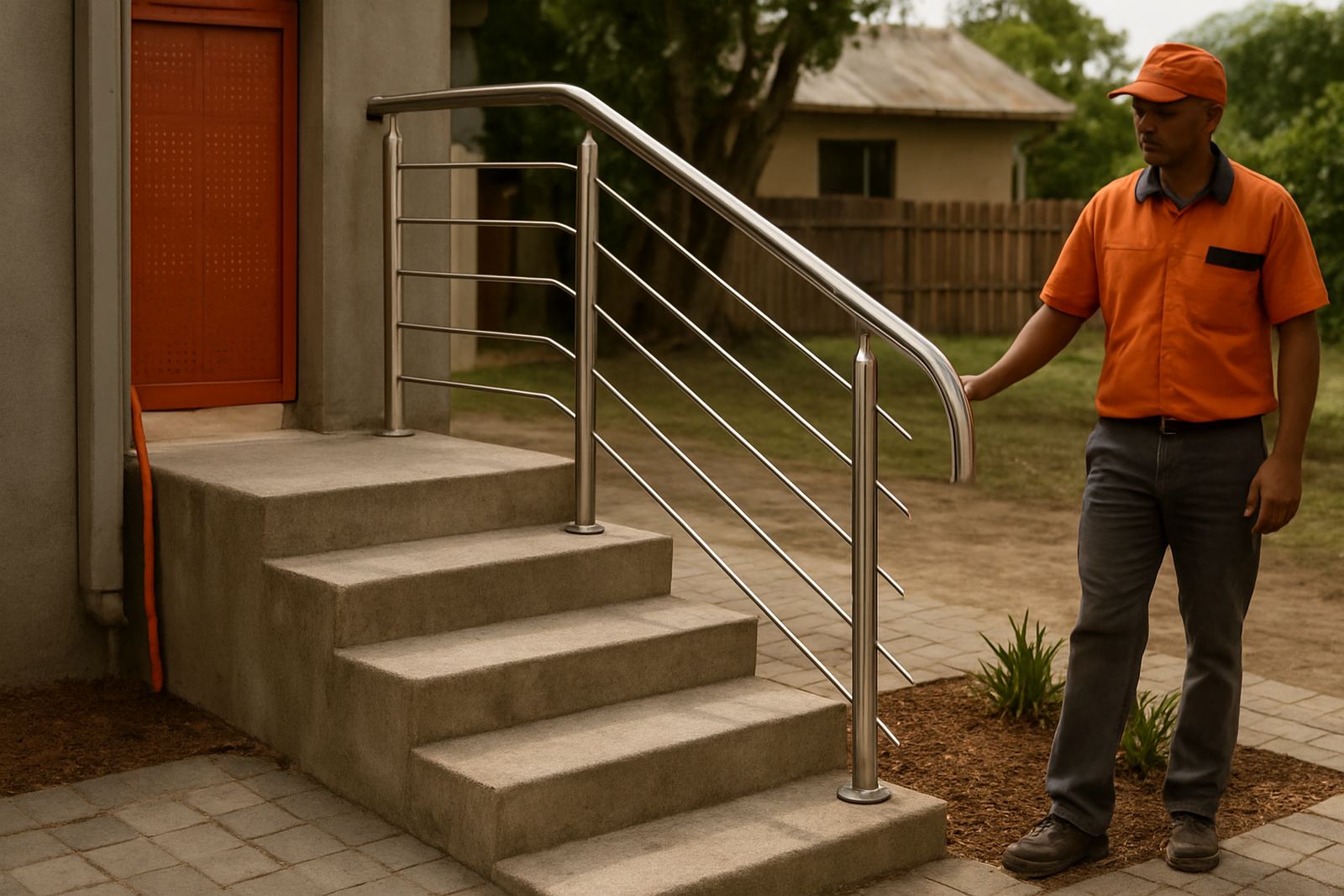
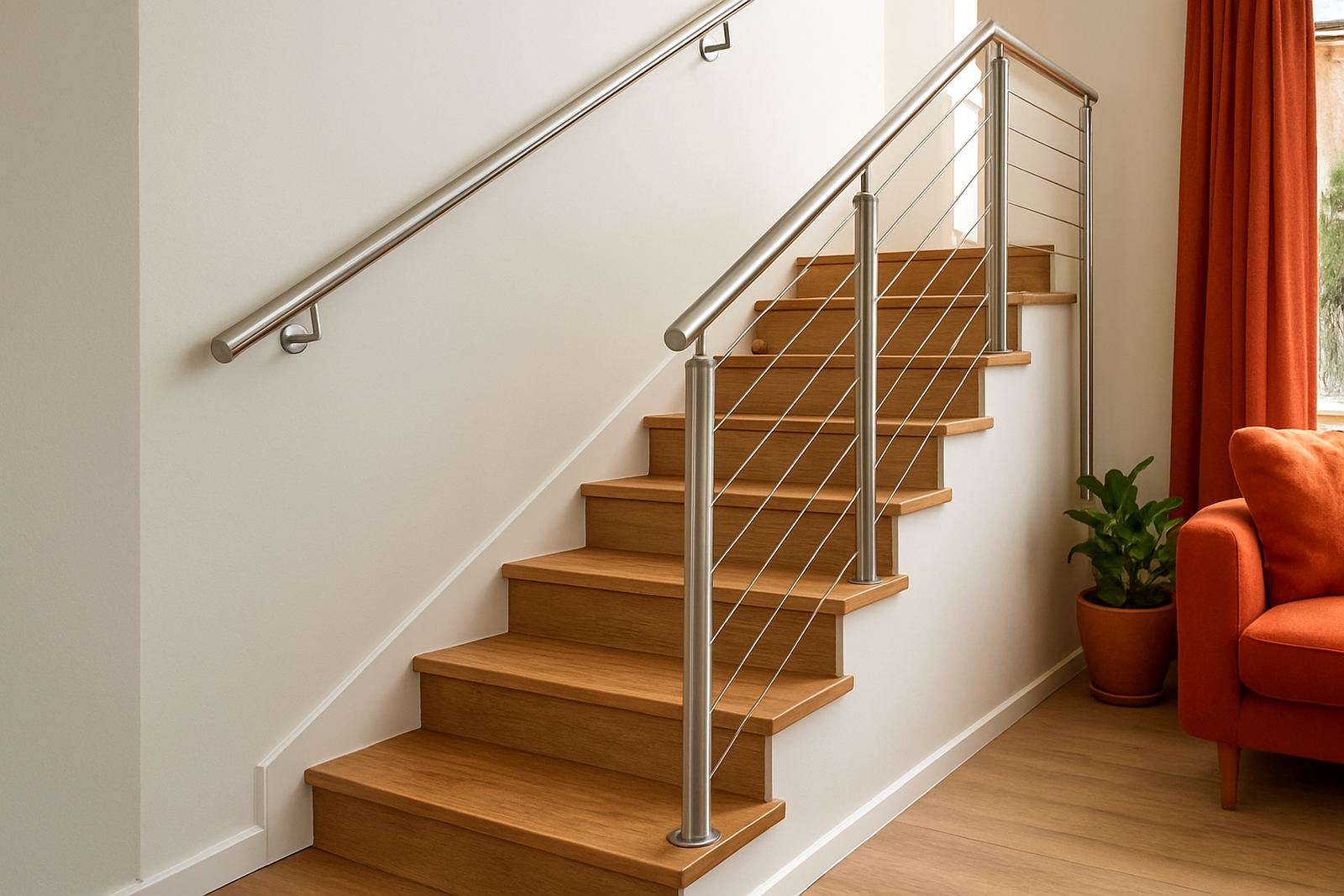
- Handrail posts and brackets: These support railings along edges, steps and access ramps.
- Top rails and intermediate rails: These give people something steady to hold while moving along the jetty.
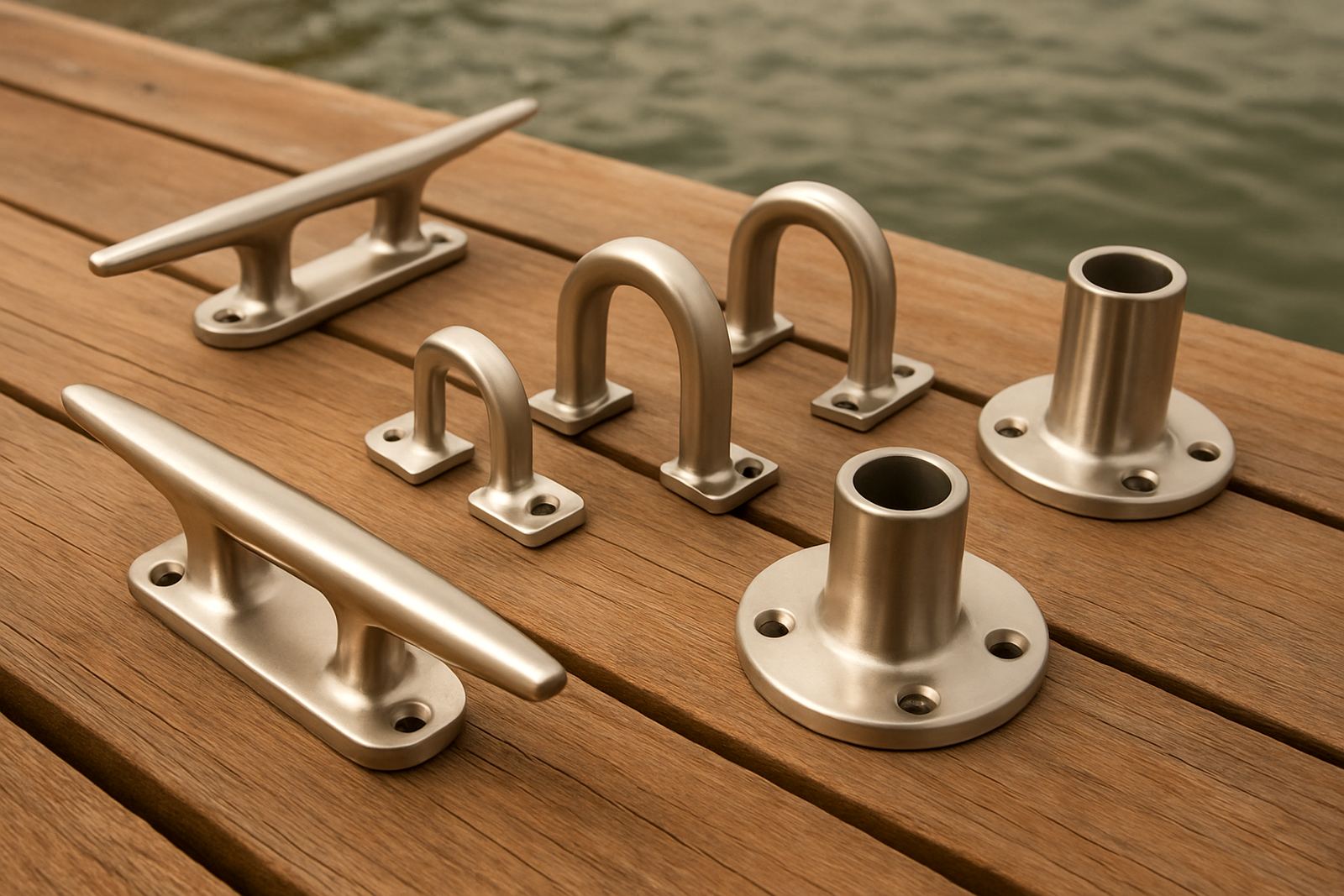
- Cleats and mooring points: Used where ropes need a solid tie-off point.
- Deck fixings and clamps: These hold boards or panels in position without unnecessary movement.
- Ladder brackets and safety mounts: These secure access ladders and safety rails.
- Hinges, latches and gate hardware: Needed for access gates, lockable sections and service points.
In our Knysna Industria workshop, we often make these items to size rather than forcing a standard part to fit a tricky site. That matters on older pontoons where timber spacing is uneven or the substructure has settled a few millimetres over time.
Choosing The Right Stainless Grade For Salt Air
Not all stainless steel behaves the same near the coast. For jetties and pontoons, material choice must match exposure. Inland fittings can often get by with a lighter specification, but on the Garden Route the constant moisture and salt spray call for more careful selection.
As a general rule, hardware closer to open water needs better corrosion resistance than fittings under cover. Fasteners matter just as much as visible components, because one weak bolt can stain the whole assembly. We also pay attention to the difference between stainless grades used for structure and those used for fixings, washers and brackets. Mixing the wrong metals can cause early corrosion or ugly marks around joints.
Another point people sometimes miss is surface finish. A smoother finish is easier to clean and less likely to trap salt. On a jetty used daily, that can mean less maintenance over a year or two, which is a real saving when labour costs and weather windows are both tight.
How Fixings And Fasteners Affect Safety
Good jetty hardware is only as reliable as the fixing method behind it. A neatly fabricated handrail can still fail if the anchors are wrong, the base plate is too thin, or the installer ignores the condition of the substrate. On timber pontoons, the support below the surface must be checked for rot, movement and previous repair work. On concrete or steel structures, the hole depth, plug type and seal around each fixing all matter.
We often recommend checking hardware in stages rather than waiting for a full failure. Look for movement, staining, loose threads, damaged welds and any sharp edges where people walk barefoot. Children, anglers and older users often grip the same rail, so even a small fault can become a safety issue fast.
- Check all handrail fixings after storm season.
- Inspect gates and latches for salt build-up and stiffness.
- Replace pitted fasteners before they seize in place.
- Confirm that any ladder or access point is still square and secure.
Why Custom Fabrication Helps On Real Sites
Jetty work rarely matches a neat catalogue drawing. One pontoon may sit beside a private dwelling in Knysna, while another forms part of a business access point in George or Mossel Bay. Each site has different levels, widths, access rules and loading patterns. That is why custom fabrication is often the sensible route.
Our process normally starts with site measuring, followed by shop drawings and then fabrication in the workshop. That sequence helps reduce delays on installation day and lowers the risk of cutting on site where space is limited. It also means gates, handrails and custom brackets can be made to the actual angle and height needed, rather than being forced into position with extra packing pieces. On a wet jetty, that sort of bodge usually shows up later.
For municipal or marina jobs, we also look at access control, slip risk and any local requirements for safe edge protection. In some cases a simple handrail upgrade is enough. In others, a full set of new posts, balustrade sections and service gates gives a cleaner result and easier maintenance.
A Local Example From Knysna Waterfront Conditions
A recent style of job we often see in Knysna is a small pontoon that has been patched over the years with mixed fixings, timber offcuts and old brackets. The owner may only want to replace one section, but once we inspect the structure it usually becomes clear that the handrail line, gate hinge and ladder support all need to be brought back into alignment at the same time.
In one such case, the jetty sat in a sheltered spot, but moisture still hung around the lower fixings through winter. We replaced corroded fasteners, fabricated new stainless brackets to suit the existing spacing, and fitted a simple access gate that could be opened one handed. The result was not flashy, just easier to use and easier to keep in order. That is the point of proper jetty hardware: it should do its job without calling attention to itself.
For properties in Plettenberg Bay, Wilderness or Sedgefield, the same approach applies. Measure properly, choose fittings for the environment, and keep the maintenance plan realistic. Salt air does not care how much the installation cost, so practical details matter more than fancy words.