Why the coast changes the spec
In Knysna, Sedgefield, Wilderness and along the bay side of George, stainless does not work in the same way it does inland. Salt in the air settles on surfaces, gets into joints and sits on fittings long after the rain has gone. If a balustrade, handrail or gate is within reach of sea spray, or catches wind from the water, the finish and grade matter a lot more.
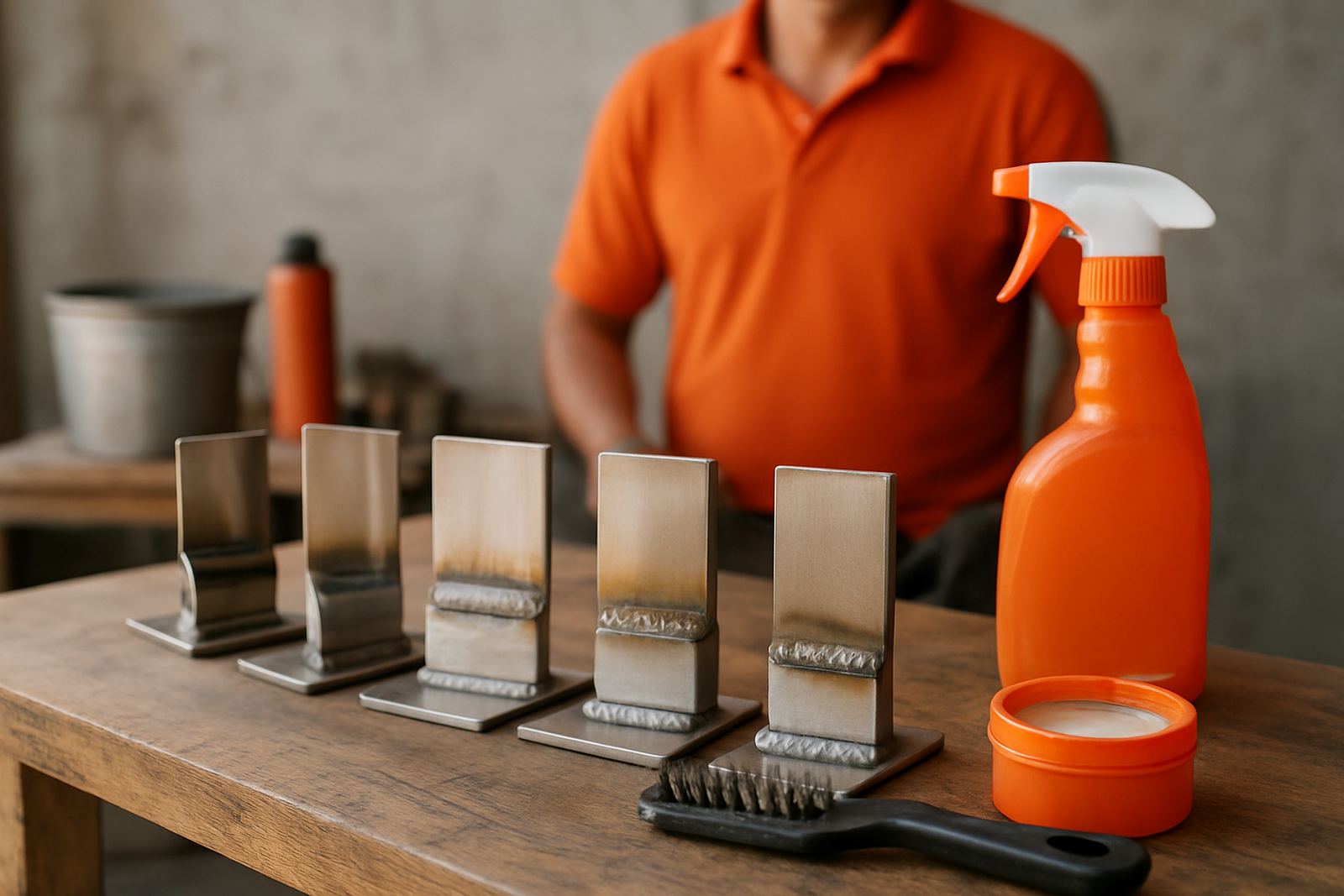
We often see people choose standard stainless for appearance alone, then wonder why tea staining starts on the welds or around screws after a season or two. That does not always mean the part is failing, but it does mean more maintenance and earlier touch ups. On the coast, the question is not only what looks good on day one. It is what will still look acceptable after a wet winter and a summer of salt air.
When marine grade is the smarter buy
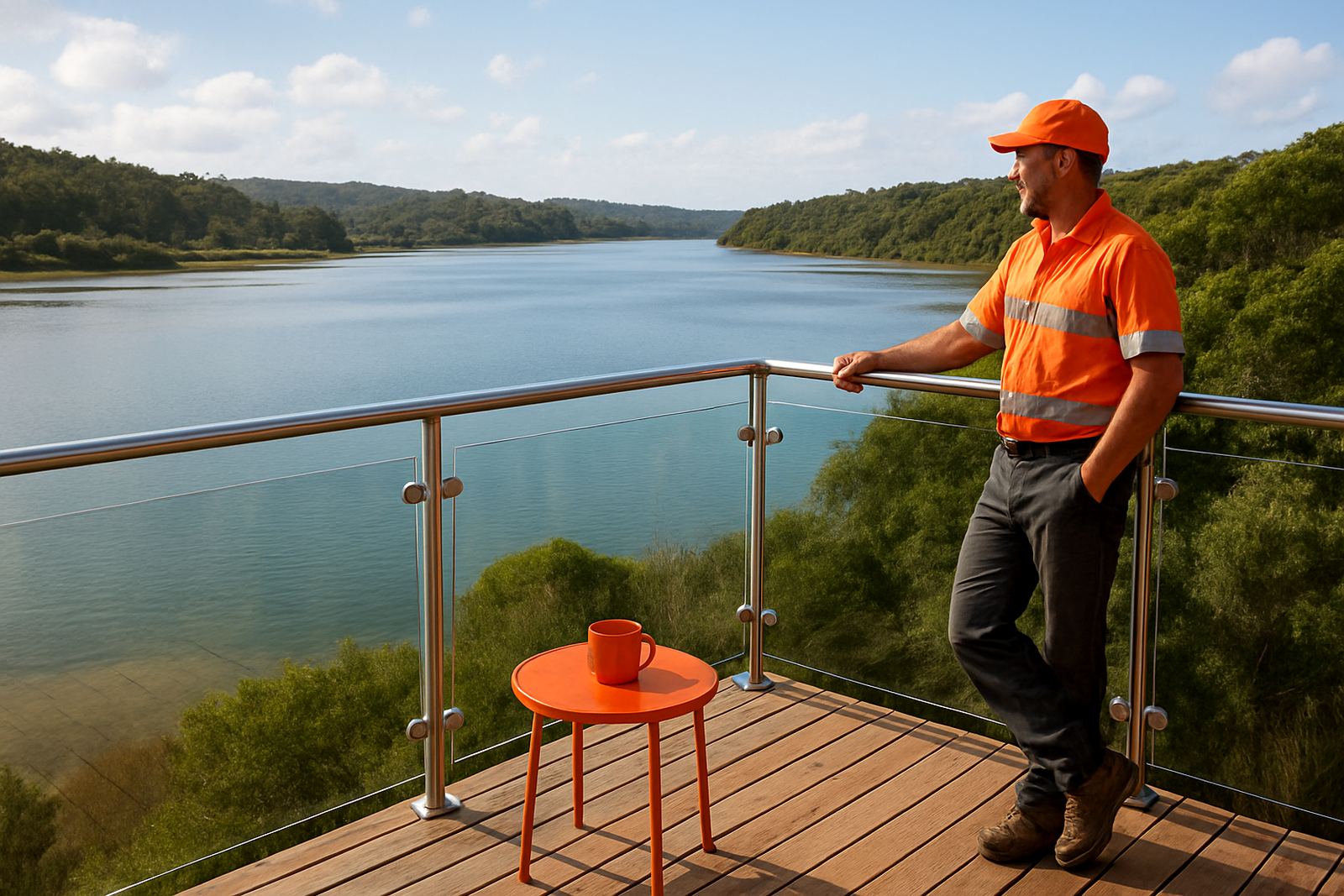
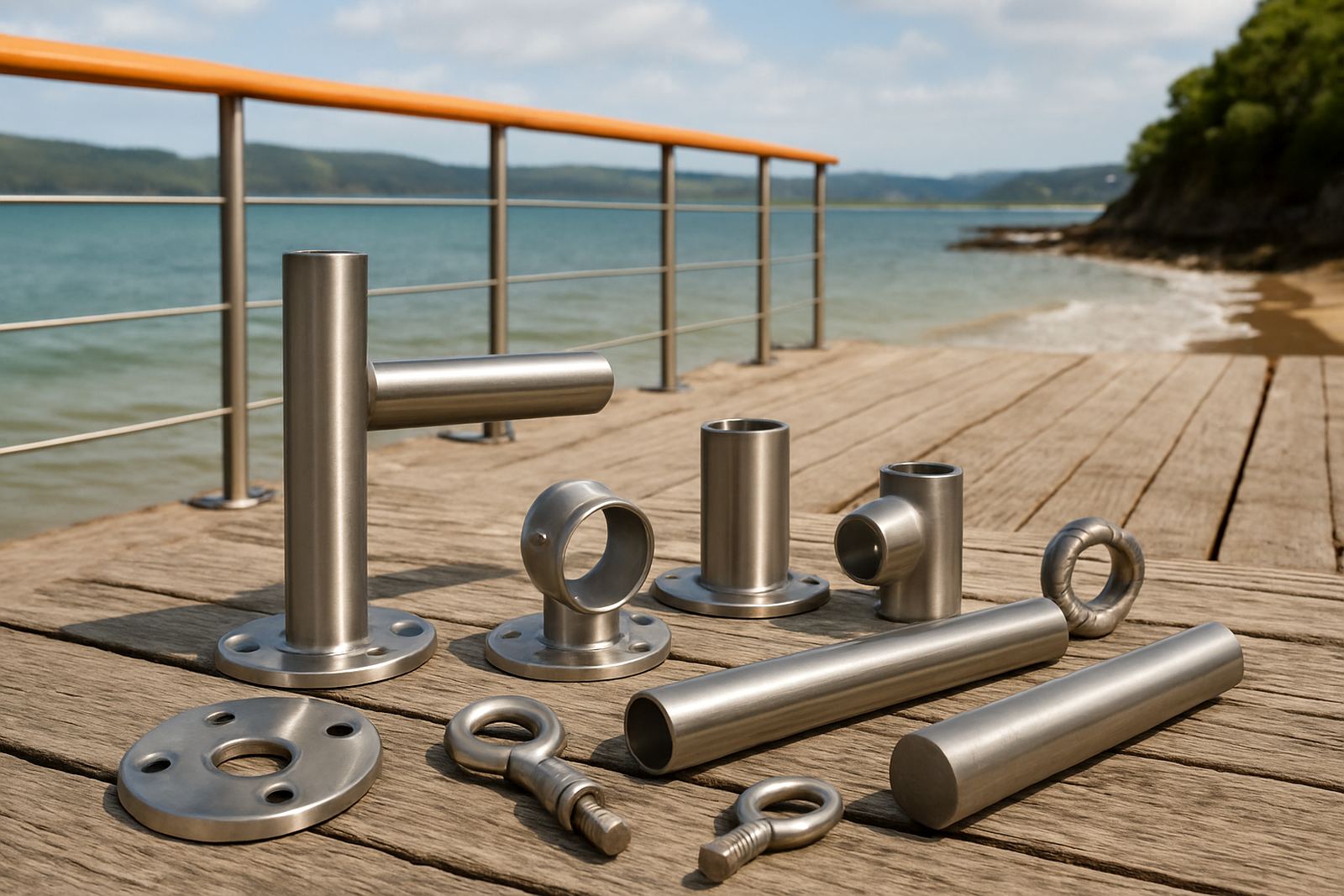
Marine grade is worth the extra investment when the item is exposed, hard to reach, or expensive to remove and repair. A handrail on a jetty, gate hardware close to the lagoon, or a stair balustrade on an open seafront deck are all good examples. If the part must stay clean for a guest house, restaurant, or sectional title complex, marine grade usually saves time and complaints later.
- Balustrades and handrails within about 500 m of the shoreline
- Gates, hinges and latches exposed to sea mist or prevailing winds
- Pool surrounds and exterior stairs that get constant washing
- Marine fitouts on boats, pontoons and waterfront access points
- Fixings and brackets that are difficult to replace after installation
If the application is protected, well drained and not directly exposed, a lower grade may still be suitable. The decision should be based on location, use and maintenance access, not on a blanket rule.
Where standard stainless still makes sense
Not every stainless item needs marine grade. A covered courtyard handrail in Knysna Industria, a kitchen support bracket, or an internal feature panel in a shop can often be built from a more common grade without any problem. If the part stays dry, gets regular wiping and is not sitting in salty wind, paying for the top grade may not make sense.
The mistake is mixing the two worlds without thinking it through. You can have a quality marine-grade tube and still get early rust spots from the wrong screws, poor weld finishing, or carbon steel tools used on the job. The full system matters, not just the pipe or sheet. We always look at the complete installation, from the fixing points to the final clean down.
- Internal or sheltered fittings
- Short runs with easy access for cleaning
- Low-risk utility brackets and supports
- Projects where budget matters more than long-term exposure
What salt air does to poor detailing
Most coastal failures start with detailing. Water sits in a seam, a cap is left open, a weld is not properly cleaned, or mixed metals are used together. Then the staining starts. It may look like rust from a distance, but often it is contamination on the surface or corrosion at the joint. Either way, it causes extra maintenance and in some cases full replacement.
We see this on older gates in Plettenberg Bay and Mossel Bay where hardware was fitted without thinking about drainage or wind direction. A gate can be made from good material and still have problems if the bottom rail traps water or if the locks and hinges are not suited to the coast. Good fabrication includes drainage, smooth welds, correct fixings and proper sealing where needed.
A Knysna example from site to finish
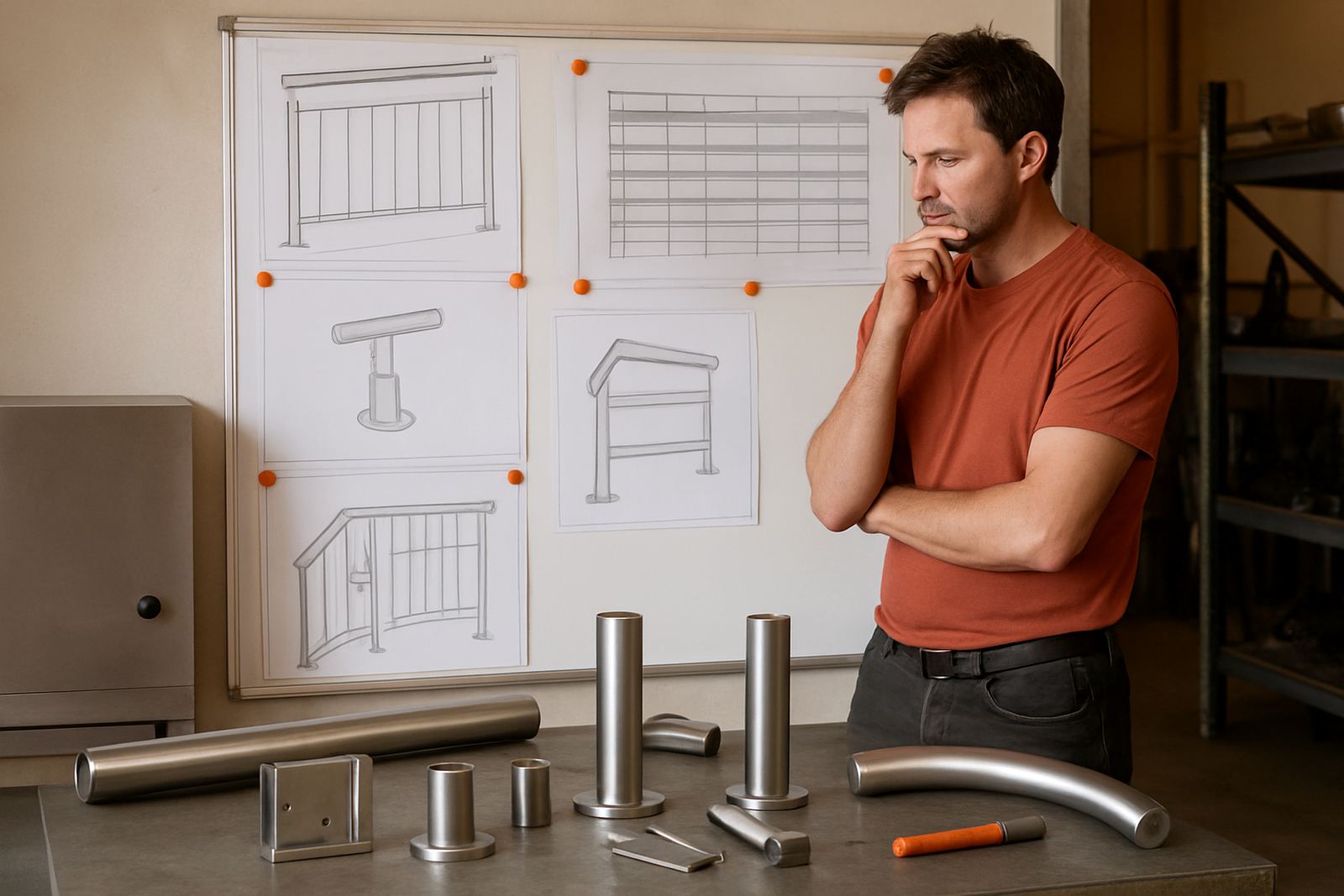
One recent coastal job involved a double-storey home near the Knysna lagoon, where the owner wanted slim balustrades, a front gate and exterior handrails that would not need repainting every few years. The site was exposed to salt and strong wind, and the fittings would be visible from the street. We measured on site, prepared shop drawings and recommended marine-oriented material for the handrails, fixings and exposed hardware.
Because the property sat in a humid area, we also planned for maintenance access. That meant clean welds, sensible drainage and a finish that could be washed down with fresh water after heavy wind. The owner later said the biggest benefit was not just the look, but how little attention the metal needed after winter. That is the real value of spending more at the start.
How to decide without overspending
The best approach is to match the grade to the risk. Start with location, exposure and maintenance access, then look at the lifespan you expect from the item. A small fitting in a sheltered position can be priced differently from a main stair rail above the tidal zone. If the part is critical, visible and difficult to service, marine grade is usually the safer call.
- Ask where wind and spray actually hit the structure
- Check whether the item can be cleaned and inspected regularly
- Consider the cost of removal if repairs are needed later
- Make sure screws, hinges and brackets match the grade of the main work
- Plan for municipal or estate rules where the work is visible from public areas
For clients in George, Wilderness and the rest of the Garden Route, the right answer often sits somewhere between budget and full marine spec. That is where proper site measuring and practical advice matter most. Get the grade wrong and you pay twice. Get it right and the job stays neat for years.