Start With the Rules Before You Pick the Look
Before anyone talks about polished posts or clear glass, the pool area must be checked against the local safety requirements that apply to your property. In Knysna, Plettenberg Bay and the wider Garden Route, the big issues are barrier height, climb points, gate swing, self-closing hardware and how easy the pool is to access from the house or garden.
A pool fence should not be treated as a decorative line only. It needs to keep children out, allow adult access when needed, and stand up to day to day use. If there is a sleeper wall, raised deck, retaining edge or uneven paving, that detail can change the full layout. We often find that the practical answer is not the first idea the client had in mind, but the one that works with the site and the regulations.
- Check the pool edge, paving levels and drop offs first
- Confirm the required height and spacing before fabrication starts
- Allow for a gate that closes on its own every time
- Plan for safe access without giving children a climb route
Choose Stainless and Glass for Different Reasons
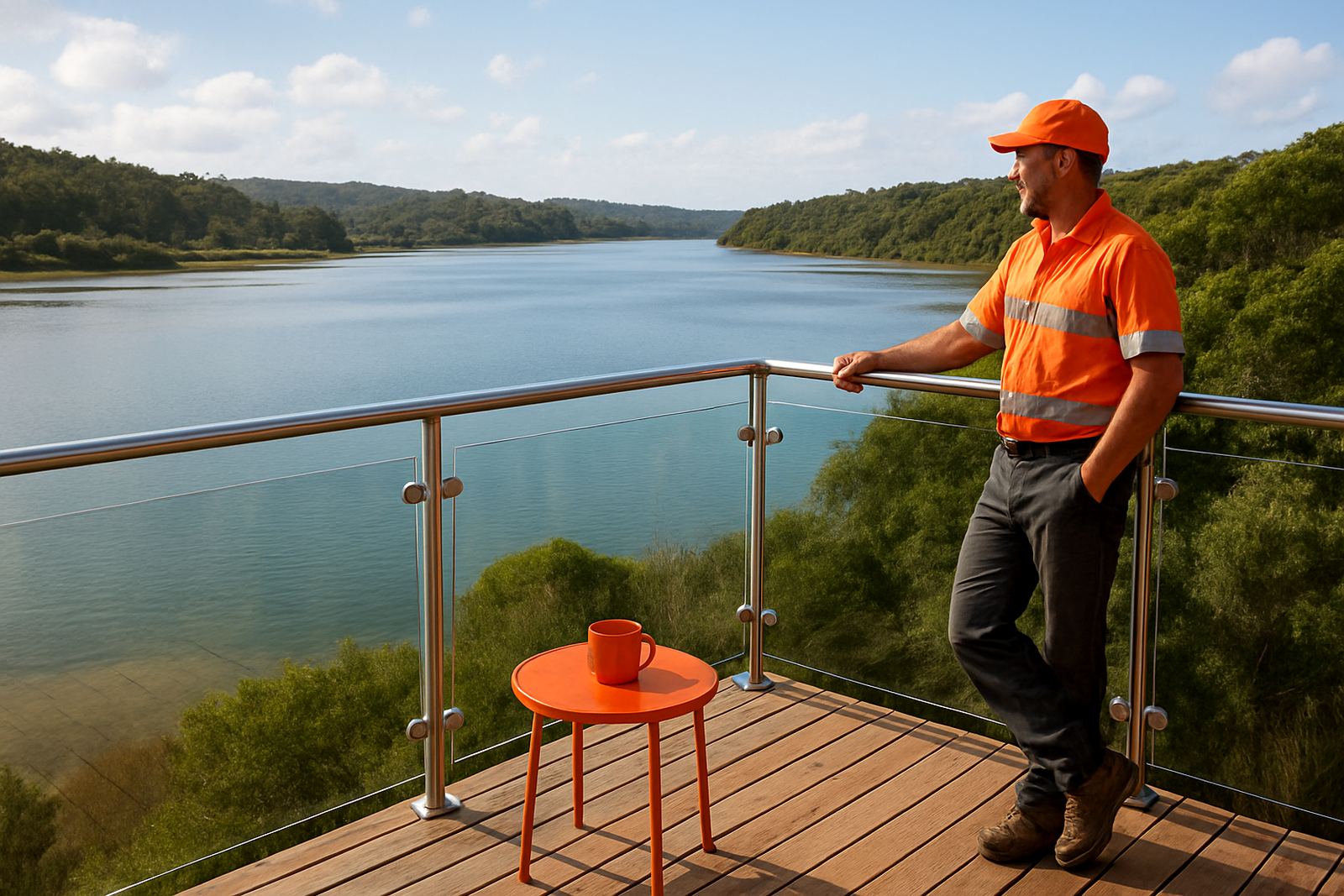
Stainless and glass are often used together because each material brings a different benefit. Stainless steel gives the structure, fixing strength and good weather performance, while glass keeps the view open and helps the pool area feel less boxed in. On coastal properties around Knysna and Sedgefield, stainless is a sensible choice because it handles humidity better than many mild steel systems.
The style you choose should follow the way the pool is used. A family home with small children may need a more closed layout with fewer gaps and careful gate positioning. A holiday property, guest house or rental unit may need something easy to maintain, with clear sight lines for supervision. If you are close to salt air, the finish matters just as much as the shape. A good barrier looks tidy on day one, and should still look tidy after a winter of wet weather and pool chemicals.
- Stainless posts suit exposed coastal sites
- Glass panels help preserve views over the water and garden
- Mixed systems can reduce visual bulk around small pools
- Finish quality matters in humid areas and near salt spray
Measure the Whole Area, Not Just the Pool Edge
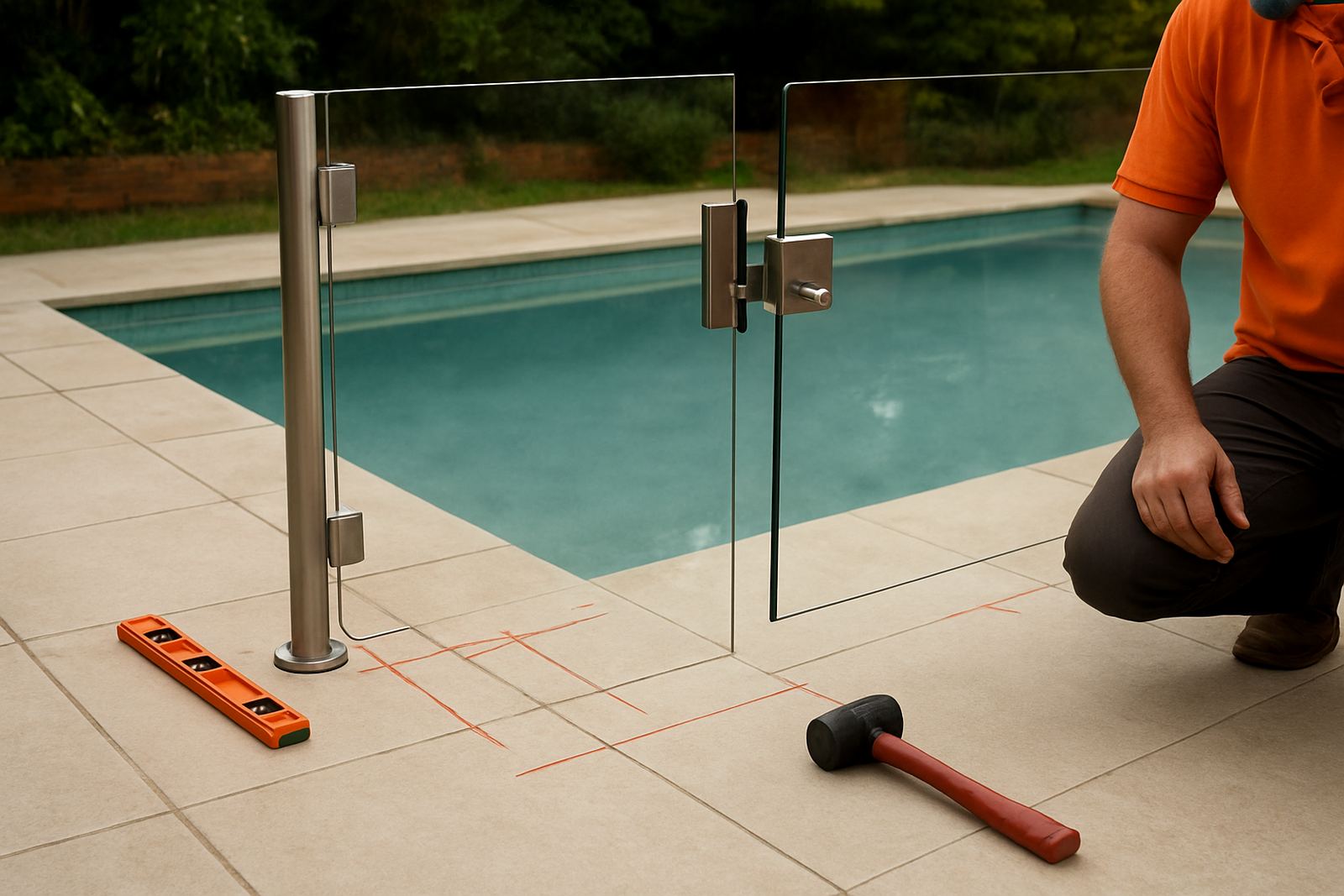
Good pool fence planning starts with proper site measuring. That means checking the pool surround, steps, coping, paving joints, retaining walls and any nearby doors or sliding openings. If there is a patio that leads straight to the pool, or a braai area with a direct path, the barrier line may need to move further out than expected.
We always look at the full movement around the space. Where do people walk when carrying towels, chairs or pool gear? Where can water collect after heavy rain? Is there enough room for fixing plates and post spacing without cracking the paving? These details matter because once the line is set, the work has to fit the site cleanly and safely. One small mistake in measurement can lead to uneven panel gaps or a gate that feels awkward to use.
In Knysna Industria we often prepare shop drawings after the site measure so the client can see the full layout before fabrication begins. That step saves time later and helps avoid changes once holes are drilled and glass is ready for fitment.
Think About the Gate First, Not Last
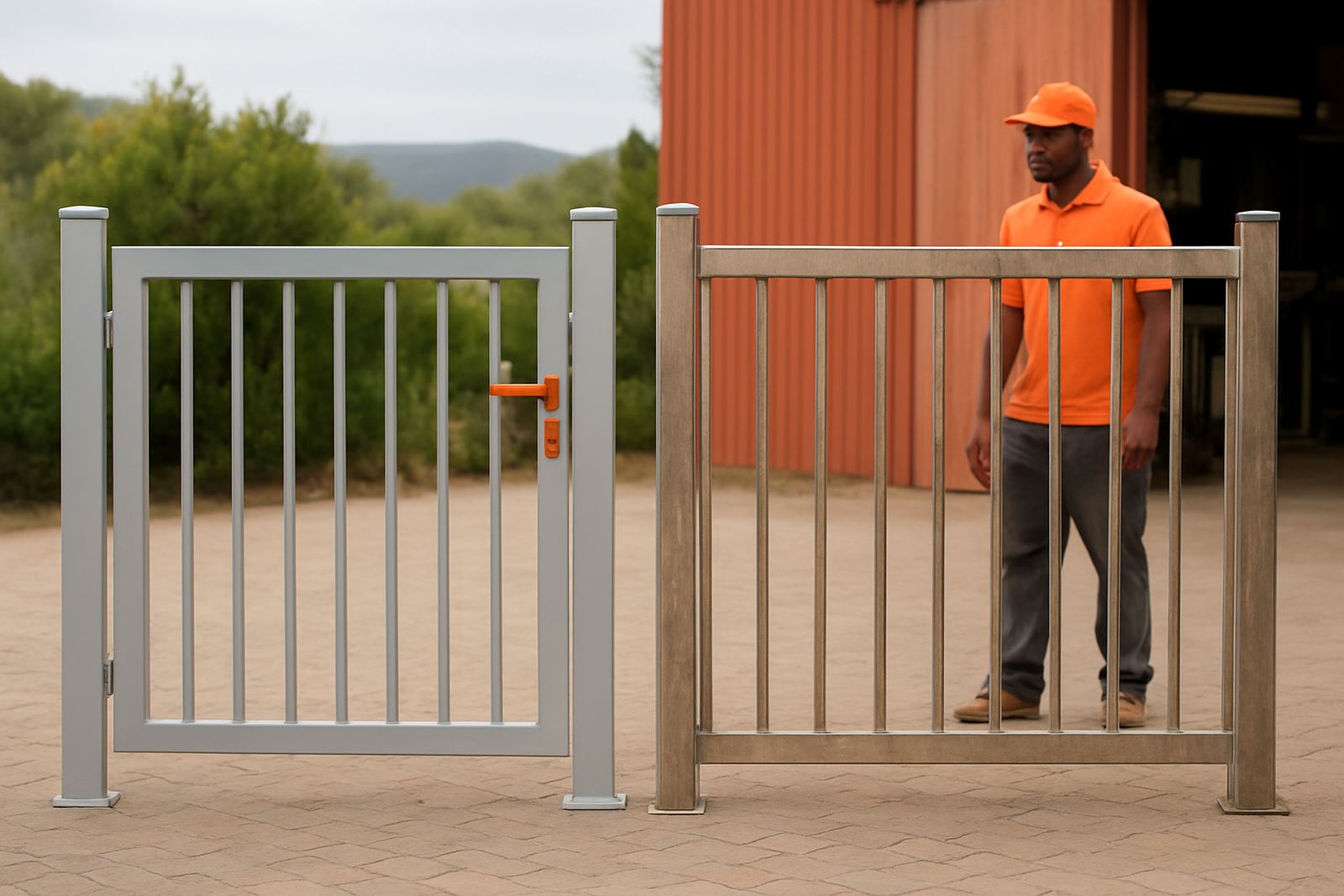
Many pool barrier problems come from the gate being treated as an afterthought. The gate is the most used part of the whole system and the point where safety either works or fails. It must close properly, latch properly and remain easy for adults to use while staying hard for children to open.
For stainless and glass pool barriers, gate hardware should suit the environment and the amount of use. A gate at a private home in Wilderness may only open a few times a day, while a guest lodge in Mossel Bay might see far more traffic. The latch height, hinge position and swing direction all need to be correct from the start. If the gate opens the wrong way, or catches on paving, people soon begin forcing it and that shortens the life of the fittings.
- Use self-closing hardware that works under regular use
- Check latch height for child safety and adult convenience
- Make sure the gate clears paving, drains and door thresholds
- Test the swing so it does not hit planters, walls or furniture
Allow for Coastal Weather and Pool Chemicals
In our part of the world, pool fencing has to deal with more than just people. Salt in the air, wind-driven rain, chlorine splash and strong sun all affect how long the barrier keeps its appearance. Around George and along the coastline, a system that looks fine in the workshop can behave differently once it is outside near a pool and open weather.
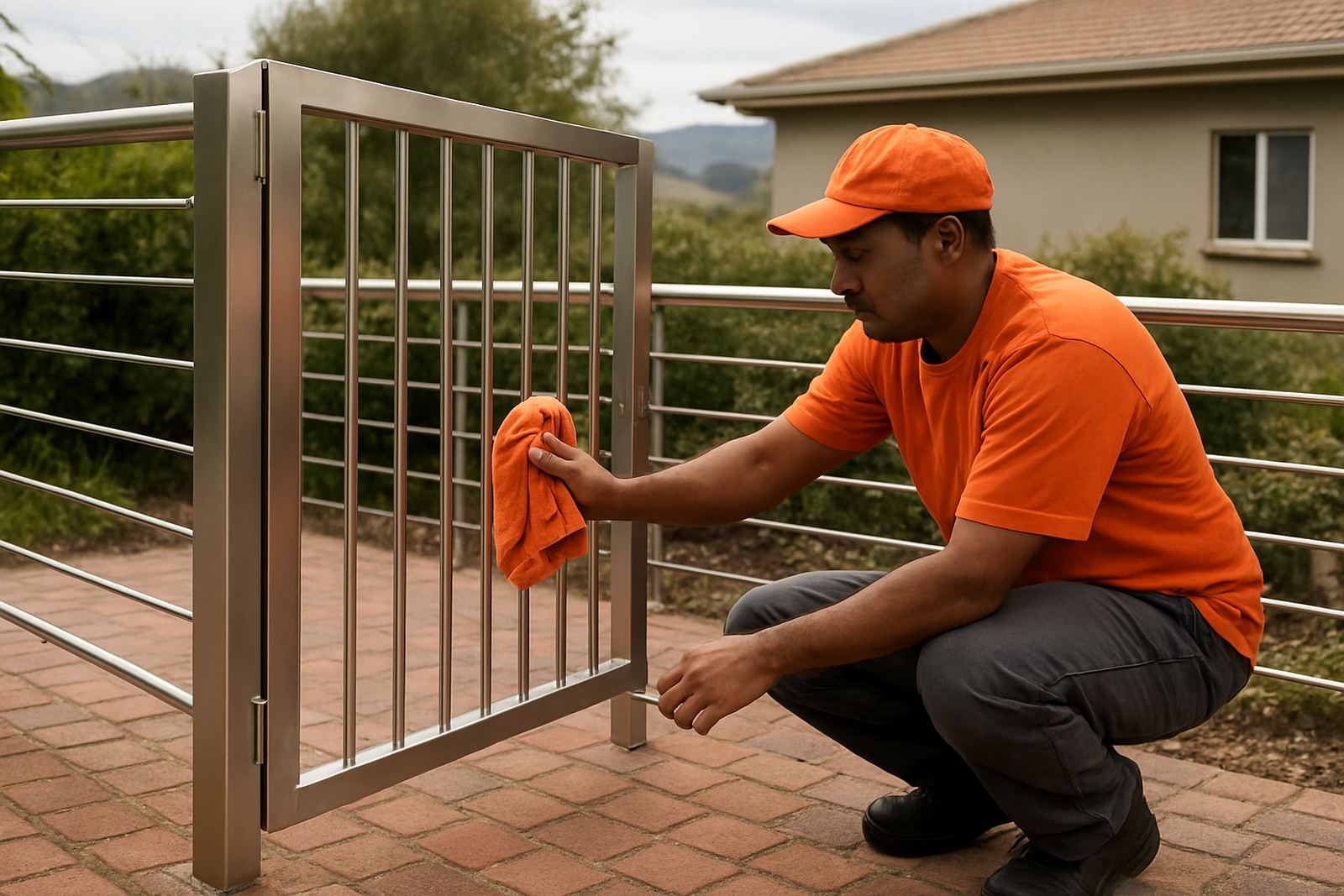
That is why we pay attention to the grade of stainless, the fixings used, the sealing around holes and the way water runs off the base. Poor detailing can leave staining marks, tea staining or loose hardware after a few seasons. Surface restoration and maintenance checks also help keep an existing fence in good shape, especially where the pool is cleaned often and chemicals are used nearby.
A clean finish is not only about appearance. It also makes the barrier easier to wash down and inspect. If there are sharp edges, open welds or trapped moisture, those issues usually show up later as nuisance problems that cost more to sort out.
A Local Example From a Knysna Family Home
We recently worked on a family home in Knysna with a pool set close to a timber deck and a side path leading to the garden. The owners wanted open views to the lagoon side, but also needed a barrier that would not interrupt the layout of the entertainment area. After measuring the site, we shifted the fence line to follow the deck edge and kept the gate away from the busiest walking path.
The result was a stainless and glass barrier that felt open without being exposed. The posts were fixed to suit the paving structure, the gate closed properly every time and the glass panels allowed clear supervision from the house. The owners also asked us to check the finish after the first wet season, which is a sensible step in a coastal town. Small checks like that can catch loose fasteners or minor wear before they become proper repairs.
That job is a good reminder that the best pool barrier is not the one with the most parts. It is the one that fits the site, suits the family and keeps working with very little fuss.
What to Send Us Before We Quote
If you are planning a new pool barrier or replacing an old one, a few clear details help us quote accurately and advise on the right setup. The more we know at the start, the easier it is to plan fabrication, site installation and gate hardware fitment without delays.
- Photos of the pool area from different angles
- Approximate measurements of the pool and surround
- Any steps, decks, retaining walls or doors near the pool
- Your location, whether Knysna, Plett, Sedgefield, Wilderness, George or Mossel Bay
- Whether you want stainless and glass, stainless only, or repairs to an existing barrier
For a practical discussion, email projects@sisonkemanufacturing.co.za. We work from our Knysna Industria base and install across the Garden Route, so we can help with measuring, drawings, fabrication and on site fitment.