Start with the route, not the railing
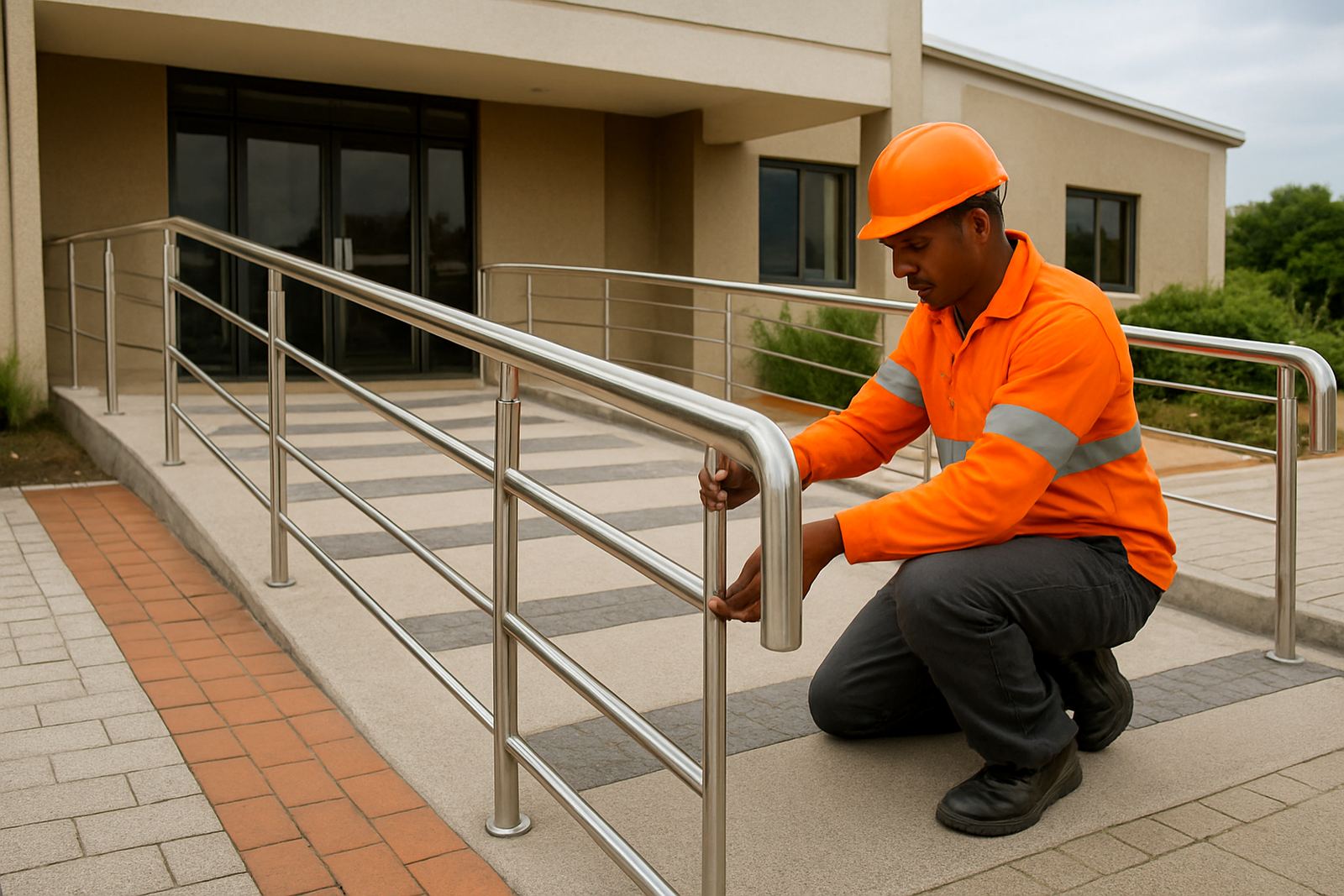
When a public access route is being planned, the handrail should be considered from the first site walk, not added at the end. The slope, width, landings, turning points and nearby walls all affect the layout. A good handrail supports people moving through the space at a steady pace, whether it is a clinic ramp, a school entrance, a municipal path or a seaside walkway in Knysna.
Public routes also need to serve different users. Older visitors, wheelchair users, parents with prams and people carrying goods all use the same line of travel. That means the height, grip, spacing and return details must be thought through carefully. If the route is awkward, the railing may still look neat but it will not help much in daily use.
- Check the full route from start to finish before fabricating.
- Allow for landings, corners and gate openings.
- Keep the handrail line clear of bins, posts and planter boxes.
- Confirm where people will naturally reach for support.
Handrail height, grip and spacing need practical checking
In public spaces, people expect a handrail that feels natural in the hand. A rail that is too thick can be hard to hold, while one that is too light may not feel secure. The height should suit the route and the users, and the fixing points must be planned so the rail stays steady under regular use. On longer ramps, a consistent line matters more than people often realise.
Spacing from walls and other surfaces is another point that gets missed. If there is not enough room for fingers and knuckles, the rail becomes awkward to use. The ends should also be handled properly so clothing and bags do not catch. On public sites, a rail that ends with a sharp return or an exposed open end can create avoidable complaints and, in some cases, injury risks.
- Keep the grip comfortable for children and adults.
- Leave enough clearance from walls and parapets.
- Use returns or closed ends where people may brush past.
- Make sure the rail line is continuous along the route.
Coastal stainless choices matter in Knysna and beyond
Along the Garden Route, the weather affects every exposed metal fitting. Salt air, wind-driven rain and humidity can mark up the wrong material very quickly. In places like Knysna, Sedgefield, Wilderness and Plettenberg Bay, public handrails need to be selected with corrosion in mind from the start. A rail that looks fine in the workshop can begin to stain or pit if the material, finish or fixing method is not suitable for coastal conditions.
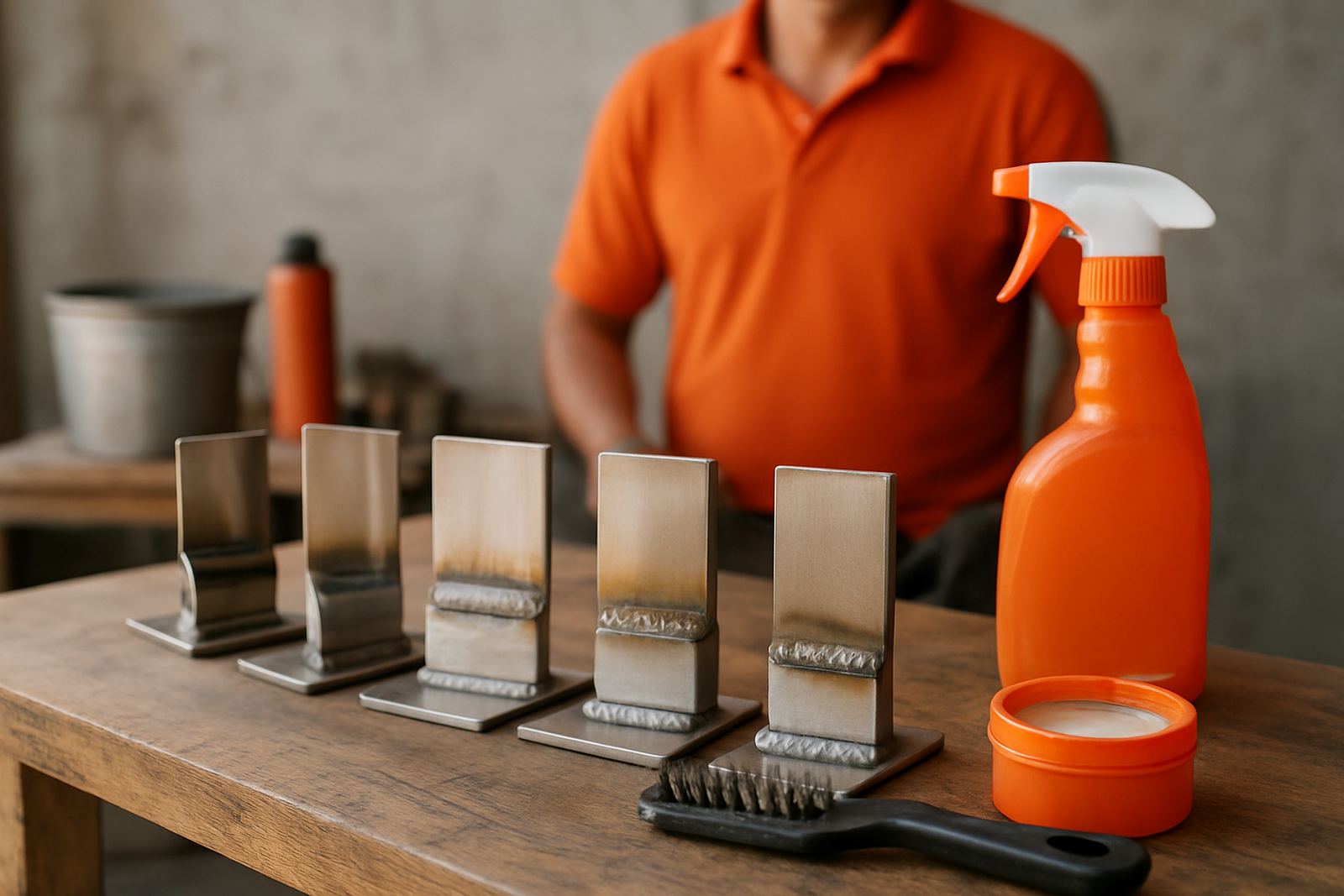
That is why surface preparation, weld quality and finishing are so important. Poorly cleaned welds or trapped contamination can shorten the life of the installation. On public work, that creates extra maintenance and can leave the site looking tired far too soon. For exposed walkways near the sea, a practical maintenance plan should be part of the handover, not an after thought.
- Choose materials suited to coastal exposure.
- Use neat welds and properly cleaned joints.
- Consider splash zones, spray and wind direction.
- Plan for routine wash-downs and checks.
Fixing methods must suit the structure underneath
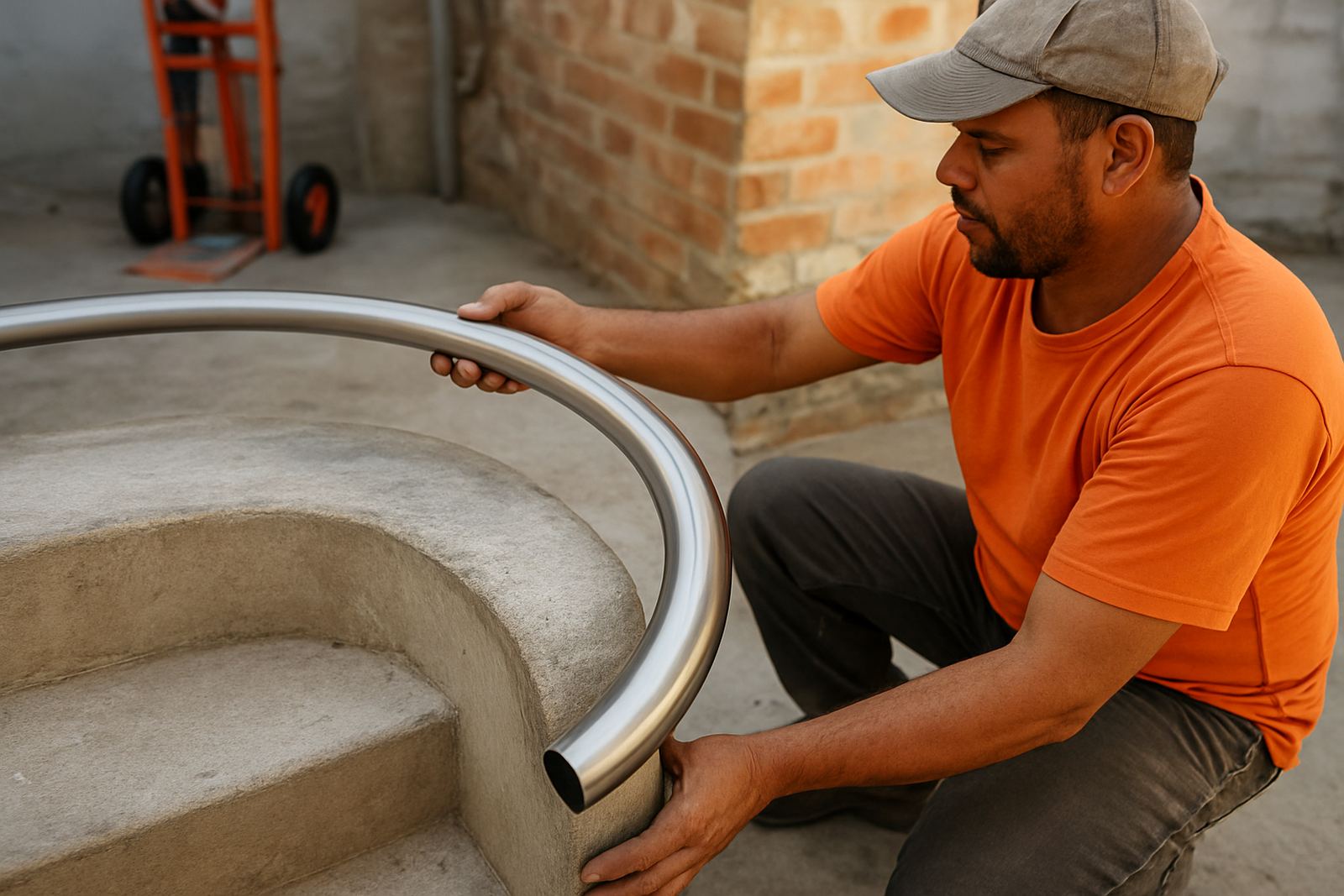
A handrail is only as good as what holds it in place. On a concrete ramp, the anchor pattern may differ from a steel walkway or a stone edge. The installer needs to know where the load will go, how thick the substrate is, and whether there are services or hidden voids below the surface. Public access routes see steady use, so the fixings must cope with repeated pressure, not just a light touch during inspection.
At Sisonke Stainless, we often find that the real work starts after the first site measure. The base may be uneven, the slope may change, or old repairs may have left the edge out of line. Those issues need to be handled before the rail is set, otherwise the finished work will follow the problems in the ground. Careful setting out saves trouble later and keeps the handrail true.
It also helps to think about vandal resistance and maintenance access. Public sites sometimes need hardware that can be checked and tightened without a long shutdown. Where the handrail is close to a gate, pool or service hatch, the fixing detail should allow for normal site use.
A school ramp in George shows what good planning looks like
One practical example is a school access ramp in George where the brief was simple enough on paper: create a safe handhold for children, teachers and visitors moving between the parking area and the entrance. Once the site was measured, it became clear the ramp had a slight twist, and the top landing was tighter than expected. The rail had to be set to guide people smoothly without blocking the doorway or squeezing the passage.
The final layout used straight runs with properly placed returns and a clean connection at the landing. The result was not just a neat finish, it made daily movement easier for staff and parents. For public sites, that is the real test. If people use the route without thinking about the rail, it has done its job.
Small site details matter. A loose paving edge, a drain cover near the post line, or a gate that swings too wide can all affect the placement. Good planning catches those issues early, which keeps the installation tidy and reduces call-backs.
What to include in the brief before fabrication starts
Before a public handrail is made, the brief should be clear enough for fabrication and installation to happen without guesswork. That means site measures, photo reference, route length and any special requirements such as glass fitment, gate hardware or matching stainless repairs on existing work. The more accurate the information, the better the final fit.
For councils, schools, estates and commercial property managers, it also helps to think about access times and site control. Some areas can only be worked on early morning or after trading hours. Others may need barriers in place while the installation is done. Planning this up front avoids delays and keeps the site safe for users and workers.
- Site measurements with slope and landing notes.
- Photos of the route and fixing points.
- Material preference and finish requirement.
- Any existing rails, gates or repairs to match.
- Installation timing and site access rules.
Maintenance checks keep public handrails dependable
Even a well-made handrail needs inspection. Public sites are busy, and regular use can loosen fixings or mark the surface over time. A simple maintenance check can pick up movement at the base plates, staining near joints, or damage after a vehicle knock or heavy weather. On coastal sites, this should be done more often because the environment works hard on exposed metal.
A practical maintenance plan does not need to be complicated. It should include cleaning, a look at all fixings, and a check that the rail still follows the route correctly. If a section is damaged, stainless repairs can often restore the line without replacing the whole run. That saves time and keeps the site open.
For public access routes and ramps across Knysna, Plettenberg Bay, Sedgefield, Wilderness, George and Mossel Bay, the goal is simple: a handrail that is safe, neat and suited to the place it serves. When the measure, material and fixing method are right, the rail does its work quietly for years.