Purpose-Built Bollards for Access and Protection
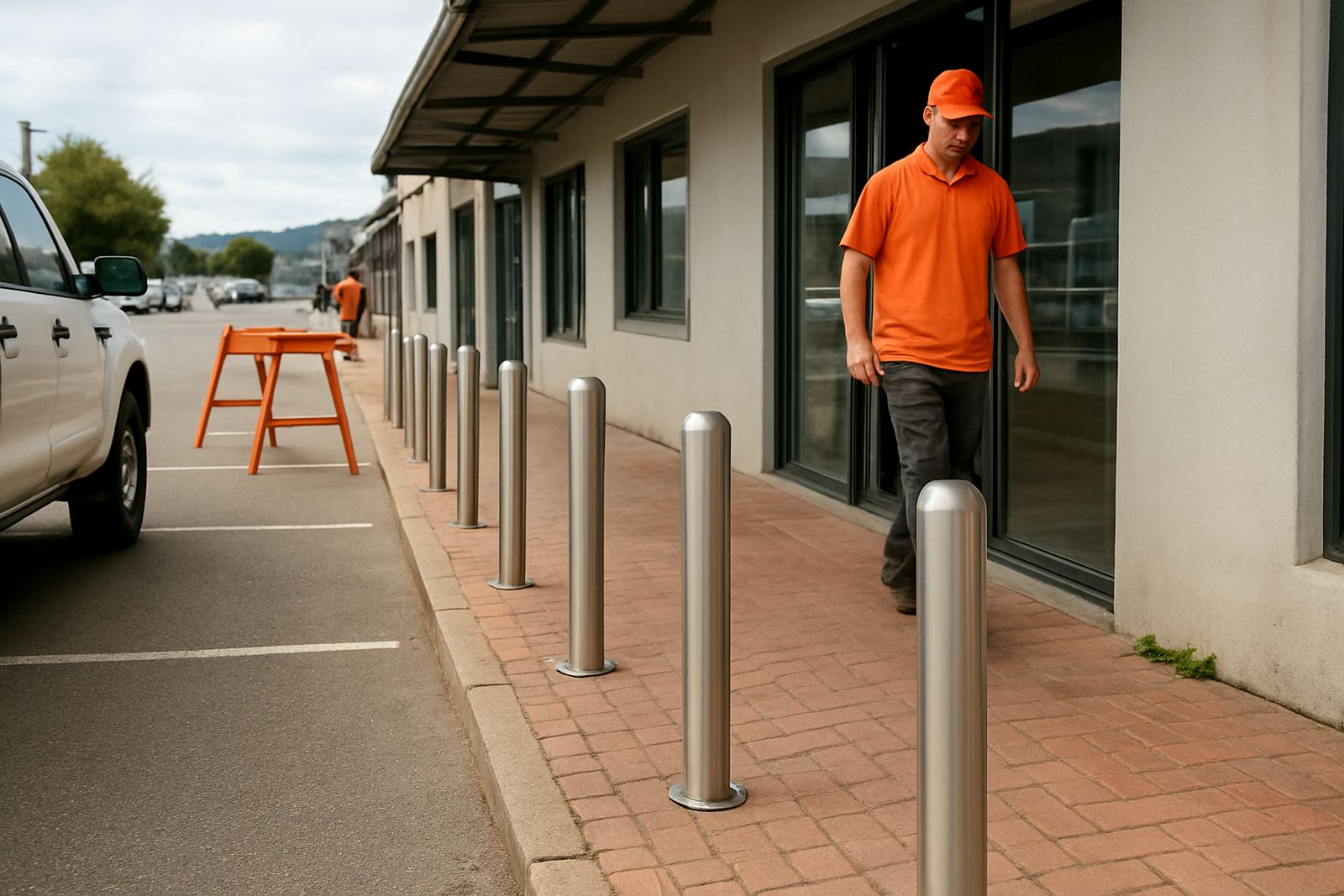
Bollards are short vertical posts fitted to stop slow vehicle movement, guide traffic and protect people, walls, shop fronts and equipment. At Sisonke Stainless we manufacture stainless bollards for parking areas, pedestrian crossings, driveways, loading points and entrance lanes where a neat finish matters as much as strength.
For coastal areas like Knysna, Plettenberg Bay, Sedgefield and Wilderness, stainless is a practical choice because it handles damp air, salt carry and regular washing better than plain mild steel. It also suits sites where the bollard will be seen up close, such as guest entrances, offices, estates and public-facing facilities.
We supply both fixed and removable bollards. Fixed units are set into concrete and are suited to permanent traffic control. Removable units are better where you need occasional access for deliveries, events, service vehicles or private parking. If the site changes often, we can set the base first and fit the removable post later.
Common Sizes, Wall Thicknesses and Finish Options
Most bollards are made to suit the site, but there are common sizes that work well on local projects. A neat standard bollard is often 76 mm, 89 mm or 114 mm outside diameter, with a wall thickness between 1.6 mm and 3.0 mm depending on the expected impact and the look you want. For higher-risk sites, heavier tube can be used and the base detail adjusted to suit the footing.
Heights are usually between 900 mm and 1200 mm above finished floor level. That gives clear visibility for drivers without creating an obstruction for pedestrians. Where extra visibility is needed, we can add polished caps, contrast bands, or a removable sleeve for reflective tape. If the site is close to spray or sea air, a brushed finish is often easier to keep looking tidy.
We fabricate in stainless steel with a clean welded finish. Polished, satin and brushed appearances are available depending on where the bollard will stand. In busy forecourts or entrance areas, a satin finish often hides finger marks and light scuffs better, while polished surfaces suit more formal entrances. Some clients want the bollards plain and practical, others want them to match handrails, gates or balustrades on the same property.
Where Bollards Suit Best Across the Garden Route
Bollards are used wherever slow-moving vehicles and people share the same space. In Knysna and George, we often fit them at shop entrances, estate access points, pharmacies, offices and parking courts. In Mossel Bay, coastal exposure is usually a bigger factor, so we pay closer attention to fixing details, drainage around the base and the finish on exposed welds.
They also work well in private homes where a driveway opens near a gate or boundary wall. If a client wants to prevent vehicles pulling too close to a wall or window, bollards can be placed as a simple physical stop. On commercial sites, they help protect boom arms, utility boxes, hydrants and loading areas from minor knocks that can become expensive repairs later.
For pedestrian routes, we can set bollards in line to guide foot traffic or to create a calm buffer between walkways and parking bays. On schools, medical rooms and hospitality sites, that extra separation is useful because it keeps movement clear without needing a heavy barrier system.
- Private driveways and entrance lanes
- Complex gates and estate access points
- Retail forecourts and customer parking
- Walkways near loading and delivery bays
- Public-facing entrances where order matters
Fixed, Removable and Removable Socket Details
Fixed bollards are the simplest option and usually the most secure. They are cast into a concrete footing or bolted to a prepared base plate, depending on the design and the load expected at the site. Once installed, they stay in place and need very little attention.
Removable bollards suit sites that need access from time to time. The post lifts out of a sleeve or socket, then locks back in place when needed. This is handy for shared parking areas, event venues, maintenance entrances and private driveways where access changes during the week.
We can include a locking arrangement on removable units so the post cannot be lifted by anyone without the correct key or tool. If there is a chance of water sitting around the base, we allow for drainage so the socket does not hold dirt and moisture. That small detail saves trouble later, especially in coastal towns where grit and damp can build up fast.
- Fixed into concrete for permanent restriction
- Socketed removable post for flexible access
- Locking feature for controlled entry
- Drainage allowance where water collects
- Matching caps and base finishes available
Installation, Base Preparation and Site Requirements
Installation starts with measuring the site properly. We check vehicle turning, pavement width, pedestrian flow, gate swing, and any slope or camber in the ground. A bollard that looks right on paper can become awkward if it sits too close to a tyre path or blocks a gate leaf, so the spacing matters.
For fixed bollards, the ground usually needs a concrete footing sized for the bollard diameter and use case. Where the site is already paved, we can core drill and set the post through the finish. For new work, the bollard location can be planned before paving so the base is neat and the line stays straight.
No power or gas is needed for the bollards themselves, but we do need access for fabrication tools and fitting equipment. On site we use standard metalworking and installation gear, plus concrete work where required. If a client needs a bollard beside electrical service gear, we keep clear of cables, meter boxes and other services during layout.
We install across Knysna, Plettenberg Bay, Wilderness, George and Mossel Bay, and we can coordinate with builders, gate installers and paving teams where needed. Good installation is mostly about accuracy, because a few millimetres out can show up immediately in a row of posts.
Care, Repairs and What To Check Before Ordering
Stainless bollards are low maintenance, but they are not no maintenance. In coastal air or dusty parking areas, a quick rinse with clean water helps keep the finish tidy. If you are near the sea, more regular washing is useful, especially on exposed welds and around the base where salt and grit collect.
We can also inspect and repair existing bollards that have been dented, bent or loosened from their base. If the surface has marks or discolouration, a restoration or polish may be enough instead of replacing the whole unit. For removable types, the locking sleeve and cap should be checked from time to time so the post still sits correctly and does not rattle.
Before ordering, check the opening width, desired height, expected vehicle type and whether you need a fixed or removable unit. It also helps to know if the bollard must match nearby handrails or gates, and whether the surface is concrete, paving or asphalt. If you are unsure, send us photos and measurements and we will work from there.
- Clear opening width between posts or walls
- Finished floor level and any slope
- Fixed or removable requirement
- Impact risk from cars, bakkies or light trucks
- Preferred finish and matching hardware details
Key facts
| Material | Stainless steel for coastal and high-traffic sites |
|---|---|
| Common diameters | 76 mm, 89 mm and 114 mm |
| Typical height above floor | 900 mm to 1200 mm |
| Wall thickness | 1.6 mm to 3.0 mm, subject to use |
| Types | Fixed, removable and socketed |
| Finish options | Brushed, satin or polished |