Built for airflow, privacy and a cleaner exterior line
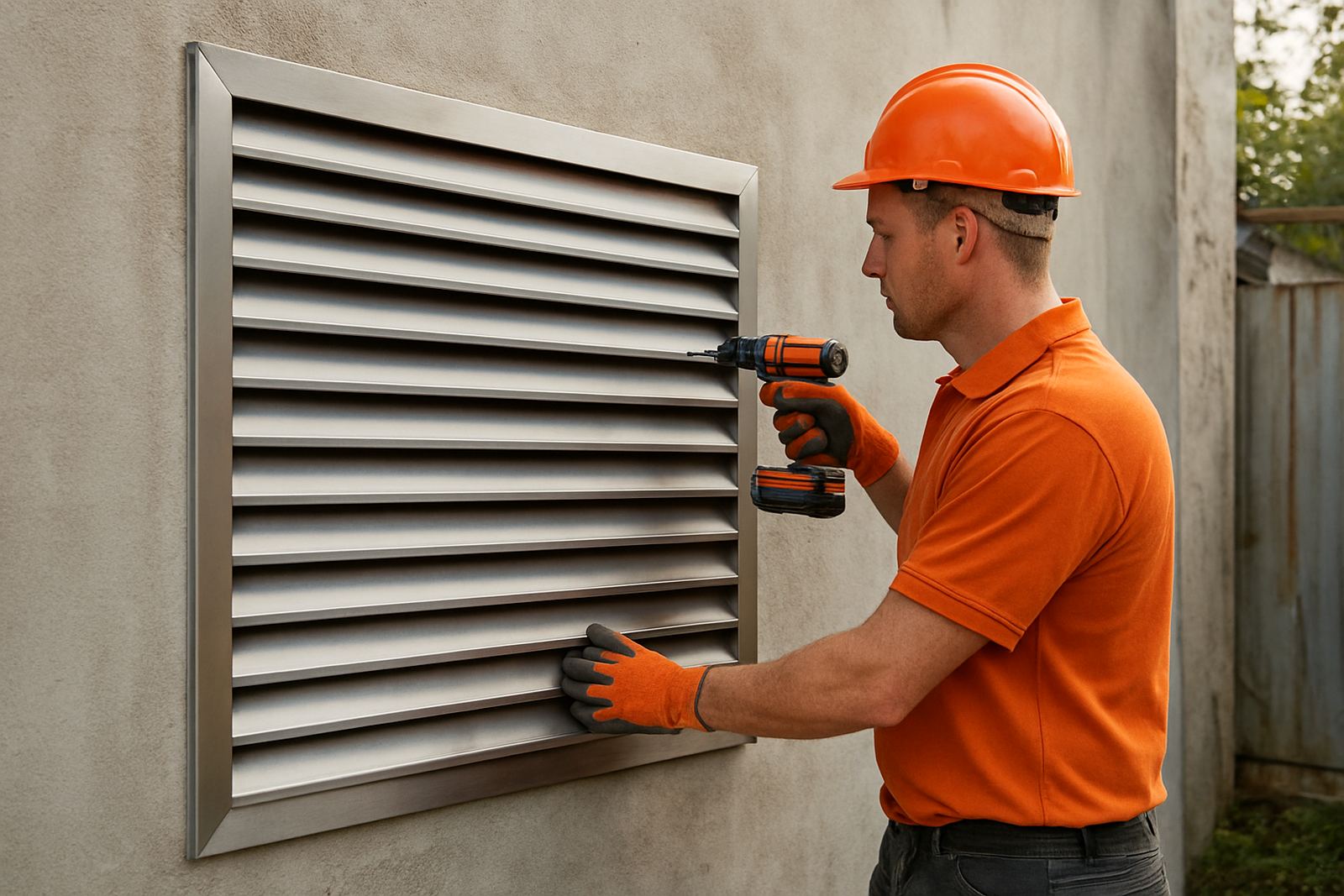
Louvre panels are fixed or adjustable slatted screens that let air move through while reducing direct views into a space. In stainless steel, they suit coastal conditions far better than plain mild steel, especially where salty air, regular rain and strong sun can wear down lesser materials. They are used as architectural features as much as practical screening, so the finish needs to look tidy from both sides.
At Sisonke Stainless, we make louvre panels to suit the opening rather than forcing a standard size into place. That matters on sites in Knysna, Sedgefield, Wilderness and Plett where walls are seldom perfectly square and builders often need a panel to sit in line with cladding, plaster, aluminium windows or timber framing.
- Good for privacy without blocking breezes
- Helps hide pumps, bins, services and plant rooms
- Can be made to match other stainless details on site
- Useful where you want shade and visual screening on a façade
Sizes, blade spacing and fixing options we can make
We fabricate louvre panels in custom sizes to suit small utility openings or long façade runs. Typical panel widths range from 300 mm to 1500 mm, with heights from 300 mm up to 3000 mm depending on the structure and how the panel will be handled during installation. For larger spans, we normally divide the run into manageable sections so the panel stays straight and serviceable.
Blade spacing is chosen for the look and the airflow you need. Tighter spacing gives more screening, while wider spacing allows more air movement. We can supply fixed blades for a simple clean line or set the panel up with a framed system that can be removed later for cleaning or maintenance. Where a more open look is wanted, we can increase the blade angle and spacing, but still keep the panel neat and practical.
- Material thickness commonly 1.2 mm, 1.5 mm or 2.0 mm stainless sheet and sections
- Blade depth and angle matched to the opening and viewing angle
- Framed or frameless appearance depending on the application
- Powder coating can be arranged where a coloured finish is required
For exposed coastal jobs we usually recommend a more careful material choice and fixing detail, because sea air and wind-driven moisture can work into corners and joints if the panel is poorly detailed.
Where louvre panels are used across the Garden Route
Louvre panels work well wherever you need screening and ventilation at the same time. We fit them on private homes, guesthouses, commercial buildings and service areas where the owner wants a smart finish that still handles daily use. In Knysna and George they are often used to screen plant rooms, refuse stores and service yards. In coastal towns they also help with airflow in enclosed areas that can otherwise hold damp air.
Common uses include:
- Balcony and patio privacy screens
- Façade features on upper storeys
- Enclosures for air-con equipment, pumps and electrical plant
- Bin stores and service yard screening
- Parking bay screening and boundary features
- Shade panels for entrances and walkways
Because the Garden Route has a mix of timber, rendered walls, glass and marine exposure, we often coordinate the panel line with existing building details so the finished result looks deliberate rather than added later.
How we measure, fabricate and install each panel
We start with a site measure in Knysna, Plettenberg Bay, George, Mossel Bay or the surrounding areas. This lets us check the opening, the wall surface, fixings, access and any nearby services before we prepare shop drawings. On renovation work, old walls are not always true so we allow for site conditions and the way the panel will sit once installed.
Fabrication is done in our Knysna Industria base. Sections are cut, formed and welded to suit the agreed layout, then cleaned and prepared for installation. Our site installation team fits the panel using suitable stainless fixings and brackets, and we check alignment, gaps and finishing lines before handover. If glass is being fitted alongside the panel, we can coordinate that too so the details line up properly.
- Site measuring and shop drawings before fabrication
- Onsite installation by our own team
- Fixings selected for exposed coastal conditions
- Can be coordinated with gates, handrails and other stainless work
Most louvre panels do not need power or gas during normal use. If the panel is part of a larger enclosure with access doors, sliding components or motorised gate hardware nearby, we can work around the required electrical set-up with your installer. We do not supply electrical power to the panel itself unless a specific motorised feature is included in the brief.
Care, servicing and coastal maintenance checks
Stainless needs less maintenance than painted steel, but it still benefits from routine cleaning, especially near the sea. Salt build-up, dust and airborne grime can dull the finish over time. A simple wash with clean water and a soft cloth is usually enough for normal care, with a mild detergent used when the panel is exposed to heavier dirt.
We recommend periodic maintenance checks on panels fitted in high-exposure areas, particularly in Mossel Bay, Wilderness and the Knysna lagoon side where damp air and salt can settle on fittings. During a check we look at fixings, welds, alignment and any movement caused by wind or building settlement.
- Wash with clean water and a soft cloth
- Avoid steel wool and harsh abrasive cleaners
- Check fixings after strong wind or building work nearby
- Inspect for surface staining around coastal joints and corners
Where a panel has picked up light discolouration, we can assist with surface restoration and repairs. That helps keep the panel looking smart without replacing the whole unit, which can save time and money for busy sites.
What to check before you place an order
The more information we have at the start, the better the fit and finish. Before ordering, it helps to know what the panel must do. Is it mainly for privacy, airflow, shade or visual effect? Will it sit outdoors, in a sheltered courtyard or inside a service area? Does it need to match nearby handrails, gates or window frames? These questions affect the section sizes, blade spacing and overall appearance.
Please check the following:
- Opening width and height in millimetres
- Whether the panel is fixed, removable or part of a larger frame
- Finish required, including brushed, polished or coated options
- Any nearby pipes, cables, lights or access hatches
- Exposure to wind, rain and sea air
- Any local building or estate rules that affect screening or façade changes
If you are not sure about the details, we can measure on site and talk through the best layout before fabrication begins. That keeps the panel practical, neat and suited to the way your building is used day to day.
Key facts
| Material | Stainless steel, selected to suit exposure and finish |
|---|---|
| Common thickness | 1.2 mm, 1.5 mm or 2.0 mm |
| Panel sizes | Custom made, typically 300 mm to 3000 mm high |
| Blade layout | Fixed spacing, custom angle and open area to suit airflow |
| Finish options | Brushed, polished or coated where required |
| Service area | Knysna, Plettenberg Bay, Sedgefield, Wilderness, George and Mossel Bay |