Wall-mounted support that fits tight spaces
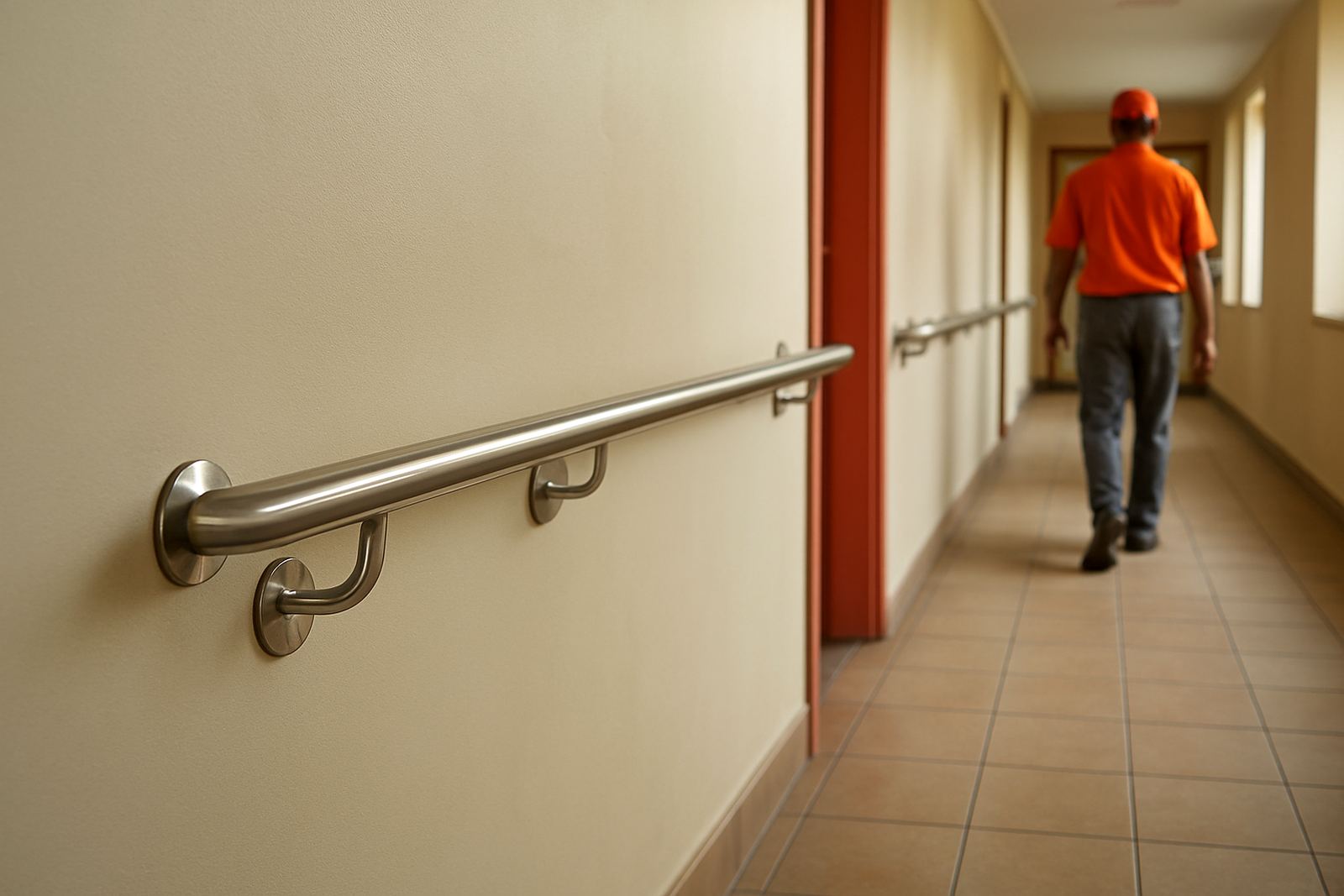
A wall handrail is a fixed stainless rail mounted to masonry, concrete, timber or steel walls with brackets at set spacing. It is used where people need a secure grip but there is not enough width for a full guardrail, or where the opening already has a separate barrier in place. In Knysna and along the coast, these rails are common on internal stair runs, passage walls, step-down areas, parking access routes and service passages.
Stainless is a practical choice near the sea because it handles moisture far better than painted mild steel. It also suits spaces that need regular washing, such as guest accommodation, clinics, kitchens and maintenance corridors. We make rails to suit the wall line and the actual route on site, so the finished handhold sits where people naturally reach for it.
Sizes, finishes and bracket options
Most wall handrails are made in round tube for a comfortable grip, with bracket positions planned to keep the rail steady and easy to hold. Typical tube sizes are 38 mm, 42.4 mm and 50.8 mm outside diameter, depending on the look and the amount of hand support needed. For heavier use, or where the rail must cover a longer run, we can increase bracket spacing or use a thicker wall tube. Finish can be brushed, polished or left with a practical satin look.
- Tube options: 38 mm, 42.4 mm or 50.8 mm outside diameter
- Common wall stand-off: 50 mm to 75 mm, depending on clearance
- Bracket spacing: usually 800 mm to 1200 mm centres
- Lengths: made to suit short landings or long stair runs
- Corner solutions: mitred bends, return ends or continuous runs
For wet entrances, pool areas or exposed balconies, we often recommend a simple shape with fewer joints so water does not sit in pockets. If the rail is for a narrow stairwell, we can keep the projection compact and still leave enough room for a firm grip.
Where wall handrails work best
These rails are useful anywhere a person needs support without blocking movement. We fit them in private homes, guest houses, body corporate blocks, offices, workshops and public-facing buildings. In the Garden Route, they are often used where stairs are tiled, where exterior steps get slippery in winter, or where older walls need a safer hold point for visitors and staff.
Typical locations include:
- Internal staircases and split-level passages
- Entrance steps and side access routes
- Corridors with long walking distances
- Ramped walkways and gentle slopes
- Support routes for elderly users or limited mobility access
When a wall handrail is part of a wider access upgrade, we can work from your site layout, then match the rail height to the actual wall, floor finish and door swing. This matters in older Knysna homes and coastal buildings where walls are not always square, and where every centimetre counts.
Measuring, fabrication and onsite fixing
Good wall rails start with proper measuring. We check the wall type, the route, the start and end points, and any changes in level. We also look for obstructions such as switches, skirting, windows, gates and return walls. If the route has a turn or a landing, we note the exact angles so the rail lands neatly and gives a continuous handhold.
Fabrication takes place in our Knysna Industria workshop. We cut, weld and finish each rail to suit the measured line, then prepare the fixing points for onsite installation. For most jobs we use mechanical anchors or suitable chemical fixing, depending on the wall material and the load needed. On older plaster walls or coastal brickwork, we check for sound fixing before drilling so the rail does not loosen later.
There is no gas or electrical supply needed for the rail itself. Installation is usually quick, but we still plan around site access, tenant hours and weather. On load-shedding days, our workshop work can continue with planning and prep already done, so fitting dates stay easier to manage.
Care in coastal conditions and maintenance checks
Stainless needs basic care, not constant attention. In coastal towns like Knysna, Sedgefield, Wilderness, George and Mossel Bay, the main issue is salt and grime building up on the surface. A wipe with clean water and a soft cloth is usually enough for normal upkeep. If the rail is beside a busy entrance or near pool splash, more regular cleaning helps keep the finish even.
We recommend the following checks:
- Look for loose fixings after building work or repainting nearby walls
- Check for scratches, dents or sharp edges on the grip line
- Confirm the rail is still firm after heavy use or a minor impact
- Wash off salt deposits and dust before they sit for long periods
For maintenance contracts or owner handover, we can inspect the rail, tighten fixings and restore the surface where needed. Minor repair work is often enough to extend the life of the installation and keep it safe for daily use.
What to send us when ordering
To quote correctly, we need clear information about the route and the fixing surface. If you already have drawings, send them through with the measurements. If not, we can do the site measuring and take the job from there. Please include the wall material, the total length needed, whether the rail is internal or external, and if there are turns, landings or steps.
- Overall length in metres
- Approximate height above finished floor level
- Wall type: brick, concrete, timber, plasterboard or steel
- Location: indoor, outdoor, coastal or sheltered
- Any special needs: child use, elderly access, narrow passage, return ends
- Preferred finish and whether matching an existing stainless item is needed
If the handrail has to match other stainless work on the property, we can keep the same finish and fixing style across the job. That gives a cleaner result and makes future servicing simpler. For a straight stair rail or a longer support route, we will also advise if a return, end cap or angled termination is the better choice for safe use.
Key facts
| Material | Stainless steel, suited to coastal use |
|---|---|
| Common tube sizes | 38 mm, 42.4 mm, 50.8 mm outside diameter |
| Typical wall stand-off | 50 mm to 75 mm |
| Bracket spacing | 800 mm to 1200 mm centres, depending on span |
| Finish options | Brushed, polished or satin |
| Service area | Knysna, Plettenberg Bay, Sedgefield, Wilderness, George and Mossel Bay |