Start with the opening and how the gate must move
Before anything else, measure the clear opening between posts or pillars and check what space you have on each side. A gate may need room to swing in, swing out, or slide along a run of fence, and that choice will affect the whole layout. On small plots in Knysna, Sedgefield or Wilderness, a swing gate can quickly become awkward if a vehicle parks close to the entrance.
Think about the ground too. If the driveway slopes, or if the entrance sits close to a kerb or retaining wall, the gate may need extra clearance. A gate that works on paper can drag on paving, catch on a rise, or make the post hardware work harder than it should. We always recommend a site measure before fabrication, because a few millimetres lost at the start can cause trouble later.
Decide how much security you need at the entrance
Every gate should do two jobs: control access and make the property practical to use. For some homes in Plettenberg Bay or George, that means a neat pedestrian gate with good lock points. For others, it means a solid driveway gate with a stronger frame, tighter gaps and proper hardware fitment. The right level depends on what sits behind the gate, how visible the site is, and how often the gate will open each day.
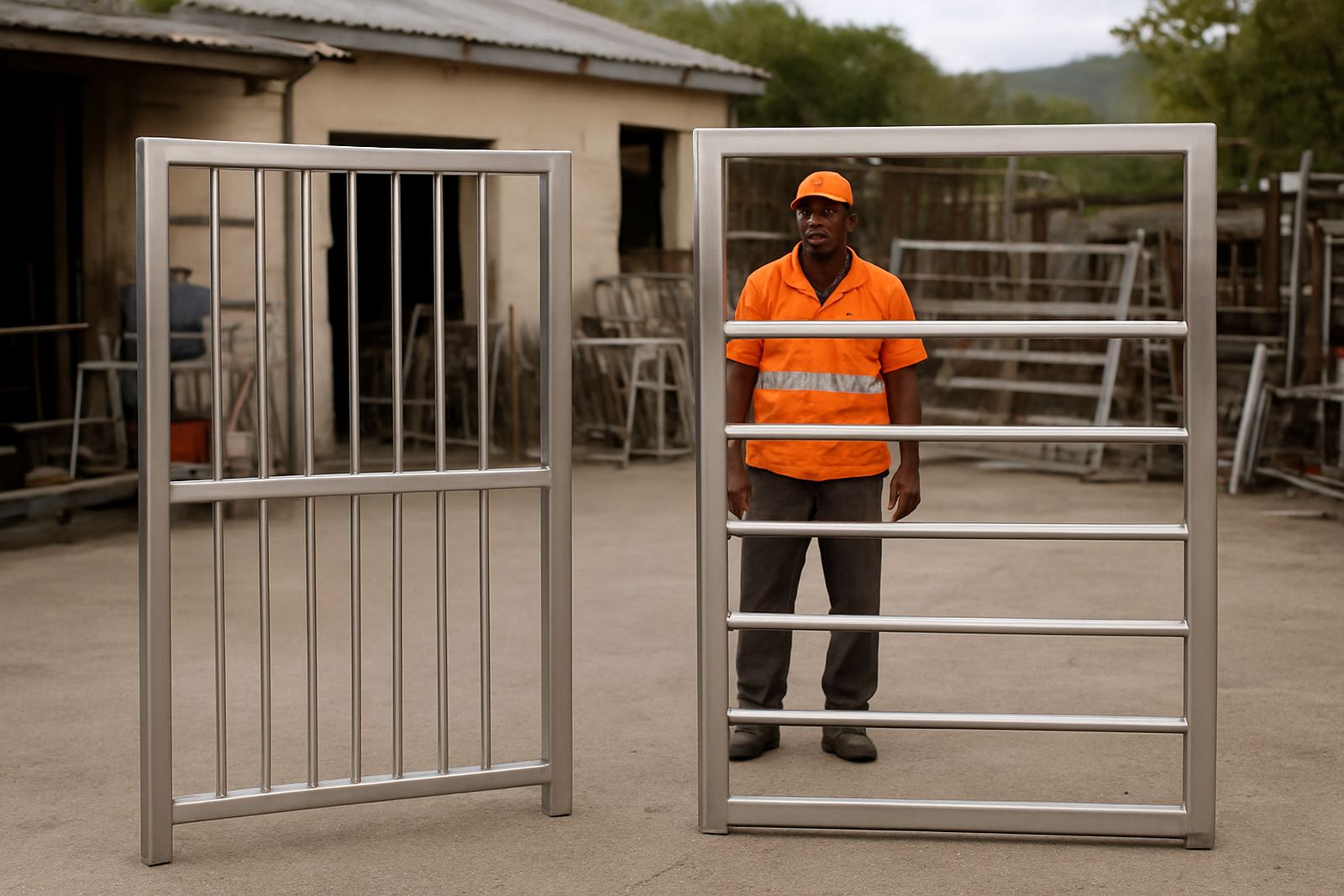
Ask yourself what you are trying to stop. Is it casual entry, small children wandering out, or a full perimeter control issue? Stainless gates can be built with vertical bars, sheet sections, laser cut patterns or mixed infill, but the spacing and hardware should match the risk. A pretty gate with poor latch placement is not much help, so the lock side must be planned from the start.
- Will the gate be used by vehicles, pedestrians, or both?
- Does the entrance need a drop bolt, latch, or lockable catch?
- Should the gate allow visibility through the opening, or provide more privacy?
- Is there any need to prepare for future motorisation?
Choose the gate style that suits the property
Gate style should match the building and the way people move on site. A modern house near the Knysna lagoon may suit a clean horizontal pattern or a simple framed design. A business yard in Mossel Bay may need a heavier gate with a more practical finish. The aim is not to make the gate complicated, but to make it useful and tidy.
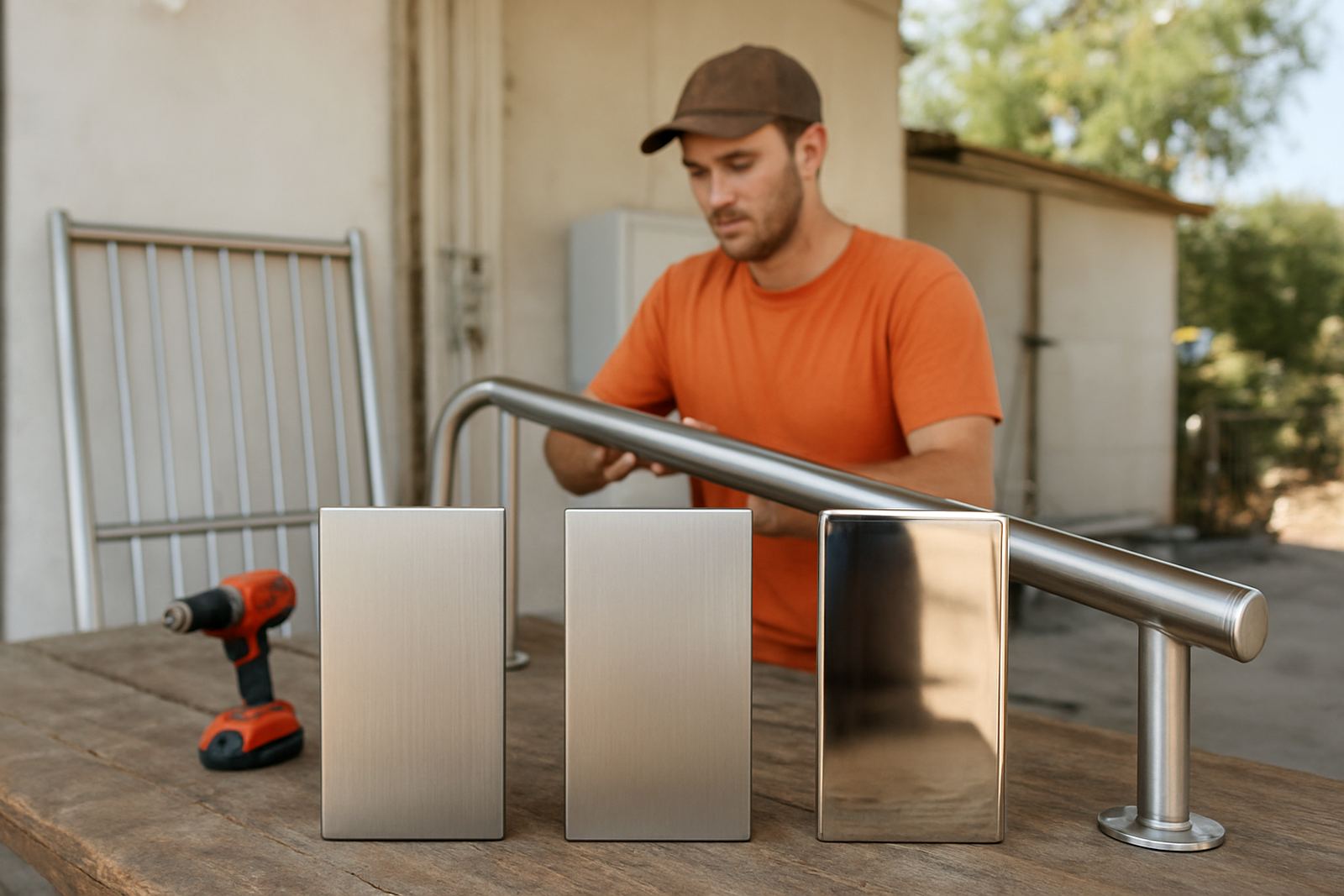
For coastal properties, stainless is a sensible choice because it handles salt air better than many mild steel options, especially where maintenance teams do not want constant repainting. If you are adding glass panels or decorative sections, make sure the design still allows easy cleaning and does not trap water. In humid conditions, small detail mistakes show up fast, so drainage, weld quality and surface finish matter more than many people think.
We often advise clients to keep the design simple where possible. Fewer weak points means less rattling in wind, fewer places for corrosion to start, and less day to day fuss. A gate should look right from the road but also work when you are coming home late in the rain with hands full.
Plan for site space, motorising and everyday access
If the gate may be automated later, say so early. The frame, post size and hinge or track arrangement should be set up with that in mind, even if the motor is not fitted on day one. It is far easier to prepare for automation during fabrication than to cut and rebuild later. Also check where the power point will be, because load-shedding and backup systems can affect where operators, battery boxes and controls are best placed.
Do not forget the people using the gate every week. A family gate, staff entrance or light commercial access point all have different needs. There may be bicycles, wheelchairs, delivery trolleys or bin movement to consider. A pedestrian gate should open freely without clashing with cars, walls or a security post. On tight sites we measure the swing path carefully so there is no surprise once the gate is installed.
- Leave enough room for gate swing or sliding travel.
- Check for slopes, drains, pipes and uneven paving.
- Confirm where power, intercoms or access controls will sit.
- Allow safe clearance for vehicles, children and foot traffic.
Insist on proper measuring, drawings and fabrication details
Good measuring saves time and avoids returns. We take site measurements, then prepare shop drawings so the client can see the layout before fabrication starts. This is where the hinge side, lock side, infill pattern, heights and fixings are checked. If there is a mistake in this stage, it often shows up later as a gate that binds, gaps that are uneven, or a latch that never quite sits right.
Ask for details on the frame size, material grade where relevant, hardware type and finish. In a coastal area, fixings and brackets need as much attention as the main frame. A neat gate with poor screws or loose brackets is a problem waiting to happen. We also recommend confirming whether the gate will need glass fitment, special gate hardware fitment, or a surface restoration approach for older stainless on site. One small note, the cheapest quote is not always the one that lasts.
Check the installation plan before you sign off
Installation is where the gate becomes part of the property. The posts must be plumb, the hinges set correctly, and the lock points aligned with the real opening on site. If the ground is uneven or the wall is not square, small adjustments may be needed during fitting. A good installation team will check all of that before drilling, anchoring and final welding.
Ask what will happen on the day, how long the work should take, and whether any site preparation is required from your side. For homes and businesses in Knysna, George, Plettenberg Bay and the surrounding towns, access can be tight, so it helps to clear the area and confirm parking for the crew. After fitment, a proper maintenance check should include hinge movement, latch action, alignment and any signs of rubbing. That simple habit can save you a repair later.