Start with the job, not the glass
The right glass depends on where the balustrade will go, how it will be used, and how much weather it will face. A balcony in Knysna Industria has different needs to an indoor stair rail in Sedgefield, and a coastal deck near Mossel Bay will need a different finish again. We always start with site measuring and then match the glass to the frame, the fixing method, and the exposure to wind, salt air, and daily use.
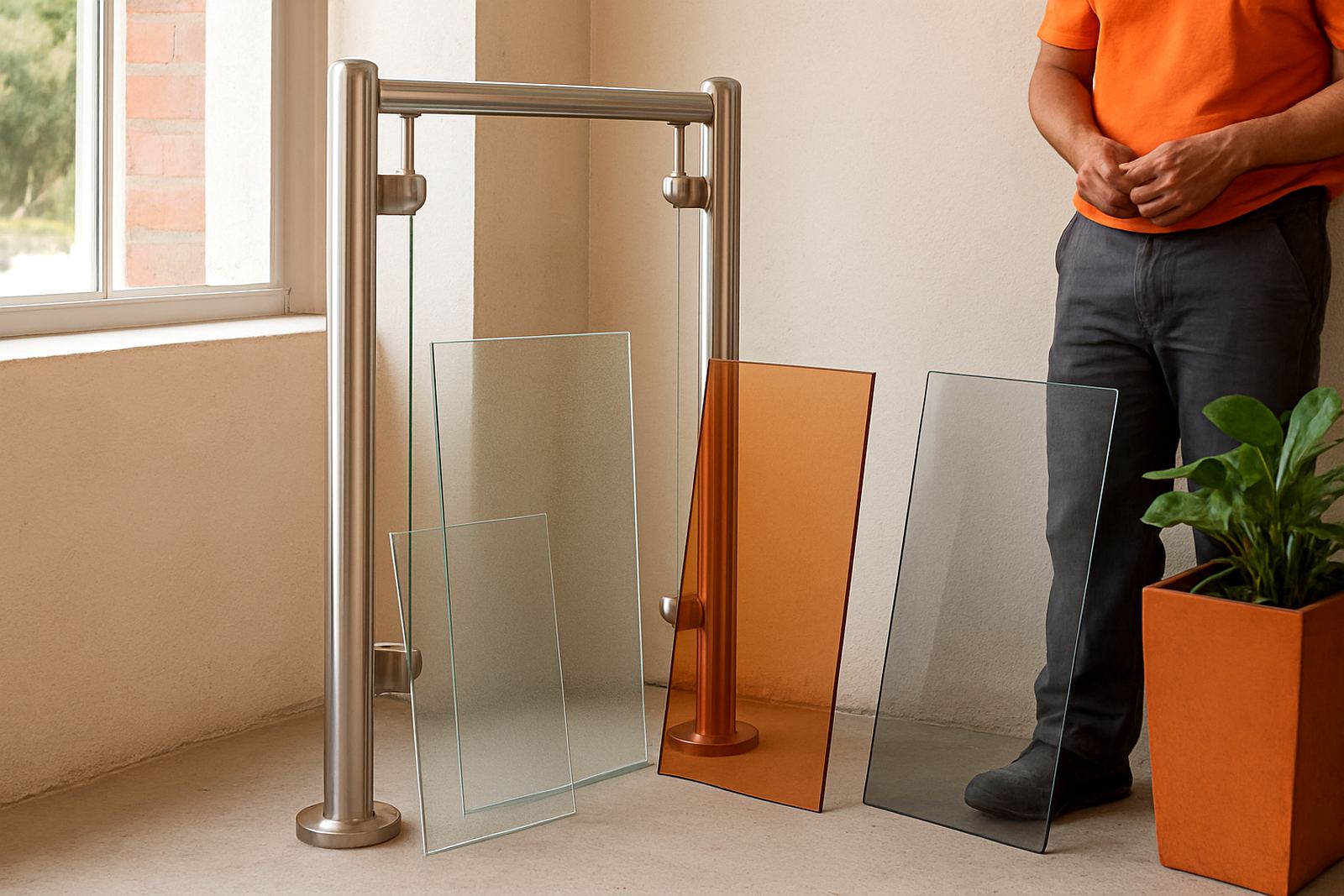
For most stainless balustrade systems, the main choices are toughened glass, laminated toughened glass, and thicker glass panels for areas that need extra stiffness. In practice, the decision usually comes down to three questions: do you want clear views, do you need added safety, and how much upkeep can you take on over time?
- Check the location: indoor, covered patio, balcony, staircase, or pool edge.
- Check the exposure: inland, coastal, or full wind exposure.
- Check the use: home, guest house, office, or public area.
- Check the finish: clear, frosted, tinted, or patterned.
Clear glass for open views and simple cleaning
Clear glass is the most common option when the aim is to keep views open. It works well with stainless posts, top rails, and clamp systems, and it suits homes that want a light, open feel without changing the colour or tone of the space. On a timber deck in Wilderness or a sea-facing stoep in Plettenberg Bay, clear glass keeps the outlook as wide as possible.
It also makes it easier to inspect the balustrade structure. You can see the stainless fittings, check for movement, and spot dirt or water marks before they become a problem. That said, clear glass does show fingerprints, salt spray, and dust more quickly than other finishes, so it needs regular cleaning. A soft cloth, clean water, and a mild detergent is usually enough. Avoid harsh scourers because they can scratch the surface.
- Best for: views, modern interiors, and balcony rails.
- Needs: regular wash-downs, especially near the coast.
- Works well with: stainless spigots, clamps, and framed panels.
Toughened or laminated glass for added safety
Safety comes first on staircases, balconies, and pool areas. Toughened glass is heat-treated to handle impact better than standard glass, and it is commonly used where there is a risk of accidental contact. Laminated toughened glass adds another layer of protection because the sheet is held together by an interlayer if it breaks. That extra hold can be useful in family homes, guest lodges, and public walkways where people move close to the edge.
For many Garden Route installations, laminated toughened glass is the safer choice when the balustrade is exposed to strong wind or where the drop is significant. It is also a sensible option where compliance and peace of mind matter more than saving on the initial quote. If you are unsure which thickness suits the span and fixing detail, we work it out during the measuring stage and prepare shop drawings before fabrication. A small site error can become an expensive fitment issue later on, so this step matters.
- Use it where fall protection is critical.
- Consider it for wind-exposed balconies and stairs.
- Ask for correct edge finishing and hole positions before fabrication.
Frosted, tinted and patterned glass for privacy
If you want privacy without closing off the space, frosted or tinted glass can help. Frosted glass softens the view and is often used on front balconies, side screens, and stair landings where neighbours or visitors can look in. Tinted glass reduces glare, which is useful in bright coastal light and on west-facing patios that get late afternoon sun. Patterned finishes are less common but they can suit certain homes or commercial spaces where a little texture is preferred.
In practical terms, these finishes can also reduce the visibility of fingerprints and small water spots. That does not remove the need for cleaning, but it can make upkeep easier for owners who want a tidier look between maintenance visits. When selecting privacy glass, check that the finish still allows enough light through the area. A darker tint may look good on paper but can make stair treads or entrances feel too dim. We often test the effect in the actual space before confirming the final specification.
- Frosted glass: better privacy for homes, offices and pool surrounds.
- Tinted glass: useful for glare and heat reduction.
- Patterned glass: chosen more for appearance than full privacy.
How the fixing method changes the final result
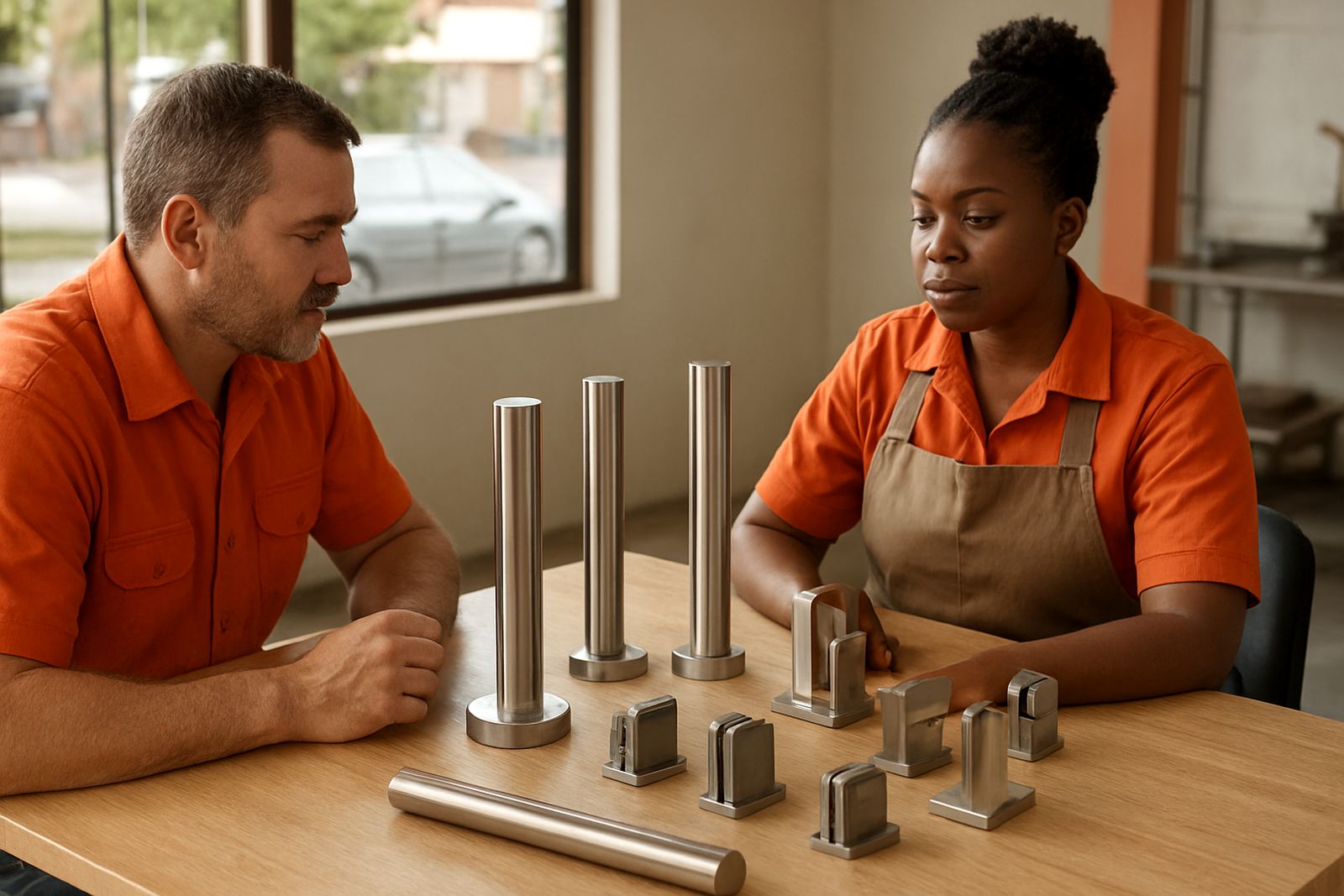
Glass is only one part of the system. The way it is fixed to the stainless structure affects safety, cleaning, and the finished look. Some systems use bottom-mounted spigots for a clean line with fewer visible fittings. Others use clamps or framed sections, which can be better where the panel needs extra support or where the site conditions are less forgiving. On a new build in George, a neat concealed look may suit the architecture. On a repair in Mossel Bay, the old structure may call for a more practical fixing plan.
We also look at how the glass meets the handrail, the floor, and any side walls. If the levels are out, the panels may need setting out carefully so the line remains straight. If the area is exposed to moving sand, salt air or strong wind, we may suggest a layout that is easier to maintain and inspect. That way the glass does not become a problem to clean or repair after installation. It is better to spend time on the setup than to fight with a poor fit later on.
- Spigots: neat and open, often used on decks and balconies.
- Clamps: practical for framed or semi-framed systems.
- Framed panels: useful where extra support is needed.
Maintenance checks for coastal and inland sites
Glass balustrades need proper maintenance if you want them to last. In coastal towns, salt can settle on stainless fittings and leave marks on the glass. Inland, dust and pollen can build up faster than expected. A simple monthly check is usually enough for most homes, but beachfront properties or busy commercial sites may need more frequent attention. During load-shedding periods, people often rely more on natural light, which makes clean glass even more noticeable.
Our maintenance checks normally include tightness of fixings, condition of seals, glass edge condition, and signs of corrosion on any adjacent metal parts. If the glass has chips or scratches near the edge, it should be assessed quickly rather than left until the next service. Small issues are easier to deal with early and they help avoid larger repair work later. We also advise owners to rinse the system after strong sea wind or heavy rain, then dry the fittings where possible.
- Wipe glass with fresh water and a soft cloth.
- Inspect stainless fittings for salt build-up or staining.
- Check for movement after strong wind or heavy use.
- Book repairs early if chips, cracks, or loose fittings appear.
A simple choice checklist before you order
If you are planning a new balustrade or replacing old glass, keep the decision process simple. Start with the use of the space, then look at safety, privacy, and cleaning. After that, match the glass to the stainless detail and the site conditions. We measure, prepare the drawings, fabricate the parts, and handle installation across Knysna, Plettenberg Bay, Sedgefield, Wilderness, George and Mossel Bay. That means the glass choice is made with the real site in mind, not just from a picture.
Before you approve the job, make sure you can answer these points clearly. If one of them is still uncertain, it is worth asking before the fabrication starts. That is usually the stage where time and cost are easiest to control.
- Where will the balustrade be installed?
- Do you want full visibility or some privacy?
- Is the site exposed to wind, salt air, or heavy use?
- Do you need easy cleaning or reduced glare?
- Has the fixing method been confirmed on site?
If you need help choosing, we can assess the site, advise on the glass type, and fit the complete stainless system with the correct hardware. It is often the small details, like edge finish and fixing positions, that make the biggest difference to how the balustrade performs over time.