Start with the safety rules, not the finish
Before choosing a pool fence, check what the property needs to comply with. The barrier must do the safety job first, then it can look neat. On many homes in Knysna, Plettenberg Bay and George, the biggest mistakes are gaps too wide, low gates, weak latches, and a layout that makes climbing too easy. If the pool is used by young children, every detail matters, even the side passages and corner returns.
For a practical first check, measure the pool area and note where people naturally walk. A good barrier should control access without creating awkward routes or making the pool hard to use. In coastal towns, the hardware also has to deal with salt air, damp mornings and regular cleaning. A cheap fitting can rust fast and then the gate stops closing properly.
- Check the opening method of every gate.
- Look for climbable rails, nearby walls or planter boxes.
- Measure the distance between the pool and boundary walls.
- Ask whether the site needs extra returns or screening panels.
Stainless steel or glass, choose for the way you live
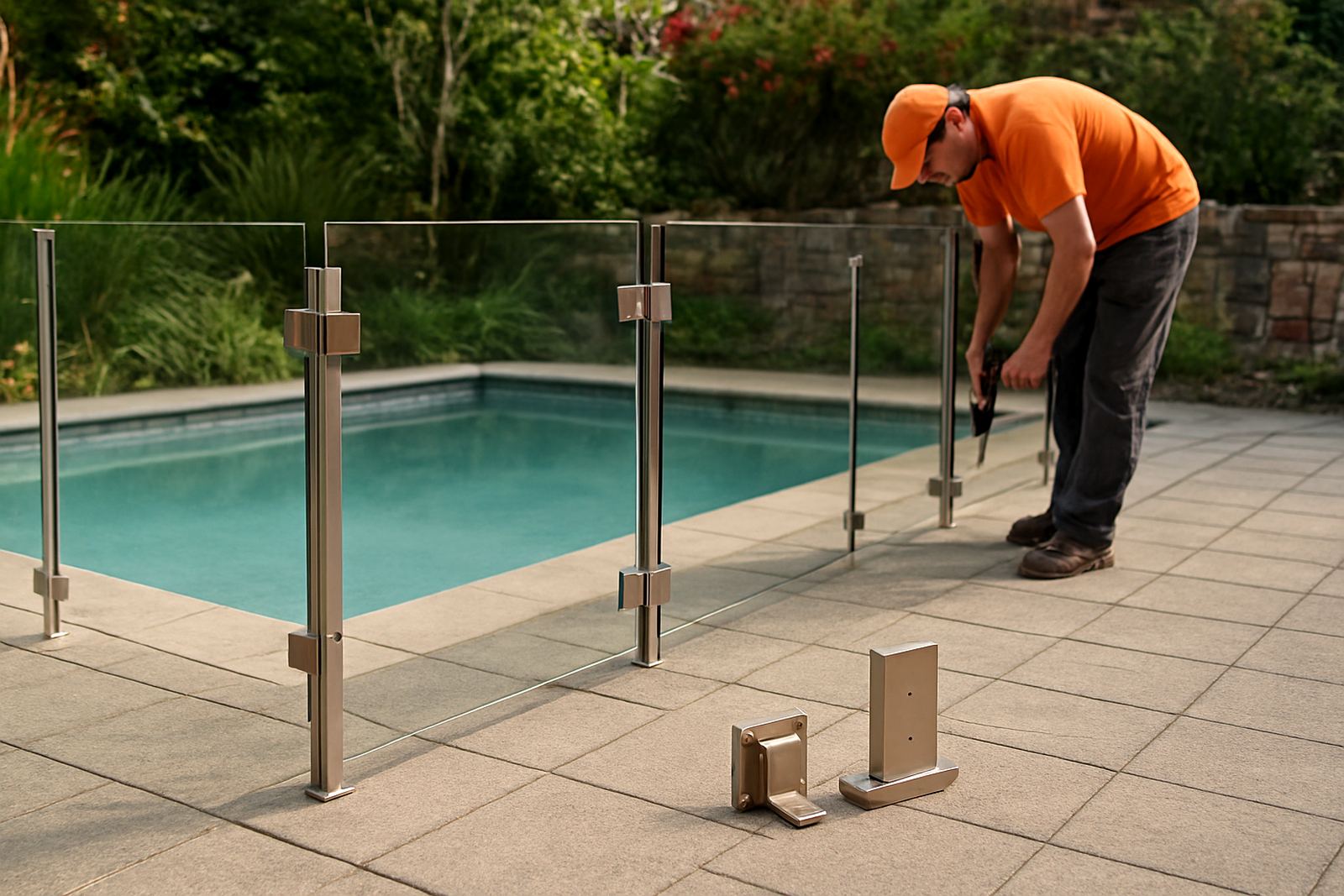
Stainless and glass both work well around pools, but they suit different homes. Stainless posts and rails are a practical choice where you want clear boundaries, less breakage risk and simpler cleaning. Glass gives an open view of the water, which many owners prefer for entertainment areas and small yards where you do not want the fence to close in the space.
In humid areas like Sedgefield, Wilderness and Mossel Bay, the important point is not just the look. It is how the barrier handles moisture, wind and regular use. Stainless is often chosen for durability and easier repairs. Glass needs careful fitting and correct support so it does not shift over time, especially if the deck settles or the paving is uneven. A proper site measure makes all the difference.
- Choose stainless where impact resistance and easy maintenance matter most.
- Choose glass where the view across the pool is a priority.
- Use marine grade fittings where salt exposure is high.
- Plan for regular washing if the pool is near the sea.
What a proper site measure should cover
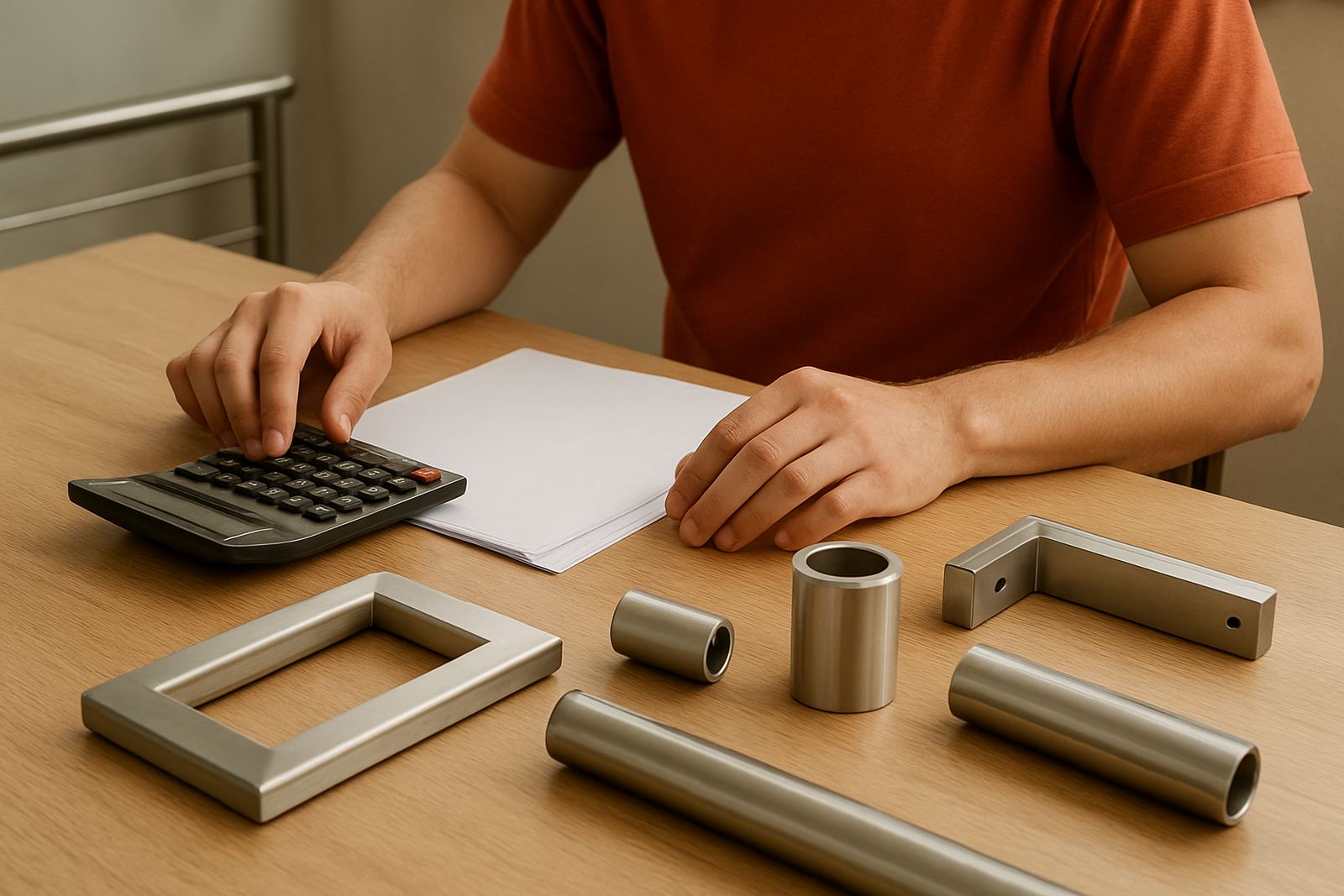
A pool barrier should never be ordered from a rough sketch alone. Site measuring needs to pick up slopes, paving heights, coping stones, drain positions, wall thickness and any uneven corners. In older homes around Knysna and Sedgefield, it is common to find surfaces that look level but are actually out by 15 mm or more. That affects gate swing, latch height and panel alignment.
We usually check the full route around the pool, not just the front edge. That includes the position of steps, braai areas, sliding doors and any access from the house. It also helps to note whether the pool area gets strong afternoon wind. If the site is exposed, the support spacing and fixing points may need to be adjusted. A few extra minutes on site can save a lot of rework later, and fewer site visits mean less disruption.
- Measure finished floor levels and paving heights.
- Record the exact width of each opening.
- Check gate clearance for tiles, coping and drains.
- Note anything that could affect drilling or anchoring.
Gate details that make daily use easier
The gate is the part people use most, so it must close properly every time. A pool gate should open in a controlled way, self close, and latch securely without needing a hard slam. If the gate is too heavy or the hinge line is wrong, people start propping it open and then the barrier is not doing its job. We often see this on holiday homes where the pool area gets heavy traffic and the gate is opened many times a day.
For family homes, the latch height and handle position should suit adults while staying out of easy reach for small children. If there is a glass section near the gate, allow enough clearance so the hardware does not catch on the panel. It is also worth thinking about night use and load shedding. A barrier should still be easy to see by torch or outdoor light, and the gate should not rely on anything electrical to stay safe. A simple mechanical latch is often the most dependable choice.
- Test the gate swing before final fixing.
- Check that the latch catches without sticking.
- Confirm that hinges carry the gate square, not skew.
- Make sure handles and edges are comfortable to use.
How installation affects strength and finish
Good materials can still fail if the installation is rushed. The fixing method must suit the substrate, whether that is concrete, brick, tiled paving or a timber deck. On coastal properties, poor drilling or weak anchors can lead to movement, and once a panel starts moving the holes get bigger and the problem grows. The finish also matters, because sharp edges, messy sealant and uneven spacing are not acceptable around a pool.
Our installation team checks alignment, door action and panel spacing on site, then makes the final adjustments before handover. Where glass is included, the fittings must be tightened evenly and the panel supported correctly from the start. If there are custom sections around curves, steps or raised decks, those parts need careful fabrication before installation. That is where shop drawings help, because the installer can follow a clear plan instead of guessing on the day. It saves time and keeps the result neater.
Care, cleaning and repair planning for coastal homes
A pool fence should be easy to keep clean, especially where sea air brings salt, fine dust and windblown sand. Stainless needs regular washing with fresh water to keep the surface looking good and to reduce staining. Glass should be cleaned with non abrasive products so it stays clear and does not pick up fine scratches. Around the Garden Route, monthly checks are sensible, and after heavy rain or strong wind it helps to look at the gate and fixings again.
Maintenance is not only about appearance. It is about the gate closing properly, fasteners staying tight, and the barrier remaining safe over time. If something bends, loosens or starts to corrode, deal with it early. Small repairs are easier and cheaper than replacing a full section later. For homes in Knysna, George and Mossel Bay, a maintenance check before peak holiday use can prevent last minute problems when the house is full.
- Wash stainless with clean water and a soft cloth.
- Check latches, hinges and fasteners every few weeks.
- Look for chipped sealant or movement around the fixings.
- Book repairs early if any panel starts to shift.